Wednesday, 10 June 2026

The Best Flooring Options for Georgia Sunrooms and Screened Porches

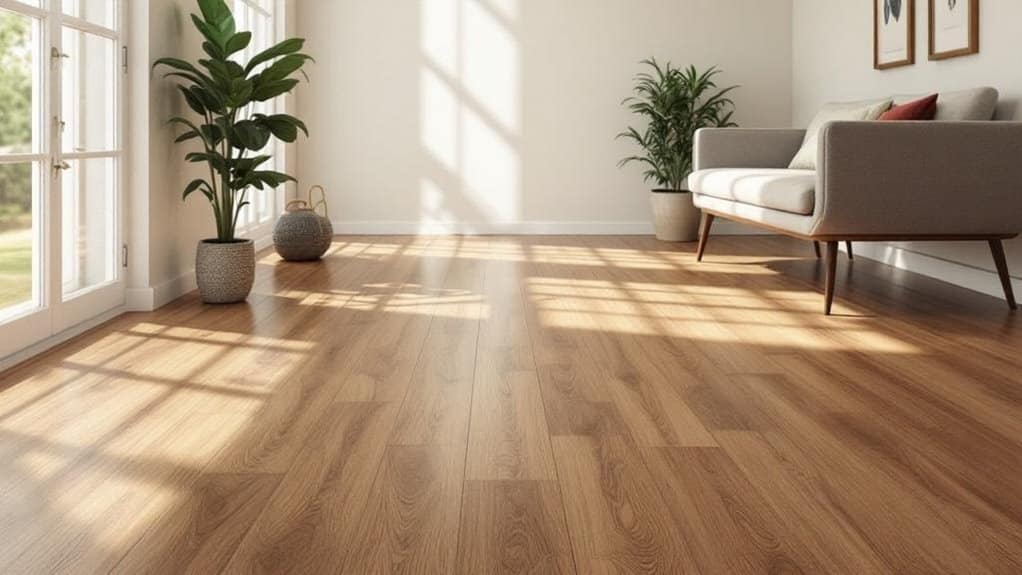
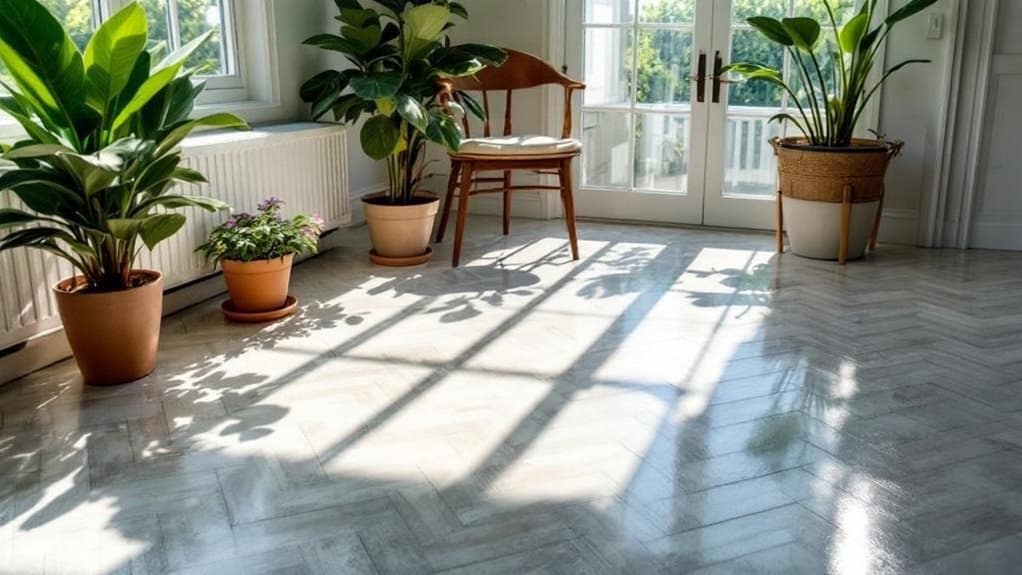
For Georgia’s sunrooms and screened porches, your best flooring options are porcelain tile, luxury vinyl plank (LVP), composite decking, and concrete. Each handles humidity above 80%, UV exposure, and temperature swings that destroy lesser materials. Porcelain absorbs less than 0.5% moisture, LVP won’t warp or fade, composite decking excels in semi-exterior conditions, and sealed concrete resists everything Georgia’s climate throws at it. Keep going to find out exactly which option fits your specific setup.

Key Takeaways

  • Porcelain tile offers superior moisture resistance, absorbing less than 0.5% moisture, making it ideal for Georgia’s high-humidity climate.
  • Luxury vinyl plank (LVP) provides a waterproof, UV-resistant, cost-effective alternative to hardwood, handling Georgia’s temperature fluctuations with minimal maintenance.
  • Screened porches require semi-exterior-rated materials like composite decking, while enclosed sunrooms allow more aesthetic options like engineered hardwood.
  • Concrete flooring withstands heavy traffic, moisture, and UV exposure, requiring only a penetrating sealer every 2–3 years for protection.
  • Slip resistance is critical; choose flooring with a coefficient of friction (COF) of 0.60 or higher for wet-condition safety.

Why Georgia’s Climate Is So Hard on Porch and Sunroom Flooring
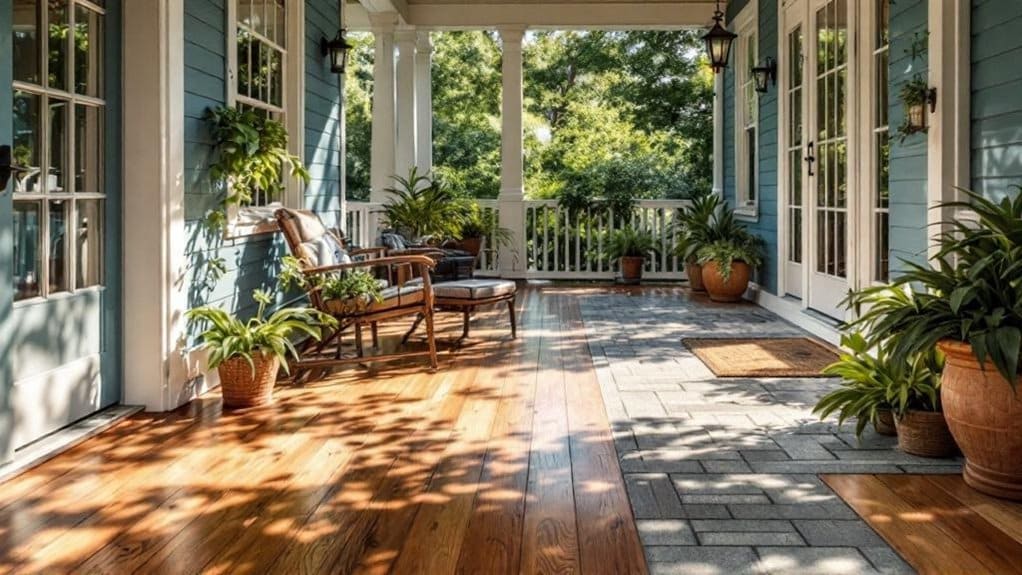
georgia s challenging flooring conditions

Georgia’s climate creates a uniquely punishing environment for sunroom and porch flooring, combining high humidity, intense UV exposure, and dramatic temperature swings that few materials can withstand long-term. Summer temperatures regularly exceed 95°F, while humidity levels frequently surpass 80%, accelerating moisture intrusion, warping, and mold growth. These climate impact factors eliminate many popular flooring choices that perform well in milder regions. UV radiation fades and degrades surface finishes rapidly, particularly in south-facing sunrooms with significant glass exposure. Winter temperature drops, though moderate, still cause repeated expansion and contraction cycles that stress joints and adhesives. Selecting waterproof flooring options engineered specifically for humid climates ensures your investment withstands Georgia’s environmental demands. Understanding these environmental demands helps you select materials engineered for durability under these specific conditions, protecting your investment while maintaining safe, attractive spaces for the people you serve.

Moisture Resistance, UV Stability, and the Other Properties That Actually Matter

Selecting the right flooring material starts with understanding which physical properties actually determine performance under Georgia’s demanding conditions. You’ll need materials that resist moisture absorption, since humidity and rain infiltration cause warping, mold, and structural failure. Moisture barriers installed beneath the flooring surface provide crucial protection against ground-level vapor intrusion. UV stability matters similarly—prolonged solar exposure fades, degrades, and brittles inadequately protected materials. UV coatings applied to or embedded within flooring surfaces considerably extend service life. Beyond these two priorities, evaluate thermal expansion coefficients, since Georgia’s temperature swings demand materials that expand and contract without cracking or buckling. Slip resistance ratings protect the clients you’re installing for, particularly in wet conditions. Finally, assess compressive strength, surface hardness, and maintenance requirements before committing to any material. Proper ventilation solutions are equally critical in screened porches and sunrooms to manage humidity levels and prevent mold growth that can compromise flooring integrity.

Screened Porch vs. Sunroom: Matching the Right Floor to Your Specific Setup
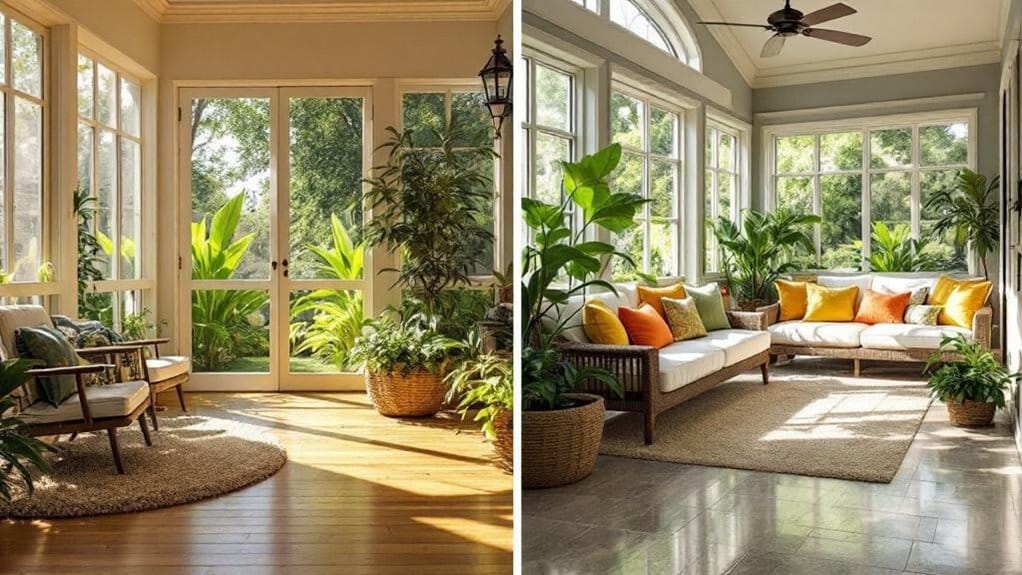
flooring for climate conditions

Whether you’re finishing a screened porch or a fully enclosed sunroom determines nearly every flooring decision you’ll make. Screened porch designs expose flooring to direct humidity, wind-driven rain, and temperature swings, so you’ll need materials rated for semi-exterior conditions — think porcelain tile, composite decking, or concrete. These surfaces drain well and resist warping.

Fully enclosed sunrooms operate closer to conditioned interior spaces, which broadens your options considerably. Sunroom aesthetics favor luxury vinyl plank, engineered hardwood, or stone tile — materials that balance visual warmth with UV and moisture tolerance. Water-resistant materials like engineered wood with a waterproof core or properly sealed natural stone can provide both durability and the warm aesthetic appeal that homeowners desire in sunroom spaces.

Ask yourself one critical question before selecting anything: does your structure hold consistent indoor temperatures year-round? If not, treat it like a screened porch regardless of its walls. Mismatching your floor to your actual environment causes premature failure.

Porcelain and Ceramic Tile for Georgia Sunrooms and Porches

When selecting flooring for your Georgia sunroom or porch, porcelain and ceramic tile stand out as top-tier options because of their superior weather and moisture resistance, making them well-suited for the state’s humid subtropical climate. You’ll find that manufacturers offer slip-resistant surface textures, including matte finishes and raised patterns, which are critical safety features for spaces exposed to rain, condensation, or high foot traffic. Beyond performance, these materials give you extensive design versatility, with options ranging from wood-look planks to stone-look slabs, allowing you to achieve virtually any aesthetic without sacrificing durability. Porcelain tile’s water-resistant properties make it particularly ideal for wet areas in sunrooms where moisture exposure is constant, while ceramic tile offers a more budget-friendly alternative for homeowners seeking comparable aesthetic appeal.

Weather And Moisture Resistance

Georgia’s humid subtropical climate makes weather and moisture resistance a critical factor when choosing sunroom flooring, and porcelain and ceramic tile consistently outperform most competing materials in this regard. Both materials are virtually impervious to moisture absorption, which means you’re protecting your clients’ investments against warping, swelling, and mold growth that frequently plague wood-based alternatives. Porcelain’s density rating makes it especially suited for high-humidity environments, absorbing less than 0.5% moisture by industry standards. When you install proper moisture barriers beneath the tile substrate, you’re dramatically extending flooring longevity and preventing subfloor deterioration. Ceramic tile, while slightly more porous than porcelain, still delivers exceptional moisture resistance when sealed correctly. Both options handle Georgia’s temperature fluctuations without compromising structural integrity, making them dependable long-term solutions for your clients. For those seeking custom tile shower installations and professional guidance, a local flooring specialist with extensive expertise can ensure proper installation techniques that maximize moisture protection in these challenging environments.

Slip-Resistant Surface Options

Slip resistance becomes just as essential as moisture resistance when you’re selecting porcelain or ceramic tile for Georgia sunrooms and porches, particularly in spaces that experience condensation, tracked-in rain, or direct water exposure. Look for tiles rated with a coefficient of friction (COF) of 0.60 or higher for wet conditions. These safety features protect your clients, family members, and guests from preventable falls. Flooring textures matter considerably here — matte, brushed, or textured tile surfaces outperform polished finishes in wet environments. Porcelain tiles with embossed or structured surfaces provide superior traction without sacrificing aesthetics. Ceramic options with anti-slip glazing offer comparable protection at lower price points. Beyond safety considerations, tile’s minimal maintenance requirements and water-resistant properties make it an ideal long-term investment for these moisture-prone spaces. Always verify slip-resistance ratings before installation, ensuring you’re meeting both safety standards and your clients’ functional expectations.

Style And Design Versatility

Porcelain and ceramic tile give you virtually unlimited design flexibility for Georgia sunrooms and porches, spanning color palettes, surface textures, patterns, and format sizes that few other flooring materials can match. Current design trends favor large-format tiles, wood-look planks, and stone-inspired finishes that enhance functional spaces into intentional living environments. Expert flooring specialists can guide your selection from consultation through installation to ensure your tile pattern choice complements your space’s unique characteristics.

Design Element Available Options
Color Palettes Neutrals, earth tones, bold accents
Patterns & Formats Geometric, plank, large-format, mosaic
Surface Finishes Matte, polished, textured, wood-look

You can coordinate tile selections with interior décor, shift seamlessly between indoor and outdoor zones, and accommodate clients’ specific aesthetic goals. This versatility makes porcelain and ceramic tile particularly valuable when you’re designing spaces intended to serve both comfort and function.

Luxury Vinyl Plank: The Practical Choice for Georgia Screened Porches

If you’re looking for a flooring solution that stands up to Georgia’s humidity, temperature swings, and heavy foot traffic, luxury vinyl plank (LVP) delivers on all fronts. You’ll find that LVP’s waterproof core and wear-resistant surface layer require nothing more than routine sweeping and occasional damp mopping to maintain a clean, polished appearance. Available in a wide range of wood and stone-look finishes, LVP combines authentic aesthetics with a rigid construction that resists warping, fading, and scratching — making it a technically sound and visually versatile choice for screened porches. As a cost-effective flooring option, LVP provides the premium look of natural materials without the financial investment required for hardwood or stone alternatives.

Weather Resistance Benefits

Weather resistance stands as luxury vinyl plank’s strongest selling point for Georgia screened porches, where humidity, temperature swings, and occasional moisture intrusion create a punishing environment for most flooring materials. When you’re evaluating weather resistance strategies for your clients, LVP’s 100% waterproof core outperforms hardwood, laminate, and carpet in every flooring material comparison. Georgia’s humid subtropical climate pushes moisture levels that cause hardwood to cup and laminate to swell, but LVP maintains dimensional stability through these conditions. You’ll find that LVP tolerates temperatures ranging from subfreezing winters to sweltering Georgia summers without warping or separating at seams. Its UV-resistant wear layer likewise resists fading from direct sunlight exposure, making it a technically superior choice for screened environments where sunlight penetrates consistently throughout the day. Unlike laminate, which is more susceptible to moisture damage, LVP provides the durability your clients need in Georgia’s challenging climate.

Easy Maintenance Tips

Beyond LVP’s weather resistance advantages, its maintenance demands are similarly compelling for Georgia screened porch installations. You’ll find that a consistent maintenance schedule keeps your floors performing effectively for years. The wear layer of luxury vinyl planks provides exceptional resistance to scratches and daily wear, making it particularly suitable for high-traffic porch areas.

Task Frequency Method
Floor cleaning Weekly Damp mop + mild cleaner
Debris removal Daily Dry sweep or vacuum
Deep cleaning Monthly pH-neutral floor solution

Follow these priorities when maintaining your LVP installation:

  • Avoid harsh chemical cleaners that degrade wear layers
  • Address spills immediately to prevent residue buildup
  • Inspect seams quarterly for lifting caused by Georgia’s humidity fluctuations

Your clients deserve flooring that simplifies their long-term upkeep responsibilities. LVP’s non-porous surface resists staining, while its click-lock construction allows damaged planks to be individually replaced without full floor removal.

Style And Durability

While LVP’s maintenance profile makes it a practical choice, its aesthetic versatility and structural durability make it the definitive flooring solution for Georgia screened porches. You’ll find style trends reflecting authentic hardwood, stone, and tile aesthetics, giving your clients sophisticated design options without sacrificing performance. When running durability comparisons against traditional hardwood or ceramic tile, LVP consistently outperforms both in moisture resistance, scratch tolerance, and dimensional stability under Georgia’s humidity fluctuations. Its wear layer withstands heavy foot traffic while maintaining visual integrity across years of seasonal exposure. You’re offering clients a flooring system that delivers upscale aesthetics alongside measurable structural resilience. LVP’s core construction resists warping, swelling, and cracking—critical performance factors that distinguish it from competing materials in outdoor-adjacent living spaces.

Natural Stone Flooring in Georgia’s Heat and Humidity

Georgia’s intense heat and humidity create a challenging environment for sunroom flooring, but natural stone handles these conditions exceptionally well. Its heat resistance and aesthetic appeal make it a top choice for homeowners serving their families with durable, beautiful spaces.

Stone Type Humidity Challenges Maintenance Requirements
Slate Low absorption Seal annually
Travertine Moderate porosity Seal every 6 months
Granite Minimal moisture risk Seal every 2 years
Limestone Higher absorption Seal quarterly
Marble Moderate sensitivity Professional cleaning recommended

Installation considerations include proper substrate preparation and expansion joints. You’ll need professional installation to guarantee moisture barriers prevent shifting. Natural stone delivers lasting performance when you install and maintain it correctly.

Composite Decking for Georgia Screened Porches: What You Need to Know
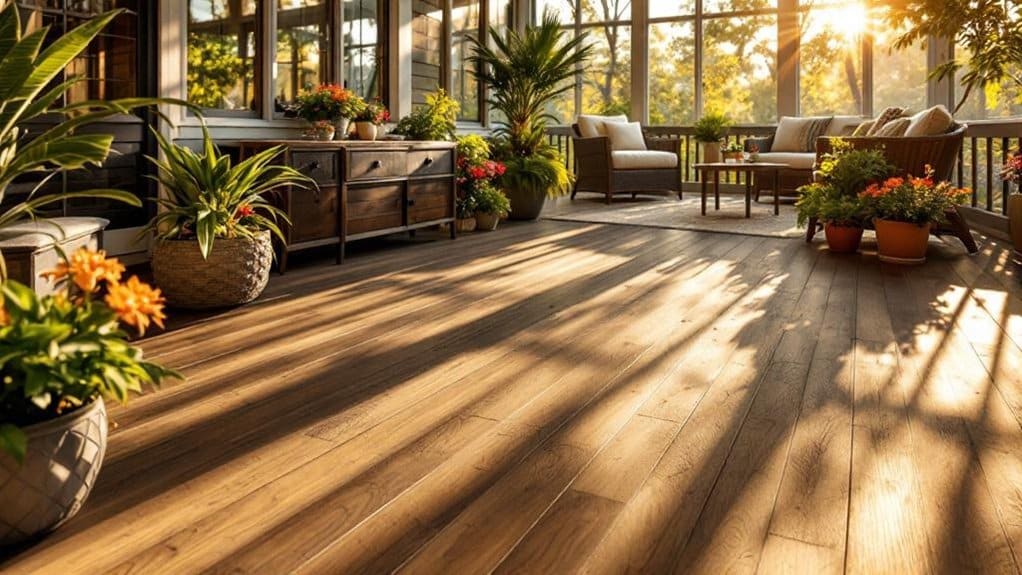
composite decking installation tips

Composite decking has become one of the most popular flooring solutions for Georgia screened porches, and it’s easy to understand why. The composite benefits are substantial: you’ll get exceptional moisture resistance, minimal maintenance requirements, and superior durability against Georgia’s intense UV exposure and humidity cycles.

When considering installation tips, you’ll want to verify adequate ventilation beneath your decking boards to prevent moisture accumulation. Maintain proper spacing between boards—typically 3/16 inch—to accommodate thermal expansion during Georgia’s summer heat spikes. Choose composite products with UV-inhibiting additives specifically engineered for southern climates.

You’ll additionally want to confirm your screened porch’s substructure can handle composite decking’s weight load. Consult a licensed contractor familiar with Georgia’s building codes before committing to your installation plan.

Concrete Flooring for Georgia Sunrooms and Porches

Concrete flooring is one of the most durable and versatile options you’ll find for Georgia sunrooms and porches, withstanding heavy foot traffic, moisture, and the region’s intense heat cycles without warping or degrading. You’ll need to apply a penetrating sealer every one to three years to prevent moisture infiltration and staining, and routine sweeping combined with pH-neutral cleaners will keep the surface in peak condition. Beyond its structural advantages, you can customize concrete with staining, stamping, epoxy coatings, or polishing techniques to achieve a range of aesthetics, from rustic flagstone patterns to sleek, modern finishes.

Concrete Durability Benefits

When it comes to raw durability, few flooring materials can match concrete’s performance in Georgia sunrooms and porches. Concrete withstands heavy foot traffic, furniture weight, and moisture exposure without warping, cracking, or deteriorating under Georgia’s intense heat cycles. You’ll find that properly sealed concrete resists staining, UV degradation, and humidity damage that typically compromise other flooring materials.

Beyond structural strength, concrete aesthetics have evolved considerably, offering polished, stained, and textured finishes that complement any design vision. Furthermore, concrete insulation properties help regulate temperature fluctuations, reducing thermal transfer between your sunroom and the outdoors. This thermal mass characteristic keeps surfaces cooler during Georgia’s brutal summers and retains warmth during cooler months. For clients prioritizing longevity and low maintenance, concrete delivers exceptional performance with minimal ongoing investment.

Sealing and Maintenance Tips

Maximizing concrete’s durability advantages requires consistent sealing and maintenance practices tailored to Georgia’s demanding climate. Apply penetrating sealers every two to three years, prioritizing products specifically formulated for high-humidity environments. Epoxy-based sealing techniques offer superior moisture resistance, protecting your clients’ concrete surfaces against Georgia’s intense heat cycles and seasonal rainfall.

Establish structured maintenance schedules that include quarterly cleaning with pH-neutral solutions, preventing mold and mildew accumulation common in Georgia’s humid conditions. Inspect sealed surfaces biannually for micro-cracks, addressing vulnerabilities before moisture infiltration compromises structural integrity.

Reapply surface sealers immediately following visible wear patterns or after significant weather events. Document each maintenance cycle meticulously, creating verifiable records that demonstrate consistent care and help your clients anticipate future sealing needs efficiently.

Decorative Concrete Design Options

Beyond functional durability, decorative concrete opens a wide range of design possibilities that let you transform Georgia sunrooms and porches into visually distinctive spaces. You can customize surfaces using techniques that reflect your clients’ preferences and complement existing architecture.

Popular decorative patterns and color options include:

  • Stamped concrete – replicates stone, brick, or tile textures at lower installation costs
  • Stained concrete – acid or water-based stains create rich, permanent color options ranging from earthy tones to bold hues
  • Engraved designs – precision-cut decorative patterns add geometric or custom motifs to existing slabs

Each technique works well in Georgia’s climate when properly sealed. Combining decorative patterns with appropriate color options lets you deliver personalized, high-performance floors that genuinely serve your clients’ aesthetic and functional needs.

Is Hardwood Flooring a Realistic Option for Georgia Sunrooms?

Hardwood flooring can work in a Georgia sunroom, but you’ll need to weigh some serious climate-related drawbacks before committing to it. Georgia’s intense heat, humidity, and direct UV exposure accelerate warping, cupping, and fading — all of which compromise flooring longevity greatly. Solid hardwood expands and contracts with seasonal moisture shifts, making it particularly vulnerable in spaces with large windows and limited climate control. If your sunroom isn’t fully conditioned, you’re likely shortening the floor’s lifespan considerably. Engineered hardwood performs better under these conditions but still requires careful installation and maintenance. Before choosing wood, seriously evaluate hardwood alternatives like luxury vinyl plank or porcelain tile, both of which deliver comparable aesthetics with far greater resistance to Georgia’s demanding climate.

Which Georgia Porch Flooring Holds Up the Longest
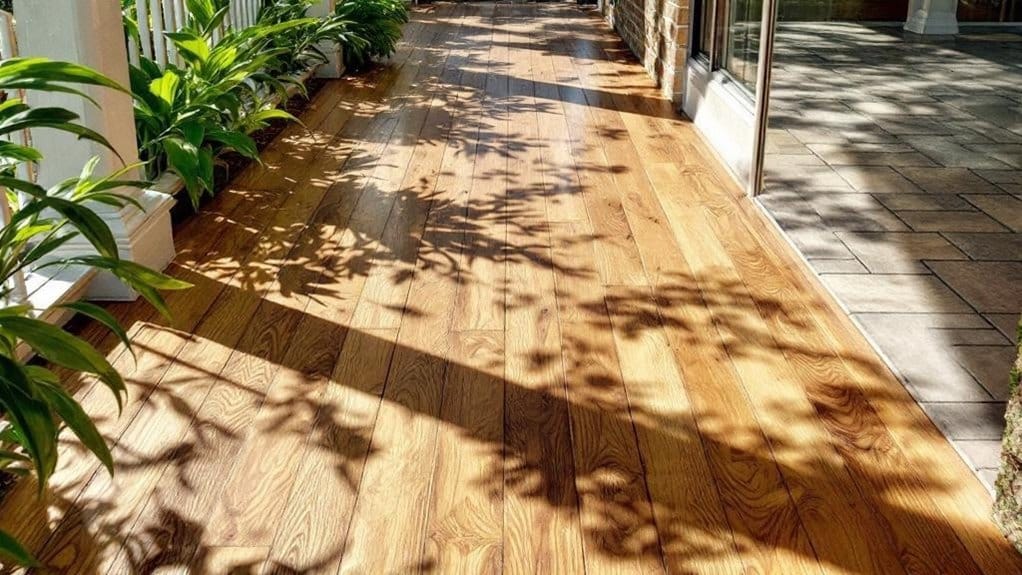
durable porch flooring options

When durability is the priority, porcelain tile and concrete consistently outperform every other porch flooring material in Georgia’s climate. Both handle humidity, UV exposure, and temperature swings without warping or fading. A durability comparison reveals:

  • Porcelain tile: 30+ year lifespan with minimal maintenance challenges
  • Concrete: Decades of performance when sealed every 2–3 years
  • Composite decking: 25-year lifespan but requires annual cleaning to prevent mildew

You’ll spend considerably less time managing maintenance challenges with porcelain or concrete than with wood-based alternatives. Neither material absorbs moisture, which eliminates your risk of rot, swelling, or structural compromise. If you’re building or renovating a sunroom or screened porch for long-term community use, these two options deliver the strongest return on investment and the lowest lifecycle cost.

How Much Does Sunroom and Porch Flooring Cost in Georgia?

Durability drives material selection, but cost determines what’s actually feasible for your project. Budget planning requires understanding Georgia-specific labor and material rates. Here’s a practical cost comparison for common options:

  • Concrete: $2–$6 per sq. ft. installed
  • Porcelain tile: $5–$15 per sq. ft. installed
  • Composite decking: $8–$20 per sq. ft. installed
  • Luxury vinyl plank: $3–$8 per sq. ft. installed
  • Pressure-treated wood: $4–$10 per sq. ft. installed

Georgia’s humidity demands moisture-resistant underlayments, adding $0.50–$1.50 per sq. ft. to your budget. When you’re serving clients or family members who depend on your project decisions, accurate cost forecasting prevents mid-project compromises that sacrifice long-term performance for short-term savings.

What to Look for in a Georgia Sunroom Flooring Installer
qualified sunroom flooring installer

Choosing the right installer separates a long-lasting sunroom floor from a costly replacement project within a few years. Verify credentials, experience, and knowledge of Georgia’s climate-specific installation techniques before signing any contract.

Look for these qualifications in your installer:

  • Proven sunroom experience: Request references from completed sunroom projects specifically, not general flooring installations.
  • Flooring warranties knowledge: Confirm they understand manufacturer warranty requirements, since improper installation voids most flooring warranties immediately.
  • Transparent written estimates: Insist on itemized quotes covering materials, labor, subfloor preparation, and moisture barrier installation.

Ask direct questions about their subfloor assessment process and moisture mitigation strategies. A qualified installer proactively identifies problems before installation begins rather than uncovering them afterward. Your clients deserve professionals who treat every project with that level of diligence.

Frequently Asked Questions

Can I Install Porch Flooring Myself, or Do I Need a Professional?

You can tackle DIY installation for most porch flooring options if you’ve got the right flooring tools. Nevertheless, complex materials like stone or intricate tile patterns often require a professional’s expertise to guarantee a flawless, lasting result.

Are There Eco-Friendly or Sustainable Flooring Options for Georgia Porches?

Like a green forest thriving in Georgia’s heat, you’ve got sustainable choices. You can select bamboo flooring or tiles made from recycled materials—both withstand humidity brilliantly while reducing your environmental footprint considerably.

How Do I Transition Flooring Between My Sunroom and Indoor Living Space?

Use connector strips to bridge different flooring materials between spaces. You’ll want to match thicknesses carefully and consider aesthetic considerations like color and texture continuity, ensuring a seamless, visually unified flow that serves your home’s overall design beautifully.

What Flooring Options Work Best for Sunrooms With Radiant Heating Systems?

For radiant heat systems, you’ll want flooring materials like porcelain tile, natural stone, or engineered hardwood. These conduct heat efficiently, respond quickly to temperature changes, and won’t warp or crack under your sunroom’s thermal cycling demands.

Can Existing Damaged Porch Flooring Be Repaired Instead of Fully Replaced?

Like Lazarus rising, your damaged porch flooring can often be revived. You can apply targeted repair techniques—filling cracks, replacing boards, or refinishing surfaces—before committing to full replacement. Always weigh cost considerations carefully to serve your budget wisely.

Conclusion

Choosing the right porch or sunroom flooring in Georgia isn’t just an aesthetic decision—it’s a structural one. Think of your floor like a car’s paint job in a coastal town: without the right protection, the salt air wins eventually. Georgia’s humidity and UV load are relentless, and studies show moisture-related flooring failures account for nearly 40% of premature replacements. Match your material to your specific exposure, and you’ll get decades instead of years.

The post The Best Flooring Options for Georgia Sunrooms and Screened Porches appeared first on Flooring Specialist.

source https://myflooringspecialist.com/best-flooring-options-georgia-sunrooms-screened-porches/

Sunday, 7 June 2026

Best Flooring for Rental Properties in Warner Robins

For Warner Robins rental properties, luxury vinyl plank (LVP) is your best overall choice. It’s durable, water-resistant, and handles Georgia’s humid climate without warping or swelling. Tile works well in bathrooms and kitchens, while engineered wood outperforms solid hardwood in moisture-prone areas. Carpet still has a place in bedrooms, but avoid it in high-traffic zones. Each flooring type comes with trade-offs worth understanding before you invest a single dollar.

Key Takeaways

  • Luxury vinyl plank (LVP) is the top choice for Warner Robins rentals, offering durability, moisture resistance, and easy maintenance at $1–$3 per square foot.
  • Warner Robins’ humid climate makes moisture-resistant flooring essential, as improper materials risk warping, mold, and costly replacements between tenant cycles.
  • Tile flooring resists humidity and temperature fluctuations, making it ideal for kitchens, bathrooms, and other moisture-prone areas in rental properties.
  • Engineered wood outperforms solid hardwood in Georgia’s humidity, providing aesthetic appeal with superior moisture resistance and lower upfront installation costs.
  • Carpet should be limited to bedrooms only, as high-traffic and humid areas accelerate wear, increasing replacement costs for landlords.

Luxury Vinyl Plank: The Top Flooring Choice for Warner Robins Rentals

durable affordable luxury flooring

When it comes to flooring for Warner Robins rental properties, luxury vinyl plank (LVP) stands out as the clear frontrunner. You’ll appreciate its luxury durability, as it withstands heavy foot traffic, moisture, and everyday wear that tenants inevitably bring. LVP’s vinyl aesthetics mimic hardwood beautifully, giving your tenants an upscale living experience without the premium price tag. You can install it in kitchens, bathrooms, and living areas alike since it’s water-resistant and easy to clean. When a tenant moves out, minor scratches and scuffs won’t require full replacement — just swap individual planks. Minimal maintenance requirements mean tenants can keep the floors looking pristine with just regular sweeping and occasional mopping. For landlords committed to providing quality housing while protecting their investment, LVP consistently delivers the best balance of performance, appearance, and long-term value.

The 4 Traits Every Durable Rental Floor Needs in Warner Robins

Choosing the right floor for your Warner Robins rental comes down to 4 essential traits: durability, moisture resistance, easy maintenance, and cost-effectiveness. Understanding these durability factors helps you protect your investment while serving tenants well.

  1. Durability – Withstands heavy foot traffic and resists scratches from everyday tenant use.
  2. Moisture Resistance – Handles Georgia’s humidity and accidental spills without warping or swelling.
  3. Easy Maintenance – Simplifies your maintenance tips between tenants, requiring only basic cleaning routines.
  4. Cost-Effectiveness – Balances upfront installation costs against long-term replacement savings.

Prioritizing these traits guarantees your flooring performs reliably across multiple tenant cycles. When your rental floors are built to last, you’re reducing turnover costs and providing tenants with a comfortable, well-maintained living space. Luxury vinyl plank flooring is particularly well-suited for rental properties because its multiple-layer composition provides the durability and water-resistance needed for Georgia’s climate while remaining budget-friendly.

Rental Flooring Costs Per Square Foot in Warner Robins

affordable rental flooring options

When choosing flooring for your Warner Robins rental, you’ll want to balance upfront installation costs against long-term durability. On average, installation costs range from $1–$3 per square foot for vinyl plank, $3–$7 for laminate, and $6–$12 for hardwood, with materials adding considerably to those figures. If you’re working with a tight budget, luxury vinyl plank (LVP) and laminate are your strongest options, offering durability and tenant appeal without overspending. LVP is particularly well-suited for rental properties because it provides greater water resistance than laminate, making it ideal for moisture-prone areas where tenants may cause accidental spills or damage.

Average Flooring Installation Costs

Understanding the cost of flooring installation is essential for budgeting your Warner Robins rental property. Several installation factors influence your final expenses, so use these cost comparisons to plan effectively:

  1. Labor costs typically run $2–$5 per square foot, depending on complexity and material type.
  2. Subfloor preparation adds $1–$3 per square foot if repairs or leveling are necessary.
  3. Material removal and disposal costs $0.50–$1.50 per square foot for existing flooring tearout.
  4. Room size and layout affect total pricing, as irregular spaces require additional cutting and time.

Combining these factors with your material costs gives you a realistic total budget. Always request multiple contractor quotes to guarantee you’re maximizing value for your tenants while protecting your investment. Professional installation typically results in a higher-quality finish compared to DIY approaches, which can save you money on future repairs and tenant complaints.

Budget-Friendly Flooring Options

Four budget-friendly flooring options stand out for Warner Robins rental properties, each balancing upfront costs with long-term durability. You’ll find that cost-effective materials like luxury vinyl plank ($2–$5/sq ft), laminate ($1–$3/sq ft), ceramic tile ($1–$4/sq ft), and standard carpet ($1–$3/sq ft) deliver reliable performance without straining your budget. Luxury vinyl tile is particularly suitable for rental properties because it is water-resistant and scratch-resistant, making it ideal for managing tenant wear and tear.

When applying installation tips, you’ll maximize savings by purchasing materials in bulk, reducing per-unit costs considerably. Choose floating-floor systems for vinyl and laminate, since they’re faster to install and require minimal subfloor preparation. Prioritize tiles in high-traffic areas like kitchens and bathrooms, where moisture resistance matters most.

These selections help you serve tenants well while protecting your investment, keeping vacancy-related replacement costs manageable throughout your property’s lifespan.

Which Rooms in Your Rental Need the Toughest Flooring?

Not all rooms in your rental property take the same beating, so it makes sense to prioritize your flooring choices based on foot traffic and function. Focus your toughest materials where tenants live hardest.

  1. Kitchen – Kitchen durability matters most here; choose waterproof luxury vinyl or tile to handle spills and heavy use.
  2. Bathrooms – Bathroom moisture destroys weak flooring fast; use porcelain tile or waterproof vinyl to prevent warping and mold.
  3. Entryways – Dirt, debris, and constant foot traffic demand scratch-resistant, easy-to-clean surfaces.
  4. Living Rooms – High-traffic areas need durable flooring that holds up through multiple tenant turnovers without showing excessive wear.

Matching the right flooring to each room protects your investment and keeps maintenance costs manageable for Warner Robins landlords. Waterproof flooring options like luxury vinyl plank and porcelain tile are particularly valuable in rental properties because they resist the moisture damage and daily wear that come with frequent tenant transitions.

Does Tile Hold Up in Georgia’s Heat and Humidity?

tile withstands georgia s climate

If you’re managing rental properties in Georgia, you’ll find that tile is one of the most climate-resilient flooring options available, handling the state’s intense heat and humidity far better than wood or laminate. Tile doesn’t absorb moisture, won’t warp, and stays dimensionally stable even when temperatures spike. The one vulnerability you’ll need to watch is grout, which can crack or harbor mildew over time if you don’t seal it properly and schedule routine maintenance. For rental properties in high-traffic areas like entryways and bathrooms, tile’s natural resistance to moisture and stains makes it an ideal long-term investment that minimizes costly repairs and turnover expenses.

Tile’s Climate Resilience

Georgia’s heat and humidity put flooring materials through a serious test, but tile passes with flying colors. When you’re choosing flooring for your Warner Robins rental, tile’s climate resilience makes it a top contender.

Here’s why tile handles Georgia’s conditions so well:

  1. It doesn’t expand or contract in fluctuating temperatures like wood does.
  2. Moisture resistance prevents warping, mold, and mildew growth.
  3. Proper tile installation with waterproof grout seals out humidity effectively.
  4. Routine tile maintenance keeps surfaces looking fresh through seasonal changes.
  5. A textured finish on tile surfaces helps prevent slipping in moisture-prone bathroom environments, which is especially important in humid Georgia climates.

You’re investing in flooring that won’t buckle under Georgia’s brutal summers or unpredictable weather patterns. Your tenants benefit from a durable, comfortable surface, and you’ll avoid costly repairs that other flooring materials often demand in this climate.

Humidity and Grout Durability

Tile holds up remarkably well in Georgia’s heat and humidity, but grout is where most landlords run into trouble. Tile itself offers excellent humidity resistance, making it a smart choice for Warner Robins rentals. Nevertheless, grout is porous and absorbs moisture, which leads to staining, cracking, and mold growth over time.

To protect your investment and your tenants, seal the grout before move-in and schedule regular grout maintenance between tenancies. Epoxy grout is worth considering since it’s far more moisture-resistant than traditional cement-based options, and porcelain tile’s imperviousness to water absorption pairs exceptionally well with epoxy for maximum protection against Georgia’s humidity. You’ll likewise want to choose wider tiles, which reduce the number of grout lines and minimize maintenance demands.

When you maintain grout properly, tile becomes one of the most durable, tenant-friendly flooring choices available in Central Georgia’s challenging climate.

Hardwood vs. Engineered Wood in Warner Robins Rentals

When choosing between hardwood and engineered wood for your Warner Robins rental, you’ll find that each option carries distinct trade-offs in cost, durability, and long-term value.

Consider these key factors:

  1. Hardwood maintenance demands regular refinishing and careful moisture monitoring, increasing long-term upkeep costs.
  2. Engineered wood advantages include superior humidity resistance, making it better suited for Georgia’s climate.
  3. Engineered wood installs faster and costs less upfront, reducing tenant turnover expenses.
  4. Solid hardwood offers refinishing longevity but risks warping under Warner Robins’ seasonal humidity swings.

Hardwood flooring improves indoor air quality compared to engineered alternatives, which can be an important selling point for health-conscious renters.

Engineered wood typically delivers stronger returns for rental investors prioritizing durability and lower maintenance demands. On the other hand, if your property targets premium renters, solid hardwood’s aesthetic appeal may justify the additional hardwood maintenance investment.

Is Carpet Still Worth Installing in Warner Robins Rentals?

selective carpet installation benefits

While engineered wood and hardwood dominate conversations about Warner Robins rental flooring, carpet still holds a place in the market—though its value depends heavily on where and how you use it.

Tenant preferences vary, but many renters with families or young children appreciate carpet in bedrooms for comfort and noise reduction. It’s not the best choice for high-traffic areas or humid spaces, where it deteriorates quickly.

Carpet maintenance demands more from both you and your tenants—regular vacuuming, professional cleaning between tenancies, and prompt stain treatment are non-negotiable. Replacement costs add up faster than with hard surfaces.

Consider using carpet selectively: bedrooms only, neutral colors, and mid-grade quality. That approach balances tenant comfort with manageable upkeep, helping you protect your investment without sacrificing tenant satisfaction.

What Flooring Upgrades Actually Raise Rent and Attract Better Tenants

Not every flooring upgrade translates into higher rent or better tenant retention—but the right ones do. Understanding tenant preferences and local market expectations helps you invest wisely.

Flooring upgrades that deliver real returns:

  1. Luxury vinyl plank (LVP) — meets aesthetic appeal and maintenance concerns while justifying higher rent through durability.
  2. Neutral-toned hard surfaces — align with current flooring trends and attract quality tenants who value clean, modern interiors.
  3. Consistent flooring throughout — strengthens visual flow, boosting perceived value and supporting your cost-benefit analysis.
  4. Upgraded entryway and kitchen floors — these high-traffic zones carry the most weight in first impressions and rental upgrades decisions.

When you match your investment to what renters actually want, you improve tenant retention and your bottom line simultaneously.

How to Choose Rental Flooring That Looks Great Without Overspending

affordable durable flooring choices

Knowing which upgrades move the needle is only half the battle—you additionally need to know how to get that look without blowing your budget. Start by prioritizing high-traffic areas like living rooms and hallways, where affordable aesthetics matter most to prospective tenants. Choose mid-grade luxury vinyl plank over premium options—you’ll get stylish durability without the premium price tag. Buy in bulk when possible, and stick to neutral tones that appeal broadly, reducing vacancy time between tenants. Avoid trendy patterns that date quickly and require costly replacements. In Warner Robins’ humid climate, moisture-resistant materials likewise prevent expensive repairs down the road. Work with local flooring suppliers who offer contractor pricing, and always factor installation costs into your total budget before committing to any product.

Flooring Mistakes Warner Robins Landlords Keep Making

Even Warner Robins landlords with the best intentions make costly flooring mistakes that cut into their profits. You might choose flooring based on how it looks in a showroom, only to watch it warp, scratch, or stain within months under real tenant use. You likewise can’t afford to overlook Warner Robins’ humid subtropical climate, which accelerates moisture damage in flooring materials that perform fine in drier regions.

Prioritizing Aesthetics Over Durability

When choosing flooring for your rental property, it’s tempting to prioritize style over substance—but that mindset will cost you. Chasing design trends and aesthetic appeal without considering durability leads to frequent replacements and higher costs.

Here’s what happens when appearance drives your decisions:

  1. Delicate materials scratch, stain, and wear quickly under tenant use
  2. Trendy styles become outdated, hurting market perception within years
  3. High-maintenance finishes frustrate tenants and increase your workload
  4. Poor durability overrides any initial aesthetic appeal, lowering tenant satisfaction

Smart landlords balance tenant preferences with practical performance. Choose flooring that looks attractive *and* withstands real-world conditions. Your tenants deserve quality, and your investment deserves protection. Durability and design aren’t mutually exclusive—you just need to prioritize wisely.

Ignoring Local Climate Impacts

Warner Robins landlords face a climate that’s unforgiving to the wrong flooring choices—hot, humid summers and mild but moisture-prone winters create conditions that accelerate warping, swelling, and mold growth beneath your floors. Ignoring the local climate when selecting materials directly threatens flooring longevity and increases your maintenance costs. Solid hardwood, for example, absorbs moisture readily and expands unpredictably in Georgia’s humidity. Instead, choose moisture-resistant options like luxury vinyl plank or porcelain tile, which handle temperature and humidity fluctuations without compromising structural integrity. Install moisture barriers beneath flooring in ground-level and basement units to prevent subfloor damage. When you match your flooring choice to Warner Robins’ specific climate demands, you protect your investment, reduce tenant complaints, and extend the lifespan of every floor in your rental.

Frequently Asked Questions

How Long Does Rental Flooring Installation Typically Take in Warner Robins?

You’ll typically complete your installation timeline in one to three days, depending on square footage. Staying current with flooring trends guarantees you’re choosing durable, quick-install options that’ll minimize vacancy time and better serve your Warner Robins tenants.

Can Tenants Be Charged for Flooring Damage Beyond Normal Wear?

Like a double-edged sword, tenant responsibility cuts both ways—you can charge tenants for damage beyond normal wear. Document flooring types thoroughly, and you’ll have solid grounds to deduct repair costs from security deposits.

What Flooring Options Work Best for Pet-Friendly Warner Robins Rentals?

For pet-friendly rentals, you’ll want luxury vinyl plank or tile—both are durable materials that resist scratches and moisture. Follow these maintenance tips: clean spills immediately and use entry mats to extend your flooring’s lifespan considerably.

Are There Local Warner Robins Flooring Contractors Who Specialize in Rentals?

Like finding a diamond in the rough, you’ll uncover Warner Robins contractors who specialize in rental upgrades and follow current flooring trends. They’ll guide you toward durable, cost-effective solutions that truly serve your tenants’ needs.

Does Warner Robins Have Any Codes Regulating Rental Property Flooring Standards?

Warner Robins doesn’t have specific flooring codes, but you’ll still need to meet Georgia’s rental property regulations and flooring safety standards. Guarantee your floors remain structurally sound, hazard-free, and habitable to protect your tenants effectively.

Conclusion

Think of your rental flooring like a car’s tires — the wrong choice leaves you stranded with costly replacements. Warner Robins landlords who install luxury vinyl plank report spending 40% less on flooring repairs annually. You’ve now got the roadmap to choose durable, cost-effective floors that attract quality tenants and protect your investment. Stop guessing and start installing flooring that actually works for your Warner Robins rental properties.

The post Best Flooring for Rental Properties in Warner Robins appeared first on Flooring Specialist.

source https://myflooringspecialist.com/best-flooring-for-rental-properties-in-warner-robins/

Friday, 5 June 2026

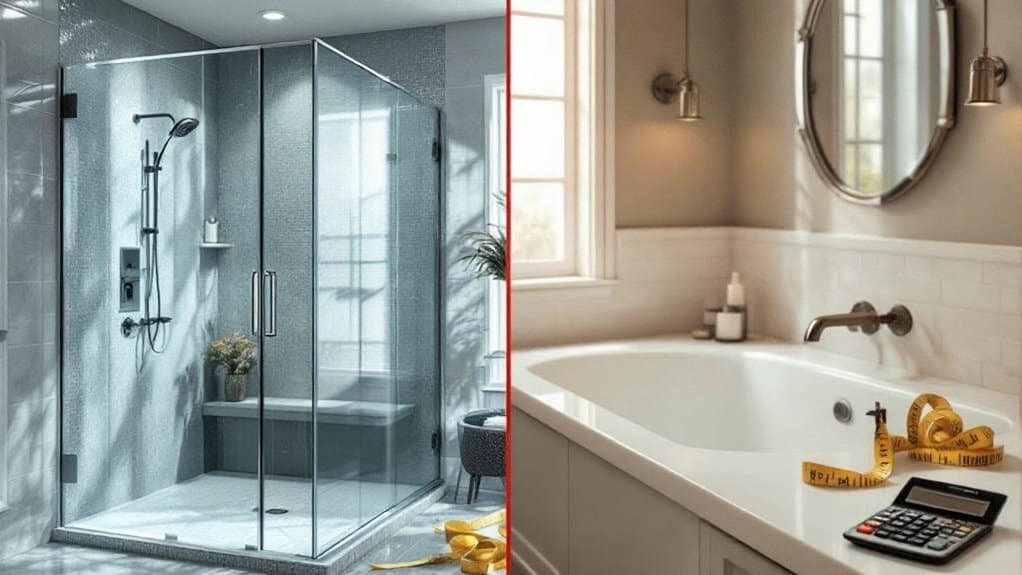
Custom Shower vs. Tub Conversion: What’s the Real Cost Difference in Middle Georgia?

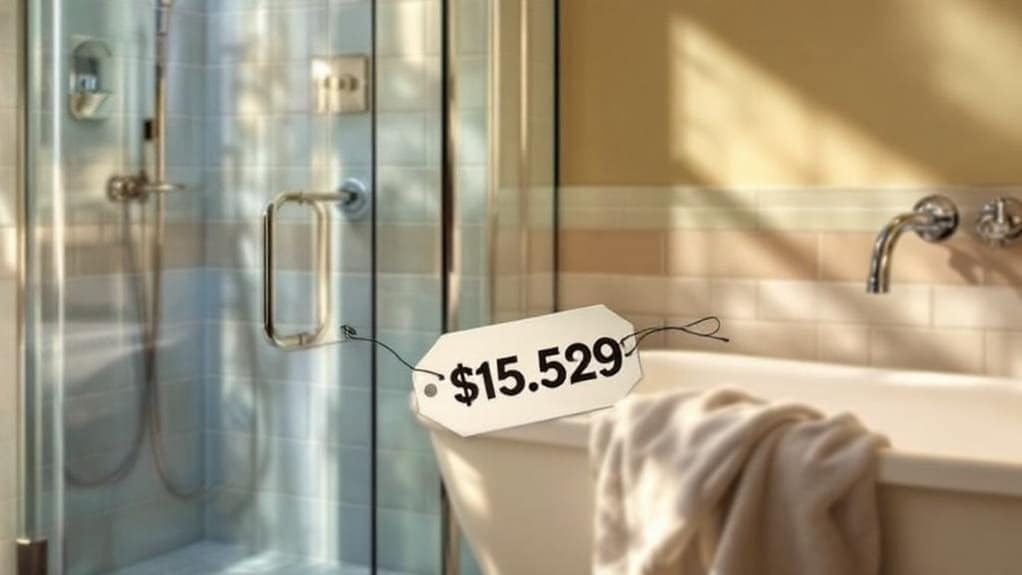
If you’re weighing options in Middle Georgia, expect to pay $1,500–$5,000 for a basic tub-to-shower conversion and $3,500–$15,000 for a custom tile shower. That gap grows once you factor in plumbing rerouting, waterproofing systems, and premium materials like porcelain or natural stone. Skilled labor in Macon and Warner Robins runs $45–$85 per hour, and hidden costs like code compliance and water damage repairs can surprise you. The full breakdown ahead will sharpen your budget considerably.

Key Takeaways

  • Custom showers in Middle Georgia typically cost $3,500–$15,000, while tub-to-shower conversions range from $1,500–$5,000.
  • Plumbing relocation adds $500–$1,500 to either project, depending on existing infrastructure and required rerouting complexity.
  • Hidden costs like water damage repairs and code compliance upgrades can significantly increase budgets for both project types.
  • Contractor labor in Middle Georgia runs $45–$85 per hour, lower than Atlanta rates, helping offset premium material costs.
  • Custom showers yield stronger resale ROI when at least one functional bathtub is retained elsewhere in the home.

Custom Shower vs. Tub Conversion: Which Actually Costs Less?

cost comparison for renovations

When weighing a custom shower against a tub conversion, the true cost difference comes down to more than just materials — it’s about scope, labor, and what your existing bathroom can actually support. In Middle Georgia, custom showers typically run higher upfront since shower aesthetics require tile work, custom enclosures, and precise waterproofing. Tub conversions, on the other hand, carry their own hidden costs — plumbing reconfiguration, structural reinforcement, and fixture upgrades. You’ll need to evaluate tub functionality if you’re serving households with elderly residents or young children who rely on soaking access. Neither option is universally cheaper. Your bathroom’s current layout, plumbing condition, and intended use determine which investment delivers better long-term value. Consider implementing Schluter waterproofing systems to minimize moisture buildup risks and ensure durability regardless of which option you choose. Getting an on-site assessment gives you accurate numbers before committing to either direction.

What a Tub-to-Shower Conversion Costs in Middle Georgia

Most tub-to-shower conversions in Middle Georgia fall between $1,500 and $5,000, though complex projects can push past $10,000 depending on scope. Understanding what drives these costs helps you serve your household’s real needs.

Three factors that shape your final price:

  1. Plumbing relocation — Moving drain lines in older Macon-area homes adds $500–$1,500 instantly.
  2. Accessibility upgrades — Adding grab bars or a zero-threshold entry for aging family members increases cost but maximizes shower convenience for everyone.
  3. Tile and fixture selection — Premium materials can double your baseline budget quickly.

You’re not just trading tub benefits for a walk-in shower — you’re making a long-term investment in your home’s functionality. Investing in waterproofing products during your shower conversion protects against gradual moisture damage and mold. Knowing these numbers upfront prevents costly surprises during your Middle Georgia renovation.

Custom Shower Installation Costs in Macon and Warner Robins

custom shower installation costs

Custom shower installations in Macon and Warner Robins typically run between $3,500 and $15,000, with most mid-range projects landing around $7,000–$9,000 once labor, materials, and waterproofing are factored in. Current shower design trends—like curbless entries, large-format tile, and frameless glass enclosures—push costs toward the higher end. You’ll additionally encounter installation challenges specific to Middle Georgia homes, particularly older Macon properties with outdated plumbing configurations or uneven subfloor conditions that require corrective work before tile can go down. Warner Robins new construction tends to offer cleaner starting points, but custom layouts still demand precision and skilled labor. Incorporating Schluter waterproofing technology into your project enhances durability and prevents moisture-related issues that can compromise your investment over time. Understanding these regional variables helps you budget realistically and serve your household’s long-term needs without overspending on features that don’t align with your home’s structure or resale potential.

Plumbing, Waterproofing, and Tile: What Actually Separates the Two Prices

The price gap between a tub conversion and a custom shower build comes down to three cost drivers: plumbing complexity, waterproofing systems, and tile work.

Here’s what separates the two in Middle Georgia:

  1. Plumbing standards — Custom showers often require rerouting drain lines, adding valve bodies, and meeting local code requirements that tub swaps don’t trigger.
  2. Waterproofing techniques — Schluter systems or liquid-applied membranes cost more than standard tub surrounds but protect your client’s home for decades.
  3. Tile options and installation methods — Large-format porcelain, linear drains, and custom layouts demand skilled labor and precise setting time.

You’re not just pricing materials — you’re pricing protection, longevity, and craftsmanship that genuinely serves the families living in those Macon and Warner Robins homes. Porcelain tiles provide superior water resistance in wet bathroom environments, making them a preferred choice for long-term durability and mold prevention in custom shower installations.

Why Custom Shower Materials Cost More Than Conversion Kits

custom showers premium materials

When you choose a custom shower, you’re paying for materials engineered to perform — large-format porcelain slabs, linear drains, and niche inserts that pre-fabricated conversion kits simply can’t match in durability or design precision. Those premium materials demand skilled tile setters, waterproofing specialists, and finish carpenters who charge accordingly, often pushing labor alone past $1,500–$3,000 depending on your local market. Investing in moisture-resistant materials like waterproof backer boards and specialized grouts ensures your shower withstands decades of use without mold growth or structural compromise. Understanding both the material grade and the craftsmanship required helps you accurately compare a custom build against a conversion kit without underestimating what you’re actually getting — or giving up.

Premium Material Quality Explained

Material quality is where the price gap between custom showers and tub conversion kits becomes most apparent. Premium materials aren’t just about aesthetics—they’re about serving your household for decades without costly repairs.

Here’s what separates premium materials from conversion kits:

  1. Porcelain and natural stone resist cracking and staining far longer than acrylic inserts common in conversion kits.
  2. Waterproof membrane systems used in custom builds prevent water intrusion that damages your Middle Georgia home’s subfloor structure.
  3. Custom grout and sealants offer superior mold resistance in Georgia’s humid climate, protecting the families you care for daily.

Installation considerations likewise matter—premium materials require skilled labor and precise techniques, which your household deserves. Large format tiles used in premium custom showers create a seamless appearance that minimizes grout lines, further enhancing durability and reducing maintenance concerns. You’re investing in durability, safety, and long-term peace of mind.

Labor And Craftsmanship Costs

Beyond premium materials, skilled labor drives much of the cost difference between custom showers and tub conversion kits. In Middle Georgia, licensed tile setters, waterproofing specialists, and plumbers each contribute distinct expertise to a custom shower build. Their labor quality reflects years of technical training and hands-on experience that conversion kit installations simply don’t require.

Tub conversions use prefabricated acrylic panels designed for quick installation, reducing skilled hours considerably. Custom showers demand precise measurements, proper slope engineering, membrane application, and detailed grout work—all requiring strict craftsmanship standards. Professional installation with KERDI waterproofing membranes ensures that your shower system remains watertight and mold-resistant for years to come.

When you’re renovating a home to serve elderly parents or create an accessible space for others, cutting corners on labor risks costly water damage and structural failure. You’re investing in expertise, not just appearance.

What Contractors in Middle Georgia Actually Charge

When you start calling contractors in Middle Georgia — think Macon, Warner Robins, and Milledgeville — you’ll find labor rates typically run between $45 and $85 per hour, noticeably lower than Atlanta metro rates but still significant when a custom tile shower requires 20 to 40 hours of skilled work. A straightforward tub-to-shower conversion kit installation often quotes out at $800 to $1,500 in total labor, while a fully custom shower build with waterproofing, tile setting, and niche framing can push your contractor invoice to $3,000 to $6,000 or more. Comparing multiple local quotes reveals a consistent pattern: you’re paying a premium for the custom work’s complexity, not just the materials discussed earlier. The inclusion of safety features like grab bars and non-slip flooring in your custom design will add to the overall project cost but provide essential accessibility benefits for all family members.

Local Labor Rate Breakdown

Labor costs in Middle Georgia don’t follow national averages, and that gap can considerably affect your project budget. Understanding the regional pricing structure helps you advocate for your clients and neighbors more effectively.

Middle Georgia’s labor market typically produces these hourly contractor rates:

  1. General contractors charge $45–$75/hour, reflecting local cost-of-living realities
  2. Licensed plumbers run $85–$110/hour, given specialized licensing requirements
  3. Tile installers average $35–$60/hour depending on complexity and experience

These figures sit noticeably below national benchmarks, which means your project dollar stretches further here than in Atlanta or Savannah. Nevertheless, skilled tradespeople remain in genuine demand across Macon, Warner Robins, and surrounding counties. For specialized projects like custom tile shower installation, securing quality labor early protects both your timeline and the people depending on your completed project.

Project Quotes Compared

Knowing what local tradespeople charge per hour only tells part of the story—real project quotes bundle labor, materials, fixtures, and overhead into a single number that can look very different from your line-item estimates. In Middle Georgia, you’ll typically see tub-to-shower conversions quoted between $2,500 and $6,000, while custom tile showers range from $5,000 to $12,000 or more. Your project scope drives that spread considerably. A basic conversion with a prefab pan and standard fixtures sits at the lower end, but once your design preferences shift toward large-format tile, frameless glass, or built-in niches, quotes climb fast. Incorporating Schluter waterproofing products into your material selections can add upfront cost but reduces long-term moisture risks and potential callbacks. Always collect three written bids, confirm what’s included, and watch for exclusions like waterproofing, permits, and demolition disposal that contractors sometimes itemize separately.

Hidden Costs Most Homeowners Don’t Budget For

budget for unexpected renovation costs

Hidden costs can quietly push your shower or tub conversion budget well beyond your initial estimate if you’re not prepared for them. Middle Georgia homes often reveal renovation pitfalls once walls open up—unexpected expenses that no quote anticipates.

Watch for these three budget planning surprises:

  1. Water damage repairs — Rotted subfloors or mold behind walls dramatically increase installation fees once demolition begins.
  2. Code compliance upgrades — Older plumbing may require updates, turning simple material choices into costly mandates.
  3. Long-term maintenance costs — Premium design preferences like custom tile demand ongoing sealing and upkeep expenses.

Understanding these hidden costs before signing a contract protects your family’s investment and guarantees you’re serving your household’s genuine long-term needs—not just chasing the lowest initial price.

Does a Custom Shower Add More Resale Value in Middle Georgia?

If you’re selling a home in Middle Georgia, understanding local buyer preferences is critical to maximizing your return on investment. Macon-area buyers, particularly in family-oriented neighborhoods, still place strong value on at least one functional bathtub, which means a full tub-to-shower conversion can actually hurt your resale appeal. Nonetheless, adding a custom shower to a master bath while retaining a tub elsewhere typically yields a stronger ROI by aligning with what local real estate data consistently shows buyers want.

Local Buyer Preferences

When it comes to resale value in Middle Georgia, buyer preferences lean heavily toward custom showers over tub-shower combos—but the impact depends on your home’s price point and neighborhood. Understanding local buyer demographics and design preferences helps you make smarter renovation decisions.

Middle Georgia buyers typically respond to:

  1. Spa-like walk-in showers — Buyers in Warner Robins and Macon’s mid-range market emotionally connect with accessible, modern designs.
  2. Retained tub in multi-bathroom homes — Families strongly prefer at least one tub for children’s bathing needs.
  3. Tile quality and craftsmanship — Buyers notice premium finishes immediately, associating them with overall home care.

You’ll serve future buyers best by matching your upgrade to the neighborhood’s expectations rather than personal taste alone.

Return On Investment

Knowing what Middle Georgia buyers want is only half the equation—the other half is whether acting on that knowledge actually puts money back in your pocket. Local return trends show that converting a tub to a custom shower in a single-bathroom home rarely recoups full project costs—typically 60–70% at resale. Nevertheless, in homes with two or more bathrooms, that figure climbs closer to 80%. Your investment timelines matter greatly here. If you’re planning to sell within two to three years, a mid-range conversion keeps costs manageable while still appealing to buyers. If you’re staying longer, premium fixtures and tilework add livability value beyond resale figures alone. Always weigh both scenarios before committing to a scope and budget.

How Bathroom Size and Layout Should Drive Your Decision

optimize bathroom space wisely

Your bathroom’s square footage and existing layout are the two biggest factors that should drive your conversion decision before you even start comparing contractor bids. Middle Georgia homes vary dramatically in bathroom dimensions, and ignoring layout optimization leads to costly mistakes.

Consider these realities before deciding:

  1. Bathrooms under 40 square feet rarely accommodate a custom shower without sacrificing functional movement space for family members you serve daily.
  2. Existing plumbing placement determines whether your conversion requires minor adjustments or expensive drain relocation.
  3. Door swing direction and window positioning directly impact whether a tub-to-shower conversion feels spacious or claustrophobic for everyone using it.

Measure twice, plan once — your family deserves a bathroom that actually works.

How to Find a Reliable Shower Contractor in Middle Georgia

Finding a reliable shower contractor in Middle Georgia isn’t as straightforward as a quick Google search — you’ll want to vet candidates against specific criteria that separate skilled local tradespeople from low-bid operators who cut corners on waterproofing and drainage. Verify contractor credentials first: confirm active Georgia state licensing, liability insurance, and documented tile or waterproofing certifications. Request references from completed local projects specifically involving custom showers or tub conversions, not general remodels. Discuss project timelines upfront — a qualified contractor provides written schedules covering demo, rough plumbing, waterproofing inspection, tile installation, and fixture hookup. Ask how they handle permit pulls in Bibb, Houston, or Jones County. Contractors who communicate clearly about inspections and phased deadlines typically deliver installations that protect both your client and your property long-term.

Frequently Asked Questions

Can I Finance a Custom Shower Installation Through Local Middle Georgia Contractors?

Yes, you can finance a custom shower installation through local contractors in Middle Georgia. Many local contractors offer flexible financing options, letting you manage costs while still getting the quality shower upgrade your home deserves.

How Long Does a Tub-To-Shower Conversion Typically Take to Complete?

85% of conversions finish in 1-2 days! Your conversion timeline depends on project efficiency—most Middle Georgia contractors complete standard tub-to-shower transformations within 8-16 hours, letting you serve your household’s needs again quickly.

Are Permits Required for Shower Conversions in Bibb or Houston County?

Yes, you’ll need permits for shower conversions in Bibb and Houston County. Local regulations require pulling permits before work begins, and permit fees vary by jurisdiction, so you should contact each county’s building department to confirm current requirements.

What Warranties Do Middle Georgia Contractors Typically Offer on Shower Installations?

Want real protection? Middle Georgia contractors typically offer you one-to-two-year installation guarantees covering labor defects. You’ll additionally find warranty coverage on materials ranging from five to lifetime, depending on the manufacturer and your chosen contractor’s reputation.

Can a Walk-In Shower Be Added Without Completely Gutting the Bathroom?

Yes, you can add walk-in accessibility without a full gut renovation. Skilled Middle Georgia contractors assess your existing bathroom design, often retrofitting shower systems within current footprints, saving you significant demolition costs while still achieving functional, beautiful results.

Conclusion

You’d think choosing between a tub conversion and a custom shower would be simple—just pick the cheaper option. But in Middle Georgia’s market, “cheaper upfront” rarely means “cheaper overall.” A conversion kit saves you money today while potentially costing you resale value tomorrow. A custom shower demands more now but delivers lasting returns in Macon and Warner Robins neighborhoods where buyers notice quality. Know your budget, know your timeline, and choose accordingly.

The post Custom Shower vs. Tub Conversion: What’s the Real Cost Difference in Middle Georgia? appeared first on Flooring Specialist.

source https://myflooringspecialist.com/custom-shower-vs-tub-conversion-cost-difference-middle-georgia/

Wednesday, 3 June 2026

7 Red Flags When Hiring a Flooring Contractor in Middle Georgia

When hiring a flooring contractor in Middle Georgia, you’ll want to watch for these seven red flags: they can’t prove licensing or insurance, they have no verifiable local references, they skip required permits, they give vague or verbal-only estimates, they demand full payment upfront, they pressure you to decide immediately, or they won’t provide a written contract with a start date. Keep these warning signs in mind as we break down each one in detail.

Key Takeaways

  • Contractors who hesitate or refuse to provide proof of licensing and insurance are serious red flags that expose homeowners to significant liability.
  • Inability or unwillingness to provide at least three verifiable local references signals unreliable workmanship and a questionable reputation.
  • Refusing to provide written, itemized estimates or pressuring verbal agreements before documentation indicates a lack of transparency and trustworthiness.
  • Requesting full upfront payment before work begins is a major warning sign of poor reliability and financial risk.
  • Contractors who dismiss permit requirements put homeowners at risk of fines, failed inspections, and diminished property value.

They Can’t Prove They’re Licensed and Insured as a Flooring Contractor

verify license and insurance

Any reputable flooring contractor should be able to provide proof of both licensing and insurance without hesitation. In Middle Georgia, you’ll want to confirm their license verification through the state’s contractor licensing board before any work begins. If a contractor hesitates or makes excuses, that’s a serious red flag.

Insurance coverage is similarly critical. Without it, you’re potentially liable for accidents or property damage that occur on your property. Ask to see their general liability and workers’ compensation certificates directly.

Legitimate contractors keep these documents current and readily available since they understand how important protecting your home and family is. Look for contractors with A+ BBB rating standards that demonstrate their commitment to customer satisfaction and professional excellence. Don’t let pressure or a lower bid convince you to skip this step — it could cost you considerably more in the long run.

They Have No Local References You Can Actually Verify

Any reputable flooring contractor should readily provide you with local references from recent projects in your area. When you reach out to those references, you’re looking for consistent, verifiable feedback about the contractor’s workmanship, reliability, and professionalism. If a contractor hesitates, makes excuses, or offers references you can’t actually contact, that evasiveness is a serious warning sign that something’s off. Look for contractors with established credentials like BBB accreditation that demonstrate their commitment to customer satisfaction and accountability.

Verifying Local Contractor References

When a flooring contractor can’t provide local references you can actually call and verify, that’s a serious red flag. A strong contractor reputation is built on real relationships with real customers in your community. Reference checks aren’t just a formality — they’re your clearest window into how a contractor actually performs.

Ask for at least three local references, then follow through and call them. Ask specific questions: Was the project completed on time? Did the contractor communicate clearly? Would you hire them again?

In Middle Georgia, word travels fast. Reputable contractors know this and welcome the scrutiny. If someone hesitates, deflects, or offers only online reviews without direct contacts, trust your instincts. You deserve a contractor whose work speaks for itself locally. A contractor with BBB accreditation and positive ratings demonstrates a commitment to maintaining high service quality and customer satisfaction in your community.

Warning Signs Of Evasiveness

Evasiveness often shows up before a contractor ever picks up a tool. If they’re dodging your questions, delaying written estimates, or giving vague answers about licensing and insurance, you’re likely facing serious communication barriers that won’t improve once work begins. Trust issues tend to surface early — pay attention to them.

Watch for contractors who can’t provide local Middle Georgia references you can actually call and verify. Anyone can claim satisfied customers; few can back it up with names and numbers. If they hesitate, redirect, or offer only online reviews, that’s a problem. Legitimate flooring contractors serving this community welcome scrutiny due to their reputation living here. Look for BBB accreditation and ratings as a baseline standard for accountability and customer protection. When a contractor avoids transparency, protecting your home — and your neighbors — means walking away.

They Don’t Pull the Required Permits

permit requirements protect homeowners

Pulling permits is a legal requirement for many flooring projects, and a contractor who skips this step is putting you at serious risk. In Middle Georgia, permit requirements exist to protect homeowners, ensuring all work meets local building codes. When a contractor ignores these contractor responsibilities, you’re left exposed to potential fines, failed inspections, and complications when selling your home. Unpermitted work can also significantly diminish your home’s property value and create obstacles during the sale process.

Don’t let anyone convince you that permits aren’t necessary to save time or money. That shortcut benefits them, not you. A reputable flooring contractor will handle the permitting process transparently and professionally, keeping your project legally compliant from start to finish. If a contractor dismisses permit requirements or seems evasive about them, that’s a serious red flag you shouldn’t overlook.

The Estimate Is Suspiciously Vague or Verbal Only

A trustworthy flooring contractor will always put the estimate in writing, detailing materials, labor, timelines, and costs. In Middle Georgia, estimate transparency protects both you and the contractor. Without a clear cost breakdown, disputes become nearly impossible to resolve fairly.

Watch for these red flags:

  • Contractor refuses to provide a written estimate
  • No itemized cost breakdown for materials and labor
  • Vague pricing like “around” or “approximately” without specifics
  • Pressure to agree verbally before seeing documentation
  • Missing project timelines or scope of work details

If something feels unclear, ask questions. A contractor who values serving your household well won’t hesitate to clarify every line item. Reputable contractors in Middle Georgia use professional-grade materials and provide transparent communication with detailed estimates to ensure your flooring investment is protected. Verbal promises won’t protect your investment when disagreements arise later.

They Push You to Pay Everything Upfront

upfront payment red flag

Beyond vague estimates, how a contractor handles payment requests tells you just a lot about their intentions. If a flooring contractor pressures you to pay everything upfront before work begins, that’s a serious red flag. A legitimate payment structure typically involves a reasonable deposit—usually 25–30%—with the remaining balance due upon project completion.

Demanding full payment immediately signals poor contractor trustworthiness and leaves you with little leverage if the work is subpar or never gets finished. Unfortunately, this tactic surfaces more often than homeowners in Middle Georgia realize. Protect yourself by never paying in full before your floors are installed and inspected. Any contractor worth hiring will understand this boundary and respect it. If they don’t, walk away. Remember that quality flooring installations, whether hardwood or carpet, require proper scheduling and materials procurement, which legitimate contractors finance through reasonable payment arrangements rather than demanding upfront capital.

They Use High-Pressure Tactics to Rush Your Decision

Pressure tactics are another warning sign you shouldn’t ignore when vetting a flooring contractor. Reputable contractors respect your decision making process and give you time to think. Watch for these red flags:

  • Claiming the “special price” expires today
  • Pressuring you to sign a contract on the spot
  • Dismissing your questions or concerns quickly
  • Warning that materials will “sell out” immediately
  • Making you feel guilty for taking time to decide

Trustworthy Middle Georgia contractors understand that flooring is a significant investment for your home or business. They’ll provide clear quotes and welcome your questions without rushing you. If someone’s pushing you to decide before you’re ready, that’s a strong signal to walk away and find a contractor who truly values your trust. Reputable contractors like those with BBB accreditation maintain their standing through ethical business practices and commitment to customer satisfaction.

No Written Contract, Start Date, or Timeline

get written contract protection

If a flooring contractor won’t put the project details in writing, that’s a serious warning sign you shouldn’t ignore. Verbal promises are unenforceable, leaving you with no recourse if the contractor misses deadlines, cuts corners, or disappears mid-job. Without a written contract that includes a clear start date and timeline, you’re fundamentally handing over your money and your floors with no protection. A reputable contractor, like one that is BBB Accredited, will always provide written documentation with specific project timelines and warranty details to protect both parties.

Verbal Promises Mean Nothing

A contractor’s verbal promises carry no legal weight, so insist on a written contract before any work begins. In Middle Georgia, verbal agreements create serious trust issues when disputes arise. Protect yourself by ensuring the contract includes:

  • Project scope – exact materials, labor, and installation details
  • Start and completion dates – specific, binding timelines
  • Payment schedule – amounts tied to project milestones
  • Warranty terms – written guarantees for workmanship and materials
  • Change order process – documented approval required before any modifications

Without these written protections, you’re left relying solely on memory and goodwill. A reputable flooring contractor won’t hesitate to put everything in writing. If yours does hesitate, that’s your clearest signal to walk away and find someone you can genuinely trust. Just as regular floor maintenance requires a consistent schedule and documented upkeep plan, your flooring contract should establish clear expectations and timelines to protect your investment.

Delays Without Documentation

When a flooring contractor can’t give you a written start date or project timeline, you’re already in trouble. Delays impact your household, your schedule, and the people depending on you to get the job done right. Without documentation, there’s nothing holding anyone accountable when the crew shows up two weeks late — or not at all.

Documentation importance can’t be overstated in Middle Georgia’s busy contractor market. A legitimate flooring professional will commit to dates in writing before work begins. If they hesitate, make excuses, or insist a handshake is enough, that’s a serious warning sign.

Protect yourself by requiring a signed contract that includes project start dates, completion timelines, and milestone checkpoints. If they won’t provide it, find someone who will.

Frequently Asked Questions

How Do I Find Reputable Flooring Contractors Specifically in Middle Georgia?

You’ll find reputable flooring contractors in Middle Georgia by checking online reviews on Google and Houzz, and seeking local recommendations from neighbors, churches, or community groups who’ve experienced trustworthy, quality service firsthand.

What Flooring Materials Work Best for Middle Georgia’s Humid Climate?

Middle Georgia’s humidity will absolutely destroy the wrong floors! You’ll want water-resistant options like luxury vinyl plank or tile. These climate considerations make them your smartest choices for serving your family’s long-term comfort and durability needs.

How Long Does a Typical Flooring Installation Take to Complete?

Your installation timeline typically runs one to three days, but project factors like room size, material type, and subfloor prep can extend it. You’ll want to confirm the schedule upfront with your contractor.

What Questions Should I Ask During an Initial Flooring Consultation?

Ask about their contractor credentials, timeline, warranty, and installation process. You’ll likewise want to confirm they’re licensed in Middle Georgia, check references, and understand payment terms before committing to guarantee you’re hiring someone trustworthy and reliable.

Can I Negotiate Pricing Without Sacrificing Quality on Flooring Projects?

Yes, you can negotiate pricing while maintaining quality assurance by requesting itemized quotes, comparing multiple Middle Georgia contractors, and asking about cost-saving strategies like off-season scheduling or alternative materials that don’t compromise your project’s integrity.

Conclusion

Hiring the wrong flooring contractor in Middle Georgia doesn’t just cost you money — it can turn your home into a months-long nightmare you’ll never forget. These seven red flags exist for a reason, and ignoring even one of them could leave you with warped floors, vanished contractors, and a wallet that’s completely empty. You deserve better than that. Spot the warning signs early, ask the tough questions, and protect your home like it’s your most valuable possession — as it absolutely is.

The post 7 Red Flags When Hiring a Flooring Contractor in Middle Georgia appeared first on Flooring Specialist.

source https://myflooringspecialist.com/red-flags-hiring-flooring-contractor-middle-georgia/

Sunday, 31 May 2026

How Long Does Carpet Actually Last in a Georgia Home?

In Georgia, your carpet will typically last 7 to 10 years in high-traffic areas — noticeably shorter than the national average of up to 15 years. The state’s humidity, often exceeding 70%, softens synthetic fibers and accelerates mold growth, wearing carpet down 20–30% faster than drier climates. Fiber type, installation quality, and maintenance habits all influence how long yours holds up. Keep going to uncover exactly what’s cutting your carpet’s life short and how to fight back.

Key Takeaways

  • In Georgia, carpet typically lasts 5 to 15 years, with high-traffic areas requiring replacement every 7 to 10 years.
  • Georgia’s humid climate accelerates carpet degradation by 20–30% compared to national averages, shortening overall lifespan significantly.
  • Humidity levels exceeding 70% weaken fiber integrity, while red clay causes permanent staining if not promptly treated.
  • Nylon and solution-dyed polyester carpets withstand Georgia’s climate best, offering superior durability and moisture resistance.
  • Regular vacuuming, professional cleaning every 12–18 months, and prompt spill treatment can meaningfully extend carpet lifespan.

How Long Does Carpet Last in Georgia?

carpet lifespan in georgia

Carpet in a Georgia home typically lasts between 5 and 15 years, depending on the fiber type, installation quality, and how well you maintain it. Georgia’s humid subtropical climate accelerates wear by promoting moisture retention, mold growth, and fiber degradation. Local trends show homeowners replacing carpet every 7 to 10 years, particularly in high-traffic areas like hallways and living rooms. Consistent carpet maintenance — including regular vacuuming, professional deep cleaning, and prompt stain treatment — extends your carpet’s functional lifespan considerably. Nylon and polyester fibers perform better under Georgia’s conditions than natural fibers like wool. For pet owners specifically, nylon carpets offer excellent stain resistance and durability to withstand the wear from playful pets. If you’re serving clients or tenants, prioritizing proper installation and scheduled maintenance protects your investment and guarantees occupants experience cleaner, safer, and longer-lasting flooring throughout the home.

What Georgia’s Climate Does to Your Carpet

Georgia’s humid subtropical climate creates three compounding stressors that degrade carpet faster than in drier regions: persistent moisture, extreme heat, and biological growth. Summer humidity regularly exceeds 70%, driving moisture deep into carpet fibers and padding, where it accelerates fiber breakdown and adhesive failure. Heat intensifies this process, causing synthetic fibers to soften and lose their structural resilience over time. Seasonal changes between Georgia’s humid summers and mild winters create repeated expansion and contraction cycles that stress carpet backing and seams. Without disciplined carpet maintenance, mold and mildew colonize padding within 24–48 hours of moisture exposure. These combined stressors mean Georgia homeowners should expect carpet degradation timelines roughly 20–30% shorter than national averages, making proactive care crucial for those serving households who depend on clean, safe flooring. For high-traffic areas most vulnerable to moisture accumulation, homeowners should consider durable flooring alternatives like vinyl or tile that better withstand Georgia’s humid climate.

Why Georgia Red Clay Is a Carpet’s Worst Enemy

georgia clay damages carpets

While humidity and heat accelerate fiber breakdown from within, Georgia’s red clay attacks carpet from the outside in—and it does so with remarkable efficiency. Red clay’s fine iron-oxide particles penetrate carpet fibers deeply, making clay stains and soil retention persistent problems that shorten carpet lifespan considerably. Maintaining humidity levels between 35% and 55% can help slow the degradation process caused by Georgia’s climate conditions.

Clay Impact Factor Consequence for Carpet
Iron-oxide pigmentation Permanent staining if untreated
Fine particle size Deep fiber penetration
High soil retention rate Accelerated wear patterns

Once embedded, red clay binds to synthetic and natural fibers differently—but destructively in both cases. You’ll notice traffic lanes darkening faster in Georgia homes than in drier climates. Prompt extraction cleaning, not surface scrubbing, remains your most effective defense against irreversible clay damage.

Which Carpet Types Hold Up Best in the South

When selecting carpet for a Georgia home, you’ll want to prioritize humidity-resistant fibers like nylon or solution-dyed polyester, since both resist moisture absorption and microbial growth better than wool or olefin. Nylon outperforms polyester in high-traffic durability and resilience, but polyester offers superior stain resistance at a lower cost, making your choice dependent on room function and budget. You should additionally specify a tight, dense weave construction, as tighter pile density restricts airflow pathways that mold spores exploit in Georgia’s persistently humid conditions. For families with children, consider pairing your carpet selection with water and scratch-resistant flooring options in high-moisture areas like bathrooms and kitchens to provide comprehensive protection throughout your home.

Humidity-Resistant Fiber Options

Southern humidity doesn’t just make summers uncomfortable—it actively degrades carpet fibers that aren’t engineered to resist moisture absorption. For humidity control and long-term fiber durability, your fiber selection directly determines how long your carpet serves the families walking across it.

Fiber Type Humidity Resistance
Solution-dyed nylon Excellent
Polyester (PET) Very Good
Wool Poor
Olefin/Polypropylene Moderate

Solution-dyed nylon resists moisture penetration while maintaining structural integrity under Georgia’s year-round humidity pressure. Polyester repels water effectively but compresses faster under heavy foot traffic. Wool absorbs atmospheric moisture readily, accelerating mold growth and fiber breakdown. Olefin resists moisture but degrades under UV exposure through windows. For homeowners seeking a more durable and waterproof alternative to traditional carpet, luxury vinyl planks offer superior moisture protection with minimal maintenance requirements. Choose fibers that protect the people depending on that floor every single day.

Nylon Versus Polyester Performance

Both nylon and polyester deliver solid performance in Georgia homes, but they don’t hold up the same way under the South’s specific stress conditions. Nylon durability makes it the stronger long-term choice, particularly in high-traffic areas where repeated compression and moisture exposure accelerate fiber breakdown. Nylon recovers its shape more effectively after heavy foot traffic and resists matting longer than polyester under humid conditions.

Polyester cost gives it a clear budget advantage, and it offers excellent stain resistance owing to its hydrophobic nature. Nevertheless, polyester fibers flatten more quickly under sustained traffic and don’t spring back as reliably. For clients prioritizing longevity in active households, nylon outperforms polyester. For lower-traffic spaces with tighter budgets, polyester remains a practical, serviceable option. Unlike carpet, hardwood flooring does not harbor dust mites or trap allergens in fibers, making it a healthier alternative for households concerned about indoor air quality and maintenance demands.

Tight Weaves Resist Mold

Georgia’s humidity doesn’t just affect comfort—it actively degrades carpet from the backing up, making construction type as critical as fiber choice. Tightly woven carpet constructions—particularly loop pile and dense cut pile—restrict moisture penetration into the backing layer, where mold prevention becomes most critical. Loose, open constructions trap humid air and organic debris, accelerating microbial growth beneath the surface.

For clients you’re advising, specify carpets with high stitch rates and low pile height. These constructions dry faster after cleaning or moisture exposure, making carpet maintenance considerably more manageable. Dense weaves likewise resist the fiber separation that allows moisture pathways to form. In Georgia’s climate, construction density isn’t a luxury—it’s a functional requirement that directly determines how long installed carpet actually performs. For homeowners seeking alternatives that naturally resist moisture and mold, pet-friendly flooring options like cork and rubber provide antimicrobial properties that eliminate the humidity challenges inherent to traditional carpet.

Where Carpet Wears Out Fastest in Georgia Homes

Even in the most durable carpet installations, certain high-traffic zones deteriorate considerably faster than others—and Georgia homes are no exception. Understanding carpet traffic patterns helps you anticipate wear and extend your carpet’s lifespan through proactive moisture management and strategic maintenance.

These areas demand your closest attention:

  • Entryways and foyers — exterior humidity, soil, and debris accelerate fiber breakdown immediately upon entry
  • Hallways — concentrated foot traffic compresses pile fibers faster than open rooms
  • Living room pathways — repeated walking routes create visible wear lanes between furniture pieces
  • Stair treads — friction, bending stress, and directional foot pressure degrade backing and fibers simultaneously

Identifying these zones early lets you rotate area rugs, schedule professional cleanings strategically, and recommend targeted interventions that protect your clients’ flooring investments longer. Georgia’s humid climate makes moisture management particularly critical, as excess water can cause the same swelling and discoloration issues that affect hardwood floors and compromise carpet integrity.

7 Signs It’s Time to Replace Your Carpet

signs for carpet replacement

Knowing when to replace carpet rather than clean or repair it saves you money and prevents compounding damage to your subfloor. Watch for these seven indicators:

  1. Persistent odor issues that return after professional cleaning
  2. Visible matting that won’t respond to grooming or steam treatment
  3. Fading colors caused by UV exposure or chemical damage
  4. Rippling or buckling indicating failed stretch or padding deterioration
  5. Subfloor moisture damage uncovered beneath the carpet layer
  6. Allergy symptom increases among household occupants in spite of regular cleaning
  7. Structural tearing near seams, shifts, or high-traffic zones

When multiple signs appear simultaneously, replacement becomes the most cost-effective solution. Continuing to clean deteriorated carpet wastes resources and delays necessary subfloor inspection that protects your home’s structural integrity long-term. In Georgia homes, high-traffic areas typically require replacement every 5 to 10 years depending on usage patterns and maintenance consistency.

How to Make Your Carpet Last Longer in Georgia

While replacing worn carpet protects your subfloor and indoor air quality, extending its lifespan through deliberate maintenance practices saves you significant replacement costs. Georgia’s humidity and red clay soil demand specific carpet maintenance tips and cleaning techniques to maximize durability.

  • Vacuum high-traffic areas three times weekly using a HEPA-filter vacuum
  • Schedule professional hot-water extraction cleaning every 12-18 months
  • Place moisture-absorbing mats at all entryways to reduce Georgia red clay infiltration
  • Address spills within five minutes using blotting techniques rather than scrubbing

These targeted cleaning techniques prevent fiber breakdown, mold growth, and embedded soil accumulation. You’ll protect both your investment and your household’s health by implementing consistent, proactive maintenance rather than reactive replacement cycles. Consider investing in stain-resistant carpets to enhance cleaning ease and extend your flooring’s longevity in Georgia’s challenging climate.

When to Repair vs. Replace Your Carpet in Georgia

repair or replace carpet

Determining whether to repair or replace your carpet depends on the scope of damage, your carpet’s age, and Georgia’s specific environmental stressors. Consistent carpet maintenance extends lifespan, but some damage warrants full replacement over costly repairs.

Repair Replace
Small stains or tears Widespread mold from humidity
Isolated seam separation Carpet exceeding 10–15 years
Repair costs under 50% of replacement Repair costs exceed replacement value

If moisture-related damage has compromised your carpet’s padding or subfloor, replacement becomes non-negotiable. Georgia’s humid climate accelerates deterioration, making prolonged repair cycles financially inefficient. Evaluate repair costs honestly—patching aging, humidity-weakened carpet often delays inevitable replacement while increasing your long-term expenses.

Frequently Asked Questions

Does Carpet Warranty Coverage Differ for Homes in Humid Southern Climates?

Yes, you’ll find that most carpet warranties include limitations tied to humidity effects. Manufacturers won’t cover mold, mildew, or moisture-related deterioration, so you must maintain proper indoor humidity levels to preserve your warranty coverage.

Can Carpet Padding Choices Significantly Impact Lifespan in Georgia Homes?

Yes, your padding materials choice greatly impacts carpet lifespan. You’ll extend durability by selecting moisture-resistant foam padding, as Georgia’s humidity accelerates breakdown. Consistent carpet maintenance paired with quality padding can add years to your flooring investment.

Are There Georgia Tax Incentives for Replacing Carpet With Flooring Alternatives?

Over 30% of Georgia homeowners overlook available savings. You won’t find direct state tax credits for flooring options, but you’ll benefit from federal energy-efficiency incentives if you’re replacing carpet with qualifying sustainable flooring alternatives.

How Does Georgia’s Pollen Season Specifically Affect Indoor Carpet Air Quality?

Georgia’s intense pollen season considerably degrades your carpet’s air filtration capacity. You’ll trap massive pollen allergen loads deep in fibers, worsening pollen allergy symptoms. Vacuuming frequently and replacing aging carpet helps you maintain healthier indoor air quality for everyone.

Do Georgia Pest Infestations Like Termites Ever Damage Carpet From Underneath?

Yes, termites can damage your carpet from underneath by destroying subfloor structures. You’ll extend carpet lifespan through proactive pest prevention inspections and routine carpet maintenance, catching infestations early before they compromise your flooring’s foundational integrity.

Conclusion

Think of your carpet like a Georgia peach — beautiful when fresh, but once it’s past its prime, no amount of preserving saves it. Studies show most Georgia homeowners wait 3–5 years too long before replacing worn carpet. You’re losing indoor air quality and home value every month you delay. Know your carpet’s age, watch for the warning signs, and act decisively before deterioration costs you more.

The post How Long Does Carpet Actually Last in a Georgia Home? appeared first on Flooring Specialist.

source https://myflooringspecialist.com/how-long-does-carpet-last-in-georgia-home/

The Best Flooring Options for Georgia Sunrooms and Screened Porches

For Georgia’s sunrooms and screened porches, your best flooring options are porcelain tile, luxury vinyl plank (LVP), composite decking, and...