For Georgia’s sunrooms and screened porches, your best flooring options are porcelain tile, luxury vinyl plank (LVP), composite decking, and concrete. Each handles humidity above 80%, UV exposure, and temperature swings that destroy lesser materials. Porcelain absorbs less than 0.5% moisture, LVP won’t warp or fade, composite decking excels in semi-exterior conditions, and sealed concrete resists everything Georgia’s climate throws at it. Keep going to find out exactly which option fits your specific setup.
Key Takeaways
- Porcelain tile offers superior moisture resistance, absorbing less than 0.5% moisture, making it ideal for Georgia’s high-humidity climate.
- Luxury vinyl plank (LVP) provides a waterproof, UV-resistant, cost-effective alternative to hardwood, handling Georgia’s temperature fluctuations with minimal maintenance.
- Screened porches require semi-exterior-rated materials like composite decking, while enclosed sunrooms allow more aesthetic options like engineered hardwood.
- Concrete flooring withstands heavy traffic, moisture, and UV exposure, requiring only a penetrating sealer every 2–3 years for protection.
- Slip resistance is critical; choose flooring with a coefficient of friction (COF) of 0.60 or higher for wet-condition safety.
Why Georgia’s Climate Is So Hard on Porch and Sunroom Flooring
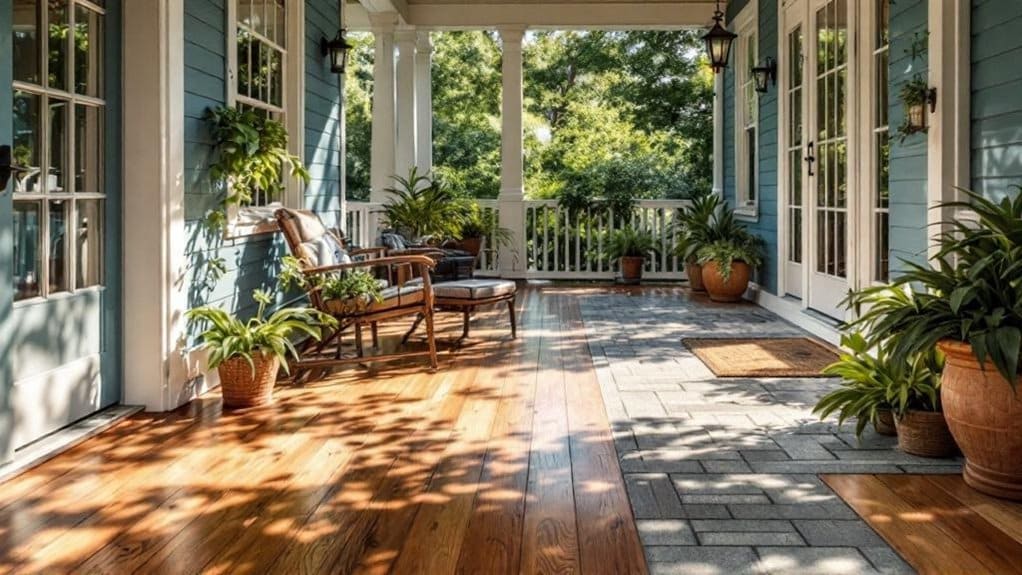
Georgia’s climate creates a uniquely punishing environment for sunroom and porch flooring, combining high humidity, intense UV exposure, and dramatic temperature swings that few materials can withstand long-term. Summer temperatures regularly exceed 95°F, while humidity levels frequently surpass 80%, accelerating moisture intrusion, warping, and mold growth. These climate impact factors eliminate many popular flooring choices that perform well in milder regions. UV radiation fades and degrades surface finishes rapidly, particularly in south-facing sunrooms with significant glass exposure. Winter temperature drops, though moderate, still cause repeated expansion and contraction cycles that stress joints and adhesives. Selecting waterproof flooring options engineered specifically for humid climates ensures your investment withstands Georgia’s environmental demands. Understanding these environmental demands helps you select materials engineered for durability under these specific conditions, protecting your investment while maintaining safe, attractive spaces for the people you serve.
Moisture Resistance, UV Stability, and the Other Properties That Actually Matter
Selecting the right flooring material starts with understanding which physical properties actually determine performance under Georgia’s demanding conditions. You’ll need materials that resist moisture absorption, since humidity and rain infiltration cause warping, mold, and structural failure. Moisture barriers installed beneath the flooring surface provide crucial protection against ground-level vapor intrusion. UV stability matters similarly—prolonged solar exposure fades, degrades, and brittles inadequately protected materials. UV coatings applied to or embedded within flooring surfaces considerably extend service life. Beyond these two priorities, evaluate thermal expansion coefficients, since Georgia’s temperature swings demand materials that expand and contract without cracking or buckling. Slip resistance ratings protect the clients you’re installing for, particularly in wet conditions. Finally, assess compressive strength, surface hardness, and maintenance requirements before committing to any material. Proper ventilation solutions are equally critical in screened porches and sunrooms to manage humidity levels and prevent mold growth that can compromise flooring integrity.
Screened Porch vs. Sunroom: Matching the Right Floor to Your Specific Setup
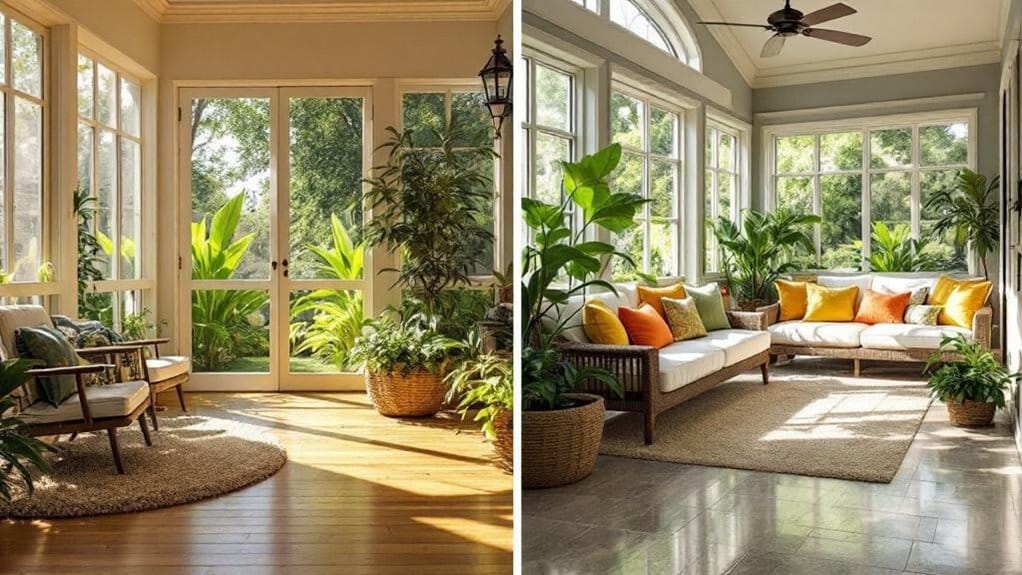
Whether you’re finishing a screened porch or a fully enclosed sunroom determines nearly every flooring decision you’ll make. Screened porch designs expose flooring to direct humidity, wind-driven rain, and temperature swings, so you’ll need materials rated for semi-exterior conditions — think porcelain tile, composite decking, or concrete. These surfaces drain well and resist warping.
Fully enclosed sunrooms operate closer to conditioned interior spaces, which broadens your options considerably. Sunroom aesthetics favor luxury vinyl plank, engineered hardwood, or stone tile — materials that balance visual warmth with UV and moisture tolerance. Water-resistant materials like engineered wood with a waterproof core or properly sealed natural stone can provide both durability and the warm aesthetic appeal that homeowners desire in sunroom spaces.
Ask yourself one critical question before selecting anything: does your structure hold consistent indoor temperatures year-round? If not, treat it like a screened porch regardless of its walls. Mismatching your floor to your actual environment causes premature failure.
Porcelain and Ceramic Tile for Georgia Sunrooms and Porches
When selecting flooring for your Georgia sunroom or porch, porcelain and ceramic tile stand out as top-tier options because of their superior weather and moisture resistance, making them well-suited for the state’s humid subtropical climate. You’ll find that manufacturers offer slip-resistant surface textures, including matte finishes and raised patterns, which are critical safety features for spaces exposed to rain, condensation, or high foot traffic. Beyond performance, these materials give you extensive design versatility, with options ranging from wood-look planks to stone-look slabs, allowing you to achieve virtually any aesthetic without sacrificing durability. Porcelain tile’s water-resistant properties make it particularly ideal for wet areas in sunrooms where moisture exposure is constant, while ceramic tile offers a more budget-friendly alternative for homeowners seeking comparable aesthetic appeal.
Weather And Moisture Resistance
Georgia’s humid subtropical climate makes weather and moisture resistance a critical factor when choosing sunroom flooring, and porcelain and ceramic tile consistently outperform most competing materials in this regard. Both materials are virtually impervious to moisture absorption, which means you’re protecting your clients’ investments against warping, swelling, and mold growth that frequently plague wood-based alternatives. Porcelain’s density rating makes it especially suited for high-humidity environments, absorbing less than 0.5% moisture by industry standards. When you install proper moisture barriers beneath the tile substrate, you’re dramatically extending flooring longevity and preventing subfloor deterioration. Ceramic tile, while slightly more porous than porcelain, still delivers exceptional moisture resistance when sealed correctly. Both options handle Georgia’s temperature fluctuations without compromising structural integrity, making them dependable long-term solutions for your clients. For those seeking custom tile shower installations and professional guidance, a local flooring specialist with extensive expertise can ensure proper installation techniques that maximize moisture protection in these challenging environments.
Slip-Resistant Surface Options
Slip resistance becomes just as essential as moisture resistance when you’re selecting porcelain or ceramic tile for Georgia sunrooms and porches, particularly in spaces that experience condensation, tracked-in rain, or direct water exposure. Look for tiles rated with a coefficient of friction (COF) of 0.60 or higher for wet conditions. These safety features protect your clients, family members, and guests from preventable falls. Flooring textures matter considerably here — matte, brushed, or textured tile surfaces outperform polished finishes in wet environments. Porcelain tiles with embossed or structured surfaces provide superior traction without sacrificing aesthetics. Ceramic options with anti-slip glazing offer comparable protection at lower price points. Beyond safety considerations, tile’s minimal maintenance requirements and water-resistant properties make it an ideal long-term investment for these moisture-prone spaces. Always verify slip-resistance ratings before installation, ensuring you’re meeting both safety standards and your clients’ functional expectations.
Style And Design Versatility
Porcelain and ceramic tile give you virtually unlimited design flexibility for Georgia sunrooms and porches, spanning color palettes, surface textures, patterns, and format sizes that few other flooring materials can match. Current design trends favor large-format tiles, wood-look planks, and stone-inspired finishes that enhance functional spaces into intentional living environments. Expert flooring specialists can guide your selection from consultation through installation to ensure your tile pattern choice complements your space’s unique characteristics.
| Design Element | Available Options |
|---|---|
| Color Palettes | Neutrals, earth tones, bold accents |
| Patterns & Formats | Geometric, plank, large-format, mosaic |
| Surface Finishes | Matte, polished, textured, wood-look |
You can coordinate tile selections with interior décor, shift seamlessly between indoor and outdoor zones, and accommodate clients’ specific aesthetic goals. This versatility makes porcelain and ceramic tile particularly valuable when you’re designing spaces intended to serve both comfort and function.
Luxury Vinyl Plank: The Practical Choice for Georgia Screened Porches
If you’re looking for a flooring solution that stands up to Georgia’s humidity, temperature swings, and heavy foot traffic, luxury vinyl plank (LVP) delivers on all fronts. You’ll find that LVP’s waterproof core and wear-resistant surface layer require nothing more than routine sweeping and occasional damp mopping to maintain a clean, polished appearance. Available in a wide range of wood and stone-look finishes, LVP combines authentic aesthetics with a rigid construction that resists warping, fading, and scratching — making it a technically sound and visually versatile choice for screened porches. As a cost-effective flooring option, LVP provides the premium look of natural materials without the financial investment required for hardwood or stone alternatives.
Weather Resistance Benefits
Weather resistance stands as luxury vinyl plank’s strongest selling point for Georgia screened porches, where humidity, temperature swings, and occasional moisture intrusion create a punishing environment for most flooring materials. When you’re evaluating weather resistance strategies for your clients, LVP’s 100% waterproof core outperforms hardwood, laminate, and carpet in every flooring material comparison. Georgia’s humid subtropical climate pushes moisture levels that cause hardwood to cup and laminate to swell, but LVP maintains dimensional stability through these conditions. You’ll find that LVP tolerates temperatures ranging from subfreezing winters to sweltering Georgia summers without warping or separating at seams. Its UV-resistant wear layer likewise resists fading from direct sunlight exposure, making it a technically superior choice for screened environments where sunlight penetrates consistently throughout the day. Unlike laminate, which is more susceptible to moisture damage, LVP provides the durability your clients need in Georgia’s challenging climate.
Easy Maintenance Tips
Beyond LVP’s weather resistance advantages, its maintenance demands are similarly compelling for Georgia screened porch installations. You’ll find that a consistent maintenance schedule keeps your floors performing effectively for years. The wear layer of luxury vinyl planks provides exceptional resistance to scratches and daily wear, making it particularly suitable for high-traffic porch areas.
| Task | Frequency | Method |
|---|---|---|
| Floor cleaning | Weekly | Damp mop + mild cleaner |
| Debris removal | Daily | Dry sweep or vacuum |
| Deep cleaning | Monthly | pH-neutral floor solution |
Follow these priorities when maintaining your LVP installation:
- Avoid harsh chemical cleaners that degrade wear layers
- Address spills immediately to prevent residue buildup
- Inspect seams quarterly for lifting caused by Georgia’s humidity fluctuations
Your clients deserve flooring that simplifies their long-term upkeep responsibilities. LVP’s non-porous surface resists staining, while its click-lock construction allows damaged planks to be individually replaced without full floor removal.
Style And Durability
While LVP’s maintenance profile makes it a practical choice, its aesthetic versatility and structural durability make it the definitive flooring solution for Georgia screened porches. You’ll find style trends reflecting authentic hardwood, stone, and tile aesthetics, giving your clients sophisticated design options without sacrificing performance. When running durability comparisons against traditional hardwood or ceramic tile, LVP consistently outperforms both in moisture resistance, scratch tolerance, and dimensional stability under Georgia’s humidity fluctuations. Its wear layer withstands heavy foot traffic while maintaining visual integrity across years of seasonal exposure. You’re offering clients a flooring system that delivers upscale aesthetics alongside measurable structural resilience. LVP’s core construction resists warping, swelling, and cracking—critical performance factors that distinguish it from competing materials in outdoor-adjacent living spaces.
Natural Stone Flooring in Georgia’s Heat and Humidity
Georgia’s intense heat and humidity create a challenging environment for sunroom flooring, but natural stone handles these conditions exceptionally well. Its heat resistance and aesthetic appeal make it a top choice for homeowners serving their families with durable, beautiful spaces.
| Stone Type | Humidity Challenges | Maintenance Requirements |
|---|---|---|
| Slate | Low absorption | Seal annually |
| Travertine | Moderate porosity | Seal every 6 months |
| Granite | Minimal moisture risk | Seal every 2 years |
| Limestone | Higher absorption | Seal quarterly |
| Marble | Moderate sensitivity | Professional cleaning recommended |
Installation considerations include proper substrate preparation and expansion joints. You’ll need professional installation to guarantee moisture barriers prevent shifting. Natural stone delivers lasting performance when you install and maintain it correctly.
Composite Decking for Georgia Screened Porches: What You Need to Know
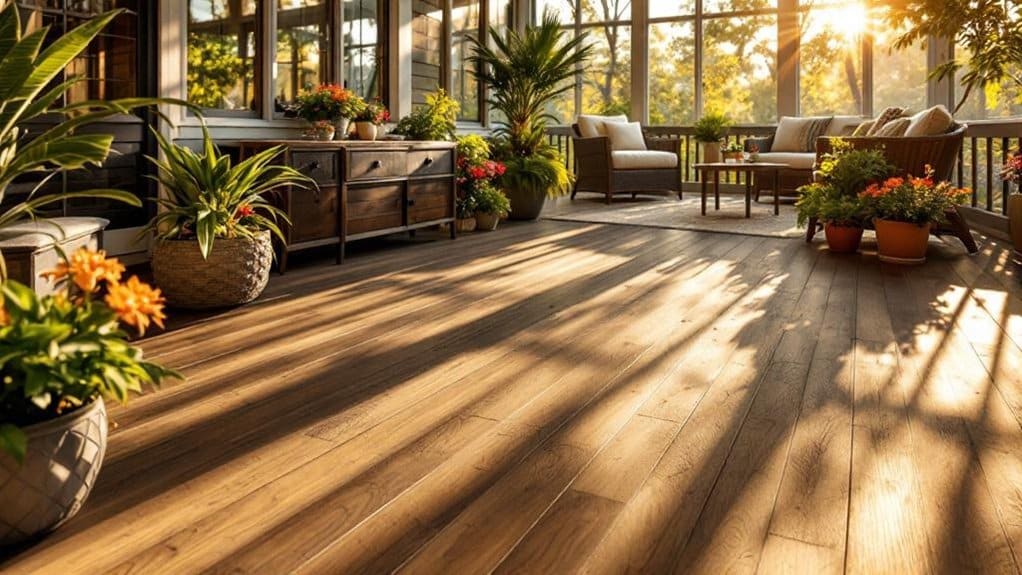
Composite decking has become one of the most popular flooring solutions for Georgia screened porches, and it’s easy to understand why. The composite benefits are substantial: you’ll get exceptional moisture resistance, minimal maintenance requirements, and superior durability against Georgia’s intense UV exposure and humidity cycles.
When considering installation tips, you’ll want to verify adequate ventilation beneath your decking boards to prevent moisture accumulation. Maintain proper spacing between boards—typically 3/16 inch—to accommodate thermal expansion during Georgia’s summer heat spikes. Choose composite products with UV-inhibiting additives specifically engineered for southern climates.
You’ll additionally want to confirm your screened porch’s substructure can handle composite decking’s weight load. Consult a licensed contractor familiar with Georgia’s building codes before committing to your installation plan.
Concrete Flooring for Georgia Sunrooms and Porches
Concrete flooring is one of the most durable and versatile options you’ll find for Georgia sunrooms and porches, withstanding heavy foot traffic, moisture, and the region’s intense heat cycles without warping or degrading. You’ll need to apply a penetrating sealer every one to three years to prevent moisture infiltration and staining, and routine sweeping combined with pH-neutral cleaners will keep the surface in peak condition. Beyond its structural advantages, you can customize concrete with staining, stamping, epoxy coatings, or polishing techniques to achieve a range of aesthetics, from rustic flagstone patterns to sleek, modern finishes.
Concrete Durability Benefits
When it comes to raw durability, few flooring materials can match concrete’s performance in Georgia sunrooms and porches. Concrete withstands heavy foot traffic, furniture weight, and moisture exposure without warping, cracking, or deteriorating under Georgia’s intense heat cycles. You’ll find that properly sealed concrete resists staining, UV degradation, and humidity damage that typically compromise other flooring materials.
Beyond structural strength, concrete aesthetics have evolved considerably, offering polished, stained, and textured finishes that complement any design vision. Furthermore, concrete insulation properties help regulate temperature fluctuations, reducing thermal transfer between your sunroom and the outdoors. This thermal mass characteristic keeps surfaces cooler during Georgia’s brutal summers and retains warmth during cooler months. For clients prioritizing longevity and low maintenance, concrete delivers exceptional performance with minimal ongoing investment.
Sealing and Maintenance Tips
Maximizing concrete’s durability advantages requires consistent sealing and maintenance practices tailored to Georgia’s demanding climate. Apply penetrating sealers every two to three years, prioritizing products specifically formulated for high-humidity environments. Epoxy-based sealing techniques offer superior moisture resistance, protecting your clients’ concrete surfaces against Georgia’s intense heat cycles and seasonal rainfall.
Establish structured maintenance schedules that include quarterly cleaning with pH-neutral solutions, preventing mold and mildew accumulation common in Georgia’s humid conditions. Inspect sealed surfaces biannually for micro-cracks, addressing vulnerabilities before moisture infiltration compromises structural integrity.
Reapply surface sealers immediately following visible wear patterns or after significant weather events. Document each maintenance cycle meticulously, creating verifiable records that demonstrate consistent care and help your clients anticipate future sealing needs efficiently.
Decorative Concrete Design Options
Beyond functional durability, decorative concrete opens a wide range of design possibilities that let you transform Georgia sunrooms and porches into visually distinctive spaces. You can customize surfaces using techniques that reflect your clients’ preferences and complement existing architecture.
Popular decorative patterns and color options include:
- Stamped concrete – replicates stone, brick, or tile textures at lower installation costs
- Stained concrete – acid or water-based stains create rich, permanent color options ranging from earthy tones to bold hues
- Engraved designs – precision-cut decorative patterns add geometric or custom motifs to existing slabs
Each technique works well in Georgia’s climate when properly sealed. Combining decorative patterns with appropriate color options lets you deliver personalized, high-performance floors that genuinely serve your clients’ aesthetic and functional needs.
Is Hardwood Flooring a Realistic Option for Georgia Sunrooms?
Hardwood flooring can work in a Georgia sunroom, but you’ll need to weigh some serious climate-related drawbacks before committing to it. Georgia’s intense heat, humidity, and direct UV exposure accelerate warping, cupping, and fading — all of which compromise flooring longevity greatly. Solid hardwood expands and contracts with seasonal moisture shifts, making it particularly vulnerable in spaces with large windows and limited climate control. If your sunroom isn’t fully conditioned, you’re likely shortening the floor’s lifespan considerably. Engineered hardwood performs better under these conditions but still requires careful installation and maintenance. Before choosing wood, seriously evaluate hardwood alternatives like luxury vinyl plank or porcelain tile, both of which deliver comparable aesthetics with far greater resistance to Georgia’s demanding climate.
Which Georgia Porch Flooring Holds Up the Longest
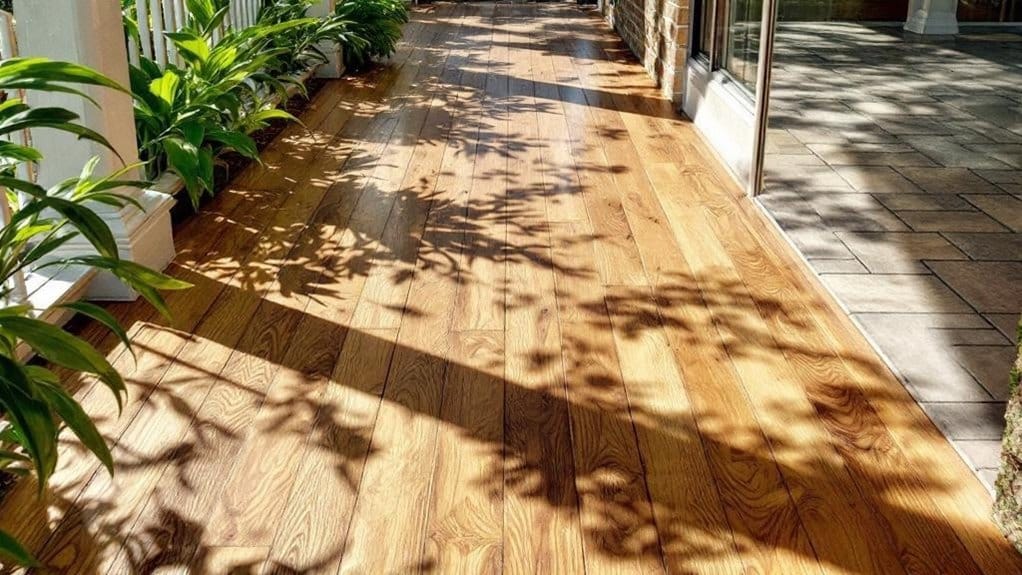
When durability is the priority, porcelain tile and concrete consistently outperform every other porch flooring material in Georgia’s climate. Both handle humidity, UV exposure, and temperature swings without warping or fading. A durability comparison reveals:
- Porcelain tile: 30+ year lifespan with minimal maintenance challenges
- Concrete: Decades of performance when sealed every 2–3 years
- Composite decking: 25-year lifespan but requires annual cleaning to prevent mildew
You’ll spend considerably less time managing maintenance challenges with porcelain or concrete than with wood-based alternatives. Neither material absorbs moisture, which eliminates your risk of rot, swelling, or structural compromise. If you’re building or renovating a sunroom or screened porch for long-term community use, these two options deliver the strongest return on investment and the lowest lifecycle cost.
How Much Does Sunroom and Porch Flooring Cost in Georgia?
Durability drives material selection, but cost determines what’s actually feasible for your project. Budget planning requires understanding Georgia-specific labor and material rates. Here’s a practical cost comparison for common options:
- Concrete: $2–$6 per sq. ft. installed
- Porcelain tile: $5–$15 per sq. ft. installed
- Composite decking: $8–$20 per sq. ft. installed
- Luxury vinyl plank: $3–$8 per sq. ft. installed
- Pressure-treated wood: $4–$10 per sq. ft. installed
Georgia’s humidity demands moisture-resistant underlayments, adding $0.50–$1.50 per sq. ft. to your budget. When you’re serving clients or family members who depend on your project decisions, accurate cost forecasting prevents mid-project compromises that sacrifice long-term performance for short-term savings.
What to Look for in a Georgia Sunroom Flooring Installer
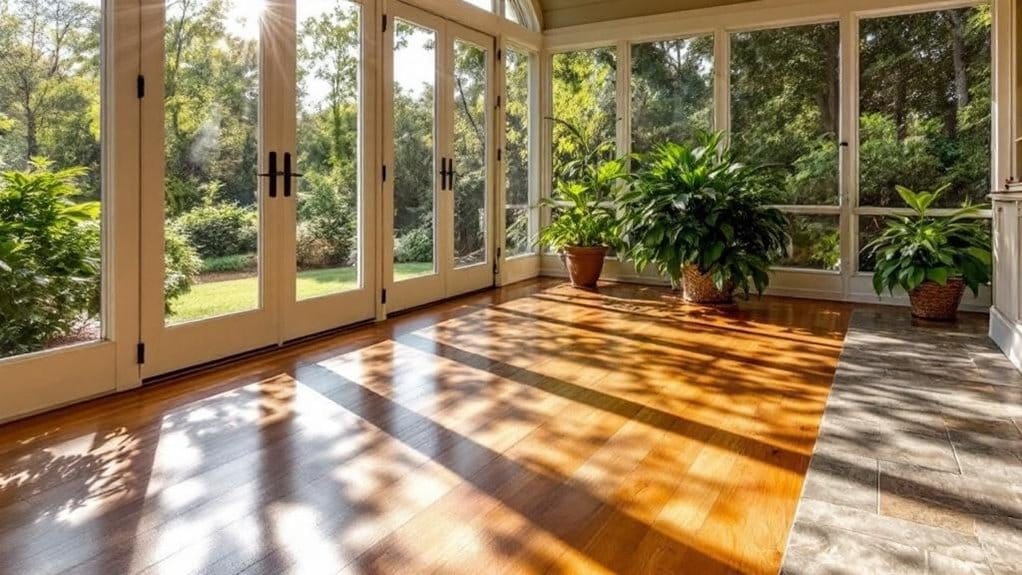
Choosing the right installer separates a long-lasting sunroom floor from a costly replacement project within a few years. Verify credentials, experience, and knowledge of Georgia’s climate-specific installation techniques before signing any contract.
Look for these qualifications in your installer:
- Proven sunroom experience: Request references from completed sunroom projects specifically, not general flooring installations.
- Flooring warranties knowledge: Confirm they understand manufacturer warranty requirements, since improper installation voids most flooring warranties immediately.
- Transparent written estimates: Insist on itemized quotes covering materials, labor, subfloor preparation, and moisture barrier installation.
Ask direct questions about their subfloor assessment process and moisture mitigation strategies. A qualified installer proactively identifies problems before installation begins rather than uncovering them afterward. Your clients deserve professionals who treat every project with that level of diligence.
Frequently Asked Questions
Can I Install Porch Flooring Myself, or Do I Need a Professional?
You can tackle DIY installation for most porch flooring options if you’ve got the right flooring tools. Nevertheless, complex materials like stone or intricate tile patterns often require a professional’s expertise to guarantee a flawless, lasting result.
Are There Eco-Friendly or Sustainable Flooring Options for Georgia Porches?
Like a green forest thriving in Georgia’s heat, you’ve got sustainable choices. You can select bamboo flooring or tiles made from recycled materials—both withstand humidity brilliantly while reducing your environmental footprint considerably.
How Do I Transition Flooring Between My Sunroom and Indoor Living Space?
Use connector strips to bridge different flooring materials between spaces. You’ll want to match thicknesses carefully and consider aesthetic considerations like color and texture continuity, ensuring a seamless, visually unified flow that serves your home’s overall design beautifully.
What Flooring Options Work Best for Sunrooms With Radiant Heating Systems?
For radiant heat systems, you’ll want flooring materials like porcelain tile, natural stone, or engineered hardwood. These conduct heat efficiently, respond quickly to temperature changes, and won’t warp or crack under your sunroom’s thermal cycling demands.
Can Existing Damaged Porch Flooring Be Repaired Instead of Fully Replaced?
Like Lazarus rising, your damaged porch flooring can often be revived. You can apply targeted repair techniques—filling cracks, replacing boards, or refinishing surfaces—before committing to full replacement. Always weigh cost considerations carefully to serve your budget wisely.
Conclusion
Choosing the right porch or sunroom flooring in Georgia isn’t just an aesthetic decision—it’s a structural one. Think of your floor like a car’s paint job in a coastal town: without the right protection, the salt air wins eventually. Georgia’s humidity and UV load are relentless, and studies show moisture-related flooring failures account for nearly 40% of premature replacements. Match your material to your specific exposure, and you’ll get decades instead of years.
The post The Best Flooring Options for Georgia Sunrooms and Screened Porches appeared first on Flooring Specialist.source https://myflooringspecialist.com/best-flooring-options-georgia-sunrooms-screened-porches/


No comments:
Post a Comment