If you’re weighing options in Middle Georgia, expect to pay $1,500–$5,000 for a basic tub-to-shower conversion and $3,500–$15,000 for a custom tile shower. That gap grows once you factor in plumbing rerouting, waterproofing systems, and premium materials like porcelain or natural stone. Skilled labor in Macon and Warner Robins runs $45–$85 per hour, and hidden costs like code compliance and water damage repairs can surprise you. The full breakdown ahead will sharpen your budget considerably.
Key Takeaways
- Custom showers in Middle Georgia typically cost $3,500–$15,000, while tub-to-shower conversions range from $1,500–$5,000.
- Plumbing relocation adds $500–$1,500 to either project, depending on existing infrastructure and required rerouting complexity.
- Hidden costs like water damage repairs and code compliance upgrades can significantly increase budgets for both project types.
- Contractor labor in Middle Georgia runs $45–$85 per hour, lower than Atlanta rates, helping offset premium material costs.
- Custom showers yield stronger resale ROI when at least one functional bathtub is retained elsewhere in the home.
Custom Shower vs. Tub Conversion: Which Actually Costs Less?
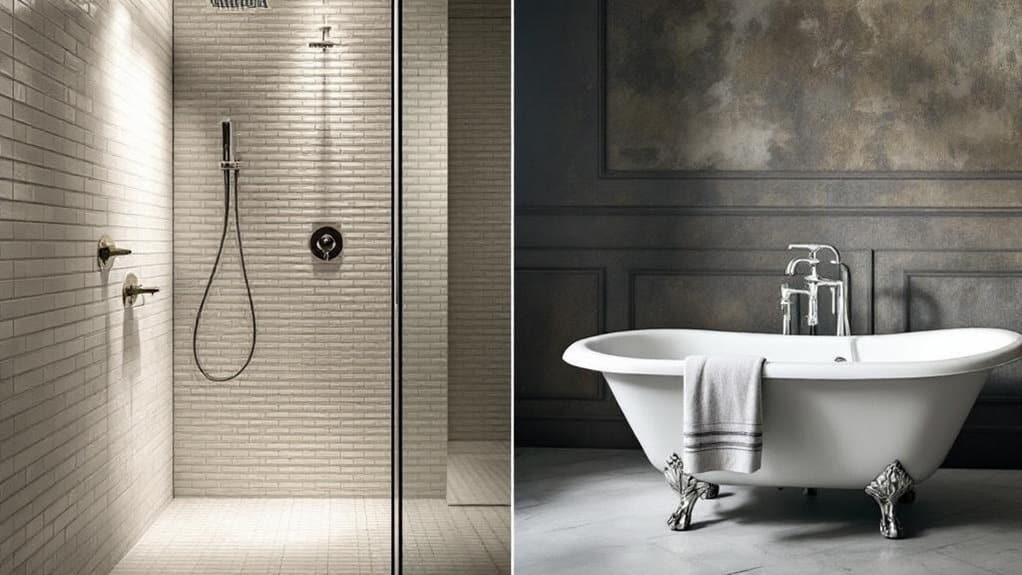
When weighing a custom shower against a tub conversion, the true cost difference comes down to more than just materials — it’s about scope, labor, and what your existing bathroom can actually support. In Middle Georgia, custom showers typically run higher upfront since shower aesthetics require tile work, custom enclosures, and precise waterproofing. Tub conversions, on the other hand, carry their own hidden costs — plumbing reconfiguration, structural reinforcement, and fixture upgrades. You’ll need to evaluate tub functionality if you’re serving households with elderly residents or young children who rely on soaking access. Neither option is universally cheaper. Your bathroom’s current layout, plumbing condition, and intended use determine which investment delivers better long-term value. Consider implementing Schluter waterproofing systems to minimize moisture buildup risks and ensure durability regardless of which option you choose. Getting an on-site assessment gives you accurate numbers before committing to either direction.
What a Tub-to-Shower Conversion Costs in Middle Georgia
Most tub-to-shower conversions in Middle Georgia fall between $1,500 and $5,000, though complex projects can push past $10,000 depending on scope. Understanding what drives these costs helps you serve your household’s real needs.
Three factors that shape your final price:
- Plumbing relocation — Moving drain lines in older Macon-area homes adds $500–$1,500 instantly.
- Accessibility upgrades — Adding grab bars or a zero-threshold entry for aging family members increases cost but maximizes shower convenience for everyone.
- Tile and fixture selection — Premium materials can double your baseline budget quickly.
You’re not just trading tub benefits for a walk-in shower — you’re making a long-term investment in your home’s functionality. Investing in waterproofing products during your shower conversion protects against gradual moisture damage and mold. Knowing these numbers upfront prevents costly surprises during your Middle Georgia renovation.
Custom Shower Installation Costs in Macon and Warner Robins
Custom shower installations in Macon and Warner Robins typically run between $3,500 and $15,000, with most mid-range projects landing around $7,000–$9,000 once labor, materials, and waterproofing are factored in. Current shower design trends—like curbless entries, large-format tile, and frameless glass enclosures—push costs toward the higher end. You’ll additionally encounter installation challenges specific to Middle Georgia homes, particularly older Macon properties with outdated plumbing configurations or uneven subfloor conditions that require corrective work before tile can go down. Warner Robins new construction tends to offer cleaner starting points, but custom layouts still demand precision and skilled labor. Incorporating Schluter waterproofing technology into your project enhances durability and prevents moisture-related issues that can compromise your investment over time. Understanding these regional variables helps you budget realistically and serve your household’s long-term needs without overspending on features that don’t align with your home’s structure or resale potential.
Plumbing, Waterproofing, and Tile: What Actually Separates the Two Prices
The price gap between a tub conversion and a custom shower build comes down to three cost drivers: plumbing complexity, waterproofing systems, and tile work.
Here’s what separates the two in Middle Georgia:
- Plumbing standards — Custom showers often require rerouting drain lines, adding valve bodies, and meeting local code requirements that tub swaps don’t trigger.
- Waterproofing techniques — Schluter systems or liquid-applied membranes cost more than standard tub surrounds but protect your client’s home for decades.
- Tile options and installation methods — Large-format porcelain, linear drains, and custom layouts demand skilled labor and precise setting time.
You’re not just pricing materials — you’re pricing protection, longevity, and craftsmanship that genuinely serves the families living in those Macon and Warner Robins homes. Porcelain tiles provide superior water resistance in wet bathroom environments, making them a preferred choice for long-term durability and mold prevention in custom shower installations.
Why Custom Shower Materials Cost More Than Conversion Kits
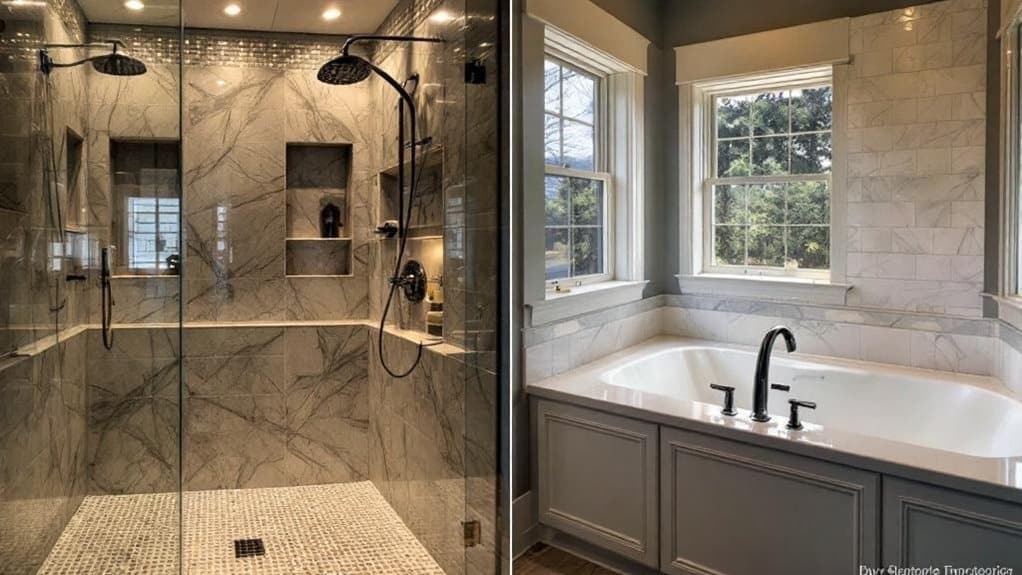
When you choose a custom shower, you’re paying for materials engineered to perform — large-format porcelain slabs, linear drains, and niche inserts that pre-fabricated conversion kits simply can’t match in durability or design precision. Those premium materials demand skilled tile setters, waterproofing specialists, and finish carpenters who charge accordingly, often pushing labor alone past $1,500–$3,000 depending on your local market. Investing in moisture-resistant materials like waterproof backer boards and specialized grouts ensures your shower withstands decades of use without mold growth or structural compromise. Understanding both the material grade and the craftsmanship required helps you accurately compare a custom build against a conversion kit without underestimating what you’re actually getting — or giving up.
Premium Material Quality Explained
Material quality is where the price gap between custom showers and tub conversion kits becomes most apparent. Premium materials aren’t just about aesthetics—they’re about serving your household for decades without costly repairs.
Here’s what separates premium materials from conversion kits:
- Porcelain and natural stone resist cracking and staining far longer than acrylic inserts common in conversion kits.
- Waterproof membrane systems used in custom builds prevent water intrusion that damages your Middle Georgia home’s subfloor structure.
- Custom grout and sealants offer superior mold resistance in Georgia’s humid climate, protecting the families you care for daily.
Installation considerations likewise matter—premium materials require skilled labor and precise techniques, which your household deserves. Large format tiles used in premium custom showers create a seamless appearance that minimizes grout lines, further enhancing durability and reducing maintenance concerns. You’re investing in durability, safety, and long-term peace of mind.
Labor And Craftsmanship Costs
Beyond premium materials, skilled labor drives much of the cost difference between custom showers and tub conversion kits. In Middle Georgia, licensed tile setters, waterproofing specialists, and plumbers each contribute distinct expertise to a custom shower build. Their labor quality reflects years of technical training and hands-on experience that conversion kit installations simply don’t require.
Tub conversions use prefabricated acrylic panels designed for quick installation, reducing skilled hours considerably. Custom showers demand precise measurements, proper slope engineering, membrane application, and detailed grout work—all requiring strict craftsmanship standards. Professional installation with KERDI waterproofing membranes ensures that your shower system remains watertight and mold-resistant for years to come.
When you’re renovating a home to serve elderly parents or create an accessible space for others, cutting corners on labor risks costly water damage and structural failure. You’re investing in expertise, not just appearance.
What Contractors in Middle Georgia Actually Charge
When you start calling contractors in Middle Georgia — think Macon, Warner Robins, and Milledgeville — you’ll find labor rates typically run between $45 and $85 per hour, noticeably lower than Atlanta metro rates but still significant when a custom tile shower requires 20 to 40 hours of skilled work. A straightforward tub-to-shower conversion kit installation often quotes out at $800 to $1,500 in total labor, while a fully custom shower build with waterproofing, tile setting, and niche framing can push your contractor invoice to $3,000 to $6,000 or more. Comparing multiple local quotes reveals a consistent pattern: you’re paying a premium for the custom work’s complexity, not just the materials discussed earlier. The inclusion of safety features like grab bars and non-slip flooring in your custom design will add to the overall project cost but provide essential accessibility benefits for all family members.
Local Labor Rate Breakdown
Labor costs in Middle Georgia don’t follow national averages, and that gap can considerably affect your project budget. Understanding the regional pricing structure helps you advocate for your clients and neighbors more effectively.
Middle Georgia’s labor market typically produces these hourly contractor rates:
- General contractors charge $45–$75/hour, reflecting local cost-of-living realities
- Licensed plumbers run $85–$110/hour, given specialized licensing requirements
- Tile installers average $35–$60/hour depending on complexity and experience
These figures sit noticeably below national benchmarks, which means your project dollar stretches further here than in Atlanta or Savannah. Nevertheless, skilled tradespeople remain in genuine demand across Macon, Warner Robins, and surrounding counties. For specialized projects like custom tile shower installation, securing quality labor early protects both your timeline and the people depending on your completed project.
Project Quotes Compared
Knowing what local tradespeople charge per hour only tells part of the story—real project quotes bundle labor, materials, fixtures, and overhead into a single number that can look very different from your line-item estimates. In Middle Georgia, you’ll typically see tub-to-shower conversions quoted between $2,500 and $6,000, while custom tile showers range from $5,000 to $12,000 or more. Your project scope drives that spread considerably. A basic conversion with a prefab pan and standard fixtures sits at the lower end, but once your design preferences shift toward large-format tile, frameless glass, or built-in niches, quotes climb fast. Incorporating Schluter waterproofing products into your material selections can add upfront cost but reduces long-term moisture risks and potential callbacks. Always collect three written bids, confirm what’s included, and watch for exclusions like waterproofing, permits, and demolition disposal that contractors sometimes itemize separately.
Hidden Costs Most Homeowners Don’t Budget For
Hidden costs can quietly push your shower or tub conversion budget well beyond your initial estimate if you’re not prepared for them. Middle Georgia homes often reveal renovation pitfalls once walls open up—unexpected expenses that no quote anticipates.
Watch for these three budget planning surprises:
- Water damage repairs — Rotted subfloors or mold behind walls dramatically increase installation fees once demolition begins.
- Code compliance upgrades — Older plumbing may require updates, turning simple material choices into costly mandates.
- Long-term maintenance costs — Premium design preferences like custom tile demand ongoing sealing and upkeep expenses.
Understanding these hidden costs before signing a contract protects your family’s investment and guarantees you’re serving your household’s genuine long-term needs—not just chasing the lowest initial price.
Does a Custom Shower Add More Resale Value in Middle Georgia?
If you’re selling a home in Middle Georgia, understanding local buyer preferences is critical to maximizing your return on investment. Macon-area buyers, particularly in family-oriented neighborhoods, still place strong value on at least one functional bathtub, which means a full tub-to-shower conversion can actually hurt your resale appeal. Nonetheless, adding a custom shower to a master bath while retaining a tub elsewhere typically yields a stronger ROI by aligning with what local real estate data consistently shows buyers want.
Local Buyer Preferences
When it comes to resale value in Middle Georgia, buyer preferences lean heavily toward custom showers over tub-shower combos—but the impact depends on your home’s price point and neighborhood. Understanding local buyer demographics and design preferences helps you make smarter renovation decisions.
Middle Georgia buyers typically respond to:
- Spa-like walk-in showers — Buyers in Warner Robins and Macon’s mid-range market emotionally connect with accessible, modern designs.
- Retained tub in multi-bathroom homes — Families strongly prefer at least one tub for children’s bathing needs.
- Tile quality and craftsmanship — Buyers notice premium finishes immediately, associating them with overall home care.
You’ll serve future buyers best by matching your upgrade to the neighborhood’s expectations rather than personal taste alone.
Return On Investment
Knowing what Middle Georgia buyers want is only half the equation—the other half is whether acting on that knowledge actually puts money back in your pocket. Local return trends show that converting a tub to a custom shower in a single-bathroom home rarely recoups full project costs—typically 60–70% at resale. Nevertheless, in homes with two or more bathrooms, that figure climbs closer to 80%. Your investment timelines matter greatly here. If you’re planning to sell within two to three years, a mid-range conversion keeps costs manageable while still appealing to buyers. If you’re staying longer, premium fixtures and tilework add livability value beyond resale figures alone. Always weigh both scenarios before committing to a scope and budget.
How Bathroom Size and Layout Should Drive Your Decision
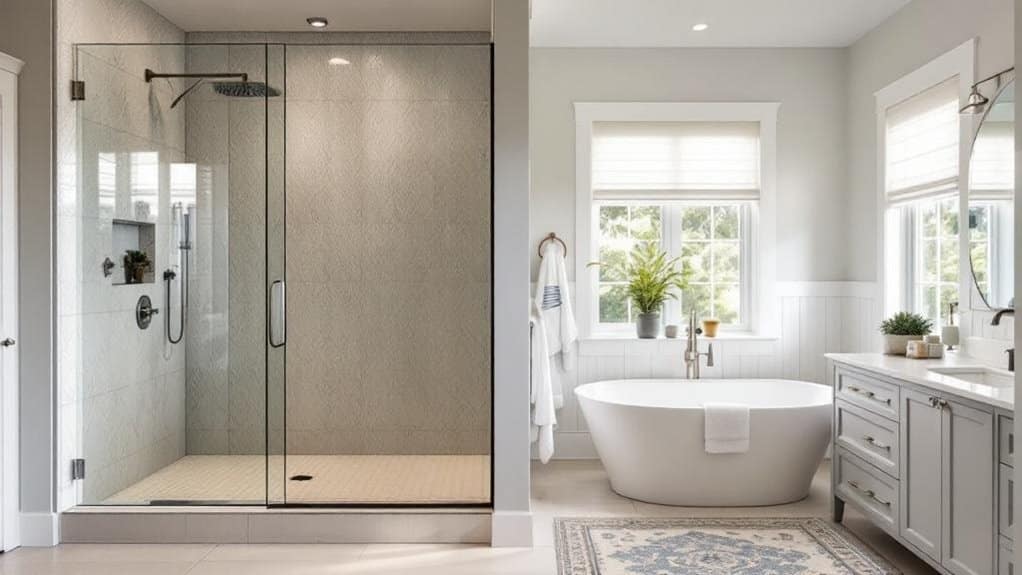
Your bathroom’s square footage and existing layout are the two biggest factors that should drive your conversion decision before you even start comparing contractor bids. Middle Georgia homes vary dramatically in bathroom dimensions, and ignoring layout optimization leads to costly mistakes.
Consider these realities before deciding:
- Bathrooms under 40 square feet rarely accommodate a custom shower without sacrificing functional movement space for family members you serve daily.
- Existing plumbing placement determines whether your conversion requires minor adjustments or expensive drain relocation.
- Door swing direction and window positioning directly impact whether a tub-to-shower conversion feels spacious or claustrophobic for everyone using it.
Measure twice, plan once — your family deserves a bathroom that actually works.
How to Find a Reliable Shower Contractor in Middle Georgia
Finding a reliable shower contractor in Middle Georgia isn’t as straightforward as a quick Google search — you’ll want to vet candidates against specific criteria that separate skilled local tradespeople from low-bid operators who cut corners on waterproofing and drainage. Verify contractor credentials first: confirm active Georgia state licensing, liability insurance, and documented tile or waterproofing certifications. Request references from completed local projects specifically involving custom showers or tub conversions, not general remodels. Discuss project timelines upfront — a qualified contractor provides written schedules covering demo, rough plumbing, waterproofing inspection, tile installation, and fixture hookup. Ask how they handle permit pulls in Bibb, Houston, or Jones County. Contractors who communicate clearly about inspections and phased deadlines typically deliver installations that protect both your client and your property long-term.
Frequently Asked Questions
Can I Finance a Custom Shower Installation Through Local Middle Georgia Contractors?
Yes, you can finance a custom shower installation through local contractors in Middle Georgia. Many local contractors offer flexible financing options, letting you manage costs while still getting the quality shower upgrade your home deserves.
How Long Does a Tub-To-Shower Conversion Typically Take to Complete?
85% of conversions finish in 1-2 days! Your conversion timeline depends on project efficiency—most Middle Georgia contractors complete standard tub-to-shower transformations within 8-16 hours, letting you serve your household’s needs again quickly.
Are Permits Required for Shower Conversions in Bibb or Houston County?
Yes, you’ll need permits for shower conversions in Bibb and Houston County. Local regulations require pulling permits before work begins, and permit fees vary by jurisdiction, so you should contact each county’s building department to confirm current requirements.
What Warranties Do Middle Georgia Contractors Typically Offer on Shower Installations?
Want real protection? Middle Georgia contractors typically offer you one-to-two-year installation guarantees covering labor defects. You’ll additionally find warranty coverage on materials ranging from five to lifetime, depending on the manufacturer and your chosen contractor’s reputation.
Can a Walk-In Shower Be Added Without Completely Gutting the Bathroom?
Yes, you can add walk-in accessibility without a full gut renovation. Skilled Middle Georgia contractors assess your existing bathroom design, often retrofitting shower systems within current footprints, saving you significant demolition costs while still achieving functional, beautiful results.
Conclusion
You’d think choosing between a tub conversion and a custom shower would be simple—just pick the cheaper option. But in Middle Georgia’s market, “cheaper upfront” rarely means “cheaper overall.” A conversion kit saves you money today while potentially costing you resale value tomorrow. A custom shower demands more now but delivers lasting returns in Macon and Warner Robins neighborhoods where buyers notice quality. Know your budget, know your timeline, and choose accordingly.
The post Custom Shower vs. Tub Conversion: What’s the Real Cost Difference in Middle Georgia? appeared first on Flooring Specialist.source https://myflooringspecialist.com/custom-shower-vs-tub-conversion-cost-difference-middle-georgia/



No comments:
Post a Comment