In Georgia, your carpet will typically last 7 to 10 years in high-traffic areas — noticeably shorter than the national average of up to 15 years. The state’s humidity, often exceeding 70%, softens synthetic fibers and accelerates mold growth, wearing carpet down 20–30% faster than drier climates. Fiber type, installation quality, and maintenance habits all influence how long yours holds up. Keep going to uncover exactly what’s cutting your carpet’s life short and how to fight back.
Key Takeaways
- In Georgia, carpet typically lasts 5 to 15 years, with high-traffic areas requiring replacement every 7 to 10 years.
- Georgia’s humid climate accelerates carpet degradation by 20–30% compared to national averages, shortening overall lifespan significantly.
- Humidity levels exceeding 70% weaken fiber integrity, while red clay causes permanent staining if not promptly treated.
- Nylon and solution-dyed polyester carpets withstand Georgia’s climate best, offering superior durability and moisture resistance.
- Regular vacuuming, professional cleaning every 12–18 months, and prompt spill treatment can meaningfully extend carpet lifespan.
How Long Does Carpet Last in Georgia?
Carpet in a Georgia home typically lasts between 5 and 15 years, depending on the fiber type, installation quality, and how well you maintain it. Georgia’s humid subtropical climate accelerates wear by promoting moisture retention, mold growth, and fiber degradation. Local trends show homeowners replacing carpet every 7 to 10 years, particularly in high-traffic areas like hallways and living rooms. Consistent carpet maintenance — including regular vacuuming, professional deep cleaning, and prompt stain treatment — extends your carpet’s functional lifespan considerably. Nylon and polyester fibers perform better under Georgia’s conditions than natural fibers like wool. For pet owners specifically, nylon carpets offer excellent stain resistance and durability to withstand the wear from playful pets. If you’re serving clients or tenants, prioritizing proper installation and scheduled maintenance protects your investment and guarantees occupants experience cleaner, safer, and longer-lasting flooring throughout the home.
What Georgia’s Climate Does to Your Carpet
Georgia’s humid subtropical climate creates three compounding stressors that degrade carpet faster than in drier regions: persistent moisture, extreme heat, and biological growth. Summer humidity regularly exceeds 70%, driving moisture deep into carpet fibers and padding, where it accelerates fiber breakdown and adhesive failure. Heat intensifies this process, causing synthetic fibers to soften and lose their structural resilience over time. Seasonal changes between Georgia’s humid summers and mild winters create repeated expansion and contraction cycles that stress carpet backing and seams. Without disciplined carpet maintenance, mold and mildew colonize padding within 24–48 hours of moisture exposure. These combined stressors mean Georgia homeowners should expect carpet degradation timelines roughly 20–30% shorter than national averages, making proactive care crucial for those serving households who depend on clean, safe flooring. For high-traffic areas most vulnerable to moisture accumulation, homeowners should consider durable flooring alternatives like vinyl or tile that better withstand Georgia’s humid climate.
Why Georgia Red Clay Is a Carpet’s Worst Enemy
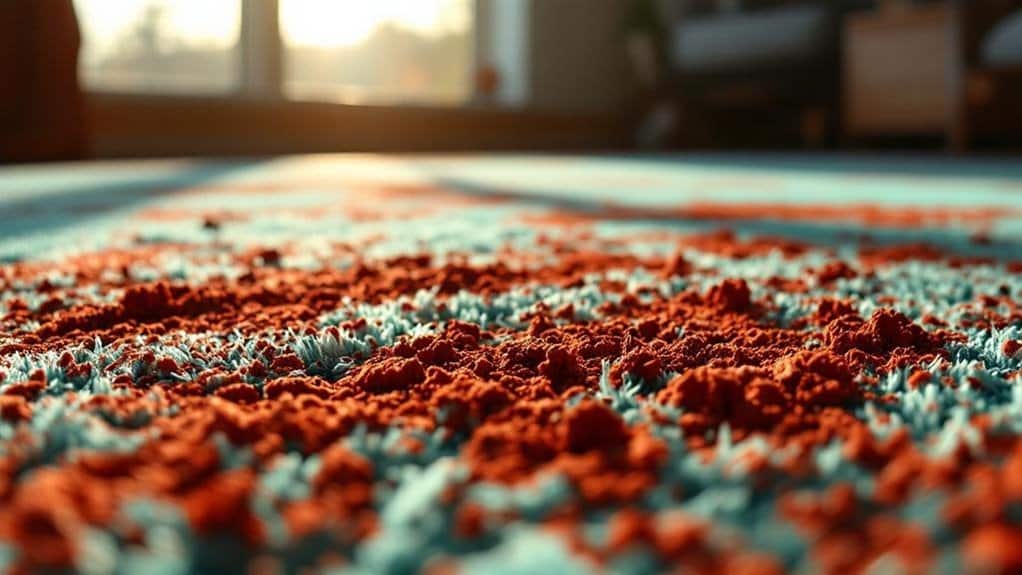
While humidity and heat accelerate fiber breakdown from within, Georgia’s red clay attacks carpet from the outside in—and it does so with remarkable efficiency. Red clay’s fine iron-oxide particles penetrate carpet fibers deeply, making clay stains and soil retention persistent problems that shorten carpet lifespan considerably. Maintaining humidity levels between 35% and 55% can help slow the degradation process caused by Georgia’s climate conditions.
| Clay Impact Factor | Consequence for Carpet |
|---|---|
| Iron-oxide pigmentation | Permanent staining if untreated |
| Fine particle size | Deep fiber penetration |
| High soil retention rate | Accelerated wear patterns |
Once embedded, red clay binds to synthetic and natural fibers differently—but destructively in both cases. You’ll notice traffic lanes darkening faster in Georgia homes than in drier climates. Prompt extraction cleaning, not surface scrubbing, remains your most effective defense against irreversible clay damage.
Which Carpet Types Hold Up Best in the South
When selecting carpet for a Georgia home, you’ll want to prioritize humidity-resistant fibers like nylon or solution-dyed polyester, since both resist moisture absorption and microbial growth better than wool or olefin. Nylon outperforms polyester in high-traffic durability and resilience, but polyester offers superior stain resistance at a lower cost, making your choice dependent on room function and budget. You should additionally specify a tight, dense weave construction, as tighter pile density restricts airflow pathways that mold spores exploit in Georgia’s persistently humid conditions. For families with children, consider pairing your carpet selection with water and scratch-resistant flooring options in high-moisture areas like bathrooms and kitchens to provide comprehensive protection throughout your home.
Humidity-Resistant Fiber Options
Southern humidity doesn’t just make summers uncomfortable—it actively degrades carpet fibers that aren’t engineered to resist moisture absorption. For humidity control and long-term fiber durability, your fiber selection directly determines how long your carpet serves the families walking across it.
| Fiber Type | Humidity Resistance |
|---|---|
| Solution-dyed nylon | Excellent |
| Polyester (PET) | Very Good |
| Wool | Poor |
| Olefin/Polypropylene | Moderate |
Solution-dyed nylon resists moisture penetration while maintaining structural integrity under Georgia’s year-round humidity pressure. Polyester repels water effectively but compresses faster under heavy foot traffic. Wool absorbs atmospheric moisture readily, accelerating mold growth and fiber breakdown. Olefin resists moisture but degrades under UV exposure through windows. For homeowners seeking a more durable and waterproof alternative to traditional carpet, luxury vinyl planks offer superior moisture protection with minimal maintenance requirements. Choose fibers that protect the people depending on that floor every single day.
Nylon Versus Polyester Performance
Both nylon and polyester deliver solid performance in Georgia homes, but they don’t hold up the same way under the South’s specific stress conditions. Nylon durability makes it the stronger long-term choice, particularly in high-traffic areas where repeated compression and moisture exposure accelerate fiber breakdown. Nylon recovers its shape more effectively after heavy foot traffic and resists matting longer than polyester under humid conditions.
Polyester cost gives it a clear budget advantage, and it offers excellent stain resistance owing to its hydrophobic nature. Nevertheless, polyester fibers flatten more quickly under sustained traffic and don’t spring back as reliably. For clients prioritizing longevity in active households, nylon outperforms polyester. For lower-traffic spaces with tighter budgets, polyester remains a practical, serviceable option. Unlike carpet, hardwood flooring does not harbor dust mites or trap allergens in fibers, making it a healthier alternative for households concerned about indoor air quality and maintenance demands.
Tight Weaves Resist Mold
Georgia’s humidity doesn’t just affect comfort—it actively degrades carpet from the backing up, making construction type as critical as fiber choice. Tightly woven carpet constructions—particularly loop pile and dense cut pile—restrict moisture penetration into the backing layer, where mold prevention becomes most critical. Loose, open constructions trap humid air and organic debris, accelerating microbial growth beneath the surface.
For clients you’re advising, specify carpets with high stitch rates and low pile height. These constructions dry faster after cleaning or moisture exposure, making carpet maintenance considerably more manageable. Dense weaves likewise resist the fiber separation that allows moisture pathways to form. In Georgia’s climate, construction density isn’t a luxury—it’s a functional requirement that directly determines how long installed carpet actually performs. For homeowners seeking alternatives that naturally resist moisture and mold, pet-friendly flooring options like cork and rubber provide antimicrobial properties that eliminate the humidity challenges inherent to traditional carpet.
Where Carpet Wears Out Fastest in Georgia Homes
Even in the most durable carpet installations, certain high-traffic zones deteriorate considerably faster than others—and Georgia homes are no exception. Understanding carpet traffic patterns helps you anticipate wear and extend your carpet’s lifespan through proactive moisture management and strategic maintenance.
These areas demand your closest attention:
- Entryways and foyers — exterior humidity, soil, and debris accelerate fiber breakdown immediately upon entry
- Hallways — concentrated foot traffic compresses pile fibers faster than open rooms
- Living room pathways — repeated walking routes create visible wear lanes between furniture pieces
- Stair treads — friction, bending stress, and directional foot pressure degrade backing and fibers simultaneously
Identifying these zones early lets you rotate area rugs, schedule professional cleanings strategically, and recommend targeted interventions that protect your clients’ flooring investments longer. Georgia’s humid climate makes moisture management particularly critical, as excess water can cause the same swelling and discoloration issues that affect hardwood floors and compromise carpet integrity.
7 Signs It’s Time to Replace Your Carpet
Knowing when to replace carpet rather than clean or repair it saves you money and prevents compounding damage to your subfloor. Watch for these seven indicators:
- Persistent odor issues that return after professional cleaning
- Visible matting that won’t respond to grooming or steam treatment
- Fading colors caused by UV exposure or chemical damage
- Rippling or buckling indicating failed stretch or padding deterioration
- Subfloor moisture damage uncovered beneath the carpet layer
- Allergy symptom increases among household occupants in spite of regular cleaning
- Structural tearing near seams, shifts, or high-traffic zones
When multiple signs appear simultaneously, replacement becomes the most cost-effective solution. Continuing to clean deteriorated carpet wastes resources and delays necessary subfloor inspection that protects your home’s structural integrity long-term. In Georgia homes, high-traffic areas typically require replacement every 5 to 10 years depending on usage patterns and maintenance consistency.
How to Make Your Carpet Last Longer in Georgia
While replacing worn carpet protects your subfloor and indoor air quality, extending its lifespan through deliberate maintenance practices saves you significant replacement costs. Georgia’s humidity and red clay soil demand specific carpet maintenance tips and cleaning techniques to maximize durability.
- Vacuum high-traffic areas three times weekly using a HEPA-filter vacuum
- Schedule professional hot-water extraction cleaning every 12-18 months
- Place moisture-absorbing mats at all entryways to reduce Georgia red clay infiltration
- Address spills within five minutes using blotting techniques rather than scrubbing
These targeted cleaning techniques prevent fiber breakdown, mold growth, and embedded soil accumulation. You’ll protect both your investment and your household’s health by implementing consistent, proactive maintenance rather than reactive replacement cycles. Consider investing in stain-resistant carpets to enhance cleaning ease and extend your flooring’s longevity in Georgia’s challenging climate.
When to Repair vs. Replace Your Carpet in Georgia
Determining whether to repair or replace your carpet depends on the scope of damage, your carpet’s age, and Georgia’s specific environmental stressors. Consistent carpet maintenance extends lifespan, but some damage warrants full replacement over costly repairs.
| Repair | Replace |
|---|---|
| Small stains or tears | Widespread mold from humidity |
| Isolated seam separation | Carpet exceeding 10–15 years |
| Repair costs under 50% of replacement | Repair costs exceed replacement value |
If moisture-related damage has compromised your carpet’s padding or subfloor, replacement becomes non-negotiable. Georgia’s humid climate accelerates deterioration, making prolonged repair cycles financially inefficient. Evaluate repair costs honestly—patching aging, humidity-weakened carpet often delays inevitable replacement while increasing your long-term expenses.
Frequently Asked Questions
Does Carpet Warranty Coverage Differ for Homes in Humid Southern Climates?
Yes, you’ll find that most carpet warranties include limitations tied to humidity effects. Manufacturers won’t cover mold, mildew, or moisture-related deterioration, so you must maintain proper indoor humidity levels to preserve your warranty coverage.
Can Carpet Padding Choices Significantly Impact Lifespan in Georgia Homes?
Yes, your padding materials choice greatly impacts carpet lifespan. You’ll extend durability by selecting moisture-resistant foam padding, as Georgia’s humidity accelerates breakdown. Consistent carpet maintenance paired with quality padding can add years to your flooring investment.
Are There Georgia Tax Incentives for Replacing Carpet With Flooring Alternatives?
Over 30% of Georgia homeowners overlook available savings. You won’t find direct state tax credits for flooring options, but you’ll benefit from federal energy-efficiency incentives if you’re replacing carpet with qualifying sustainable flooring alternatives.
How Does Georgia’s Pollen Season Specifically Affect Indoor Carpet Air Quality?
Georgia’s intense pollen season considerably degrades your carpet’s air filtration capacity. You’ll trap massive pollen allergen loads deep in fibers, worsening pollen allergy symptoms. Vacuuming frequently and replacing aging carpet helps you maintain healthier indoor air quality for everyone.
Do Georgia Pest Infestations Like Termites Ever Damage Carpet From Underneath?
Yes, termites can damage your carpet from underneath by destroying subfloor structures. You’ll extend carpet lifespan through proactive pest prevention inspections and routine carpet maintenance, catching infestations early before they compromise your flooring’s foundational integrity.
Conclusion
Think of your carpet like a Georgia peach — beautiful when fresh, but once it’s past its prime, no amount of preserving saves it. Studies show most Georgia homeowners wait 3–5 years too long before replacing worn carpet. You’re losing indoor air quality and home value every month you delay. Know your carpet’s age, watch for the warning signs, and act decisively before deterioration costs you more.
The post How Long Does Carpet Actually Last in a Georgia Home? appeared first on Flooring Specialist.source https://myflooringspecialist.com/how-long-does-carpet-last-in-georgia-home/



No comments:
Post a Comment