Wednesday, 8 April 2026

Signs Your Flooring Was Installed Without Proper Acclimation

Your flooring’s appearance can tell you plenty about its installation quality. If you’re noticing gaps widening between planks, boards cupping upward, or surfaces buckling unexpectedly, you’ve likely encountered acclimation failure. These issues stem from moisture and temperature fluctuations your installer didn’t account for during setup. Understanding what went wrong—and how to fix it—requires examining each problem individually.

Key Takeaways

  • Visible gaps between planks indicate wood shrinkage after installation due to inadequate moisture adjustment time.
  • Cupping appears as concave surfaces on boards, resulting from uneven moisture absorption during improper acclimation.
  • Warping or irregular bending of floorboards suggests temperature and humidity fluctuations weren’t properly managed beforehand.
  • Buckling creates visible peaks or waves across the floor from excessive moisture expansion post-installation.
  • Seam separation between planks occurs when uneven moisture infiltration causes boards to expand unevenly after installation.

Why Acclimation Matters: How Humidity and Temperature Damage Flooring
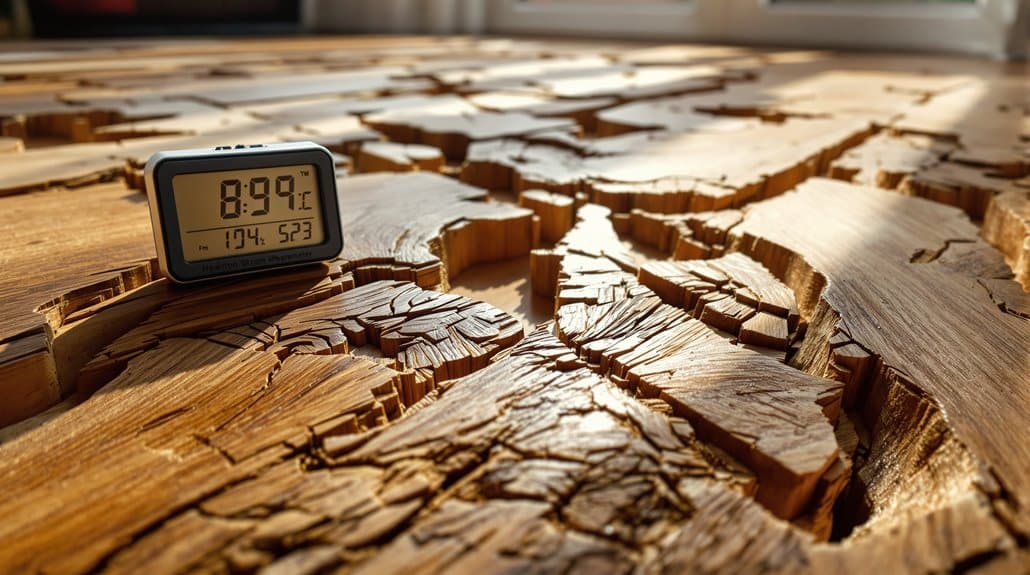
essential flooring acclimation process

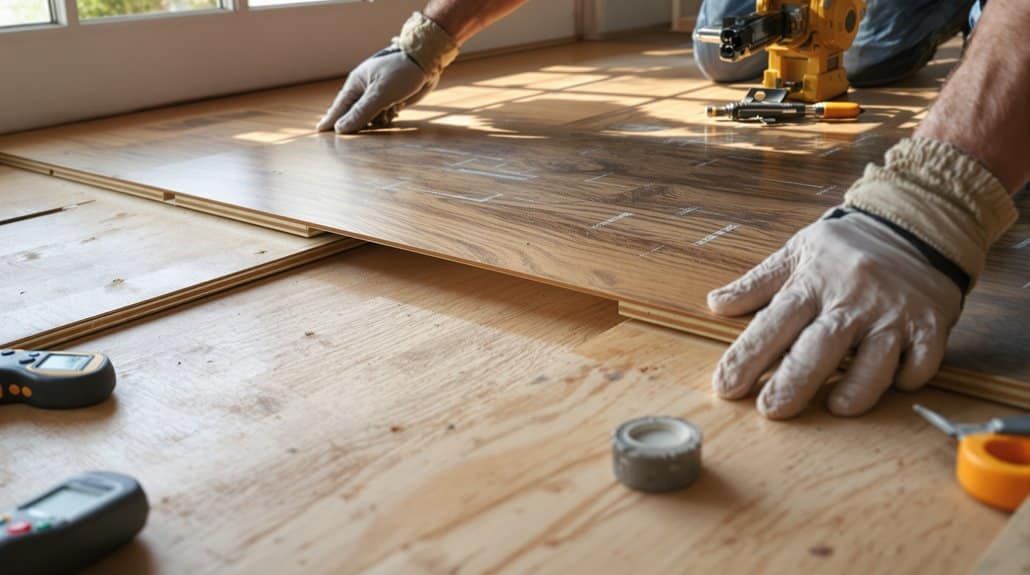
Before you install new flooring, you must acclimate it to your home’s environment for several days. This critical step allows materials to adjust to your space’s specific conditions.

Humidity control is vital since flooring absorbs moisture from the air. Without proper acclimation, wood expands or contracts after installation, creating gaps, buckling, or cupping that compromises structural integrity. Temperature regulation matters similarly—extreme shifts cause materials to expand and contract unpredictably.

You’ll prevent costly damage by allowing flooring to reach balance with your home’s humidity and temperature levels before installation. Most manufacturers require 48-72 hours minimum. Your clients deserve floors that perform reliably for years, and acclimation is the foundation of that performance. Skipping this step directly causes the warping and movement that homeowners mistake for installation defects. In humid climates like Georgia, proper acclimation is especially critical to prevent moisture damage and reduce the risk of mold growth.

Warping and Cupping: Hardwood That’s Curling Up

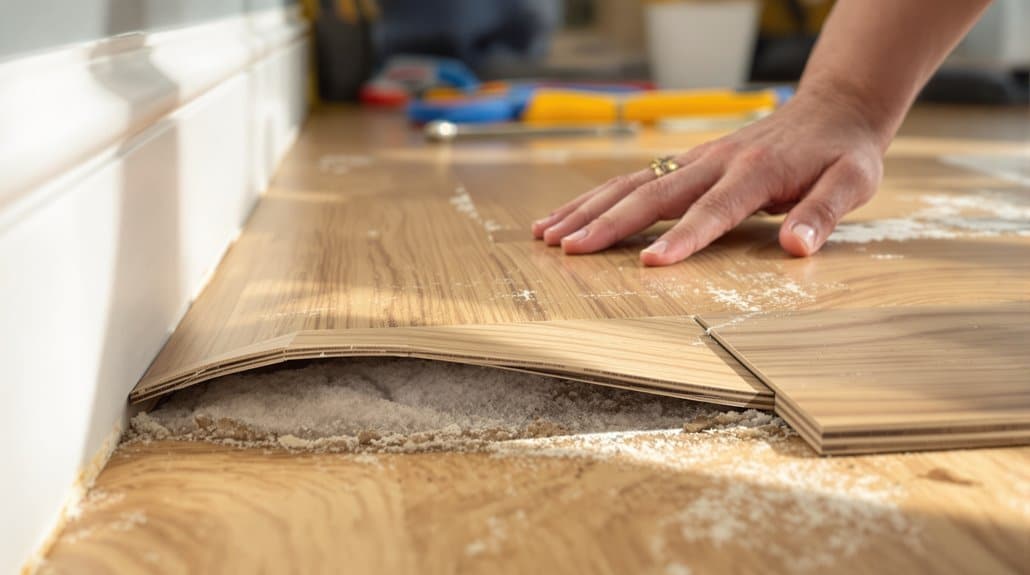
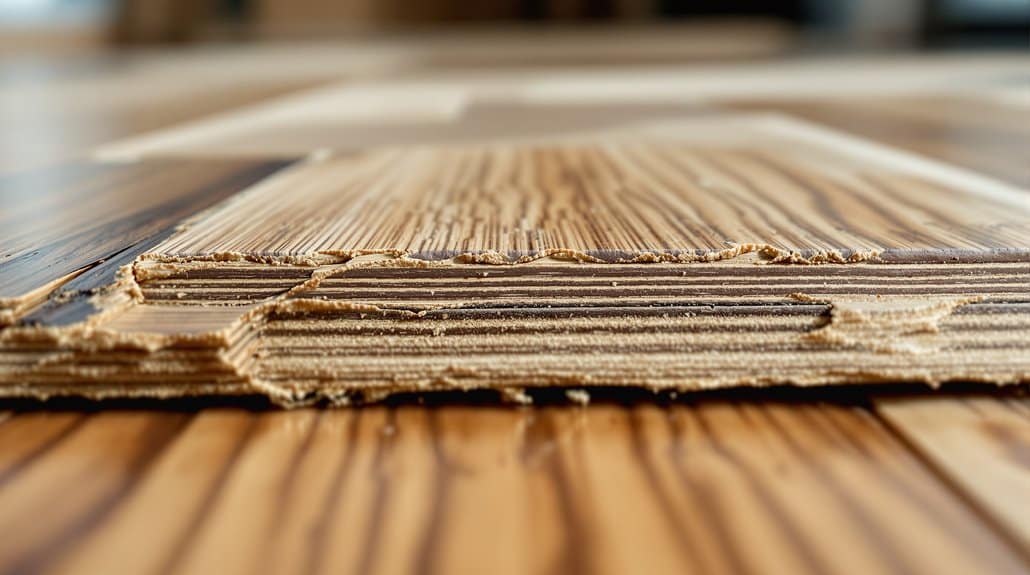
When hardwood floors warp or cup, you’re seeing the physical manifestation of moisture imbalance within the wood itself. Cupping occurs when wood edges absorb more moisture than the center, creating a concave surface. Warping develops when moisture exposure causes the boards to bend or twist irregularly.

During floor inspection, check for these deformities along seams and edges where moisture penetrates most easily. Prevention requires maintaining consistent humidity levels between 30-50% and temperature stability throughout installation and beyond.

Your maintenance tips should include monitoring subfloor moisture before installation, ensuring proper ventilation, and using vapor barriers. Address water damage immediately—don’t wait. Installing unacclimated hardwood accelerates these problems considerably. By controlling environmental conditions and performing regular inspections, you’ll help clients avoid costly replacements and structural complications. Once installed, maintain ideal humidity levels between 35% and 55% to prevent ongoing expansion or contraction of the wood.

Gaps Between Planks: A Sign of Poor Acclimation

gaps from poor acclimation

While moisture mismanagement causes cupping and warping, improper acclimation creates a different but similarly problematic issue: gaps that develop between planks as wood shrinks after installation. You’ll notice these spaces expanding over time, particularly in heated seasons when humidity drops considerably.

Gapping Causes Prevention Method
Insufficient acclimation time Allow 48-72 hours minimum
Low humidity levels Maintain 30-50% humidity
Temperature fluctuations Keep stable indoor climate
Inadequate spacing at walls Leave ½-inch expansion gaps
Moisture content mismatch Test wood before installation

During your flooring inspection, measure gaps exceeding ¼-inch—this indicates acclimation failure. You’re responsible for educating clients that proper acclimation prevents costly repairs. Install moisture barriers and maintain consistent environmental conditions to protect your installation’s integrity and serve your clients’ long-term satisfaction. Even water-resistant flooring like LVP and laminate can develop gaps if not properly acclimated to match the moisture content of the installation environment.

Buckling Floors: When Your Planks Peak in the Middle

When moisture infiltrates your flooring, you’ll notice your planks expand and create visible peaks or waves across the surface. You must maintain stable humidity levels between 30-50% in your home, as fluctuations cause wood to swell and contract unpredictably. You can prevent buckling by acclimating your flooring to your space for 48-72 hours before installation and ensuring proper ventilation throughout the acclimation period. If you’re looking for flooring that’s inherently water-resistant, LVP offers superior protection against warping and swelling compared to traditional materials.

Moisture Causes Plank Expansion

One of the most common culprits behind buckling hardwood floors is excess moisture causing individual planks to expand beyond their intended dimensions. You’ll notice the damage when moisture balance isn’t maintained before installation timing occurs.

To prevent this issue, you should:

  • Acclimate flooring to your home’s humidity levels for 7-14 days before installation
  • Monitor moisture content in both subfloor and planks using a moisture meter
  • Maintain indoor humidity between 30-50% year-round to prevent expansion and contraction
  • Install vapor barriers and guarantee proper ventilation in basements and crawl spaces
  • Use kiln-dried wood flooring that’s been properly conditioned

Understanding these preventative measures helps you serve clients by protecting their investment and avoiding costly repairs from moisture-related buckling.

Humidity Levels Affect Stability

Beyond preventing moisture infiltration, you’ll need to monitor how humidity fluctuations directly impact your flooring’s structural integrity. Excessive humidity causes flooring materials to absorb moisture, swelling the planks and creating internal stress. When humidity drops, these materials shrink, leaving gaps and weakening joints. This cyclical expansion and contraction destabilizes your floor’s foundation.

Proper humidity control prevents buckling—those peaked, dome-shaped planks appearing in your floor’s center. You’ll maintain stability by keeping indoor humidity between 30-50%, using dehumidifiers or humidifiers as needed. Different flooring materials react distinctly to humidity changes; hardwood’s particularly susceptible to warping. Monitor seasonal variations and address environmental imbalances promptly. Your proactive humidity management prevents costly repairs and extends your flooring’s lifespan considerably.

Prevention Through Proper Acclimation

Before installation, you’ll acclimate your flooring materials to your home’s specific humidity and temperature conditions—a critical step that dramatically reduces buckling risk.

Proper acclimation techniques involve:

  • Storing flooring materials in the installation space for 48-72 hours before laying
  • Maintaining consistent indoor temperature between 60-80°F during acclimation
  • Keeping humidity levels stable at 30-50% relative humidity
  • Allowing air circulation around stacked materials to equalize moisture content
  • Measuring moisture content with a moisture meter before installation begins

You’ll protect your investment by allowing flooring materials to stabilize. This prevents dimensional changes that cause buckling after installation. Skip acclimation, and you’re risking costly repairs. The time invested upfront prevents expensive floor replacement and customer dissatisfaction. Your commitment to proper acclimation techniques demonstrates professional standards and builds client trust through quality craftsmanship.

Seam Separation: Gaps That Grow Over Time

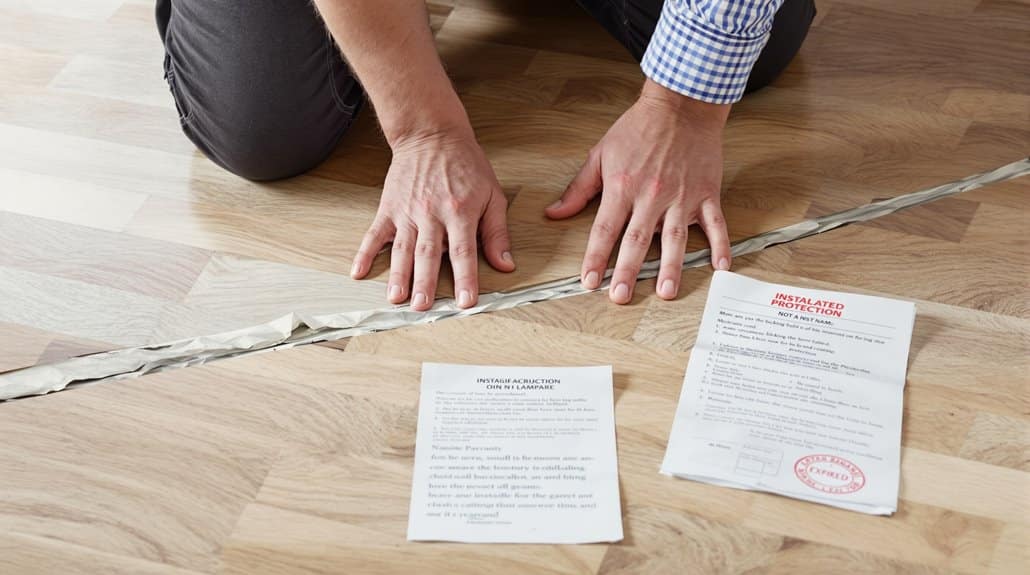
You’ll notice seam separation developing when moisture infiltrates your flooring and causes the wood to expand unevenly across planks. Temperature fluctuations intensify this problem by triggering repeated expansion and contraction cycles that push seams further apart. Wood naturally shrinks during dry seasons, creating visible gaps that widen if your subfloor wasn’t properly prepared or acclimated before installation.

Moisture Causes Expansion Issues

When moisture infiltrates flooring materials, it causes them to swell and contract, creating stress at the seams where individual planks or tiles meet.

A moisture imbalance greatly threatens your flooring durability. You’ll notice expansion that forces planks upward or buckling at joints. This movement directly causes seams to separate and gaps to widen progressively.

Key prevention strategies include:

  • Maintain indoor humidity between 30-50% consistently
  • Install moisture barriers beneath all flooring materials
  • Guarantee proper subfloor drainage before installation
  • Use dehumidifiers in high-moisture areas like kitchens and bathrooms
  • Seal gaps around room perimeters to prevent water infiltration

You must address moisture sources immediately—leaks, poor ventilation, or inadequate barriers compromise structural integrity. Regular monitoring prevents costly repairs and extends your flooring’s lifespan. Proper acclimation and environmental control work together to protect your investment.

Temperature Fluctuations Trigger Movement

As flooring materials expand and contract with temperature changes, they create stress that accumulates at seams and eventually forces gaps to widen. You’ll notice seam separation most prominently during seasonal shifts when your home experiences dramatic temperature swings.

Without proper acclimation, your flooring can’t adjust gradually to your environment. This makes it vulnerable to accelerated movement. You should implement consistent temperature management throughout your space—maintaining steady indoor temperatures prevents excessive expansion and contraction cycles that damage seams.

Pair temperature management with humidity control to protect your investment. These two factors work together to stabilize flooring dimensions. When you monitor both conditions carefully, you minimize stress on joints and seams, greatly extending your floor’s lifespan and maintaining its integrity for years to come.

Wood Shrinkage Creates Visible Gaps

Wood flooring naturally shrinks as moisture content decreases, and this shrinkage occurs unevenly across the board’s grain structure. When you’re installing floors without proper acclimation, you’re setting yourself up for visible gaps that’ll expand over time.

Installation mistakes during the acclimation phase directly cause gaps formation. You’ll notice seams separating as boards contract, compromising both aesthetics and structural integrity.

Prevention strategies:

  • Allow wood 7-14 days to acclimate to your space’s humidity levels
  • Monitor relative humidity between 30-50% during and after installation
  • Install flooring only when subfloor moisture reads below 12%
  • Use moisture barriers to prevent moisture infiltration
  • Space boards uniformly to accommodate seasonal movement

Proper acclimation prevents these costly gaps. You’re protecting your investment and serving clients with lasting, stable flooring solutions.

How Long Flooring Actually Needs to Acclimate

Acclimation isn’t optional—it’s a critical step that directly determines whether your flooring will cup, crown, or gap after installation. The acclimation duration varies greatly by flooring types. Solid hardwood typically requires 7-14 days in your space before installation, allowing wood to adjust to local humidity and temperature. Engineered hardwood needs 3-5 days, while laminate and vinyl require 24-48 hours minimum.

You’ll want to store materials in their original packaging within the installation area. This lets flooring absorb ambient moisture conditions matching your home’s environment. Skipping or shortening this process creates internal stress that manifests as visible defects post-installation.

Your diligence in respecting acclimation timelines directly protects your clients’ investments and prevents costly callbacks.

Repair or Replace: Your Options for Damaged Flooring
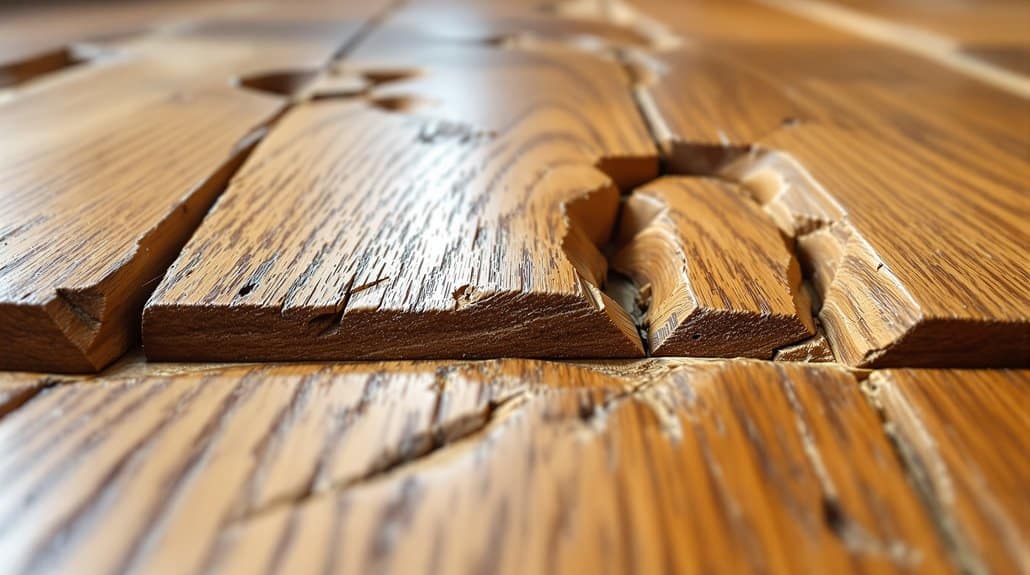
repair or replace flooring

Once flooring damage appears, you’ll face a critical decision: repair the affected area or replace the entire installation. Your choice depends on damage severity, budget, and long-term goals.

Repair methods address localized issues:

  • Spot repairs for minor gaps, cupping, or surface damage
  • Wood filling and refinishing for scratches and discoloration
  • Plank replacement when individual boards are compromised
  • Moisture remediation to prevent progressive deterioration
  • Adhesive reapplication for separation or lifting

Flooring alternatives offer replacement options when repair isn’t viable. Consider your building’s moisture conditions and acclimation requirements before selecting replacements. Improper installation often causes recurring damage; prioritize correct acclimation protocols during reinstallation. Evaluate whether existing subflooring conditions contributed to failure. Professional assessment guarantees you’re addressing root causes, not just symptoms, protecting your investment and serving your clients’ long-term needs.

Preventing Acclimation Problems in Future Installations

Because of moisture fluctuations causing the majority of flooring failures, you’ll want to establish rigorous acclimation protocols before installation begins. Implement these acclimation techniques to protect your clients’ investments and guarantee long-term performance.

Flooring Material Acclimation Duration Environmental Conditions
Hardwood 7-14 days 60-80°F, 30-50% humidity
Laminate 48-72 hours 65-75°F, 35-65% humidity
Vinyl Plank 24-48 hours 68-75°F, 40-60% humidity

You’ll measure moisture content in both the flooring materials and subfloor before proceeding. Document all readings and environmental conditions throughout acclimation. Store materials in the installation space, allowing them to reach balance with surrounding moisture levels. This preventative approach minimizes expansion, contraction, and cupping issues after installation, delivering superior results for those depending on your expertise.

Conclusion

You might think skipping acclimation saves time and money, but you’ll face expensive repairs instead. Proper acclimation prevents gaps, cupping, and buckling that compromise your flooring’s integrity. By allowing materials to adjust to your home’s humidity and temperature before installation, you’re protecting your investment and avoiding heartbreaking damage. Don’t let preventable problems destroy your beautiful floors—prioritize acclimation every time.

The post Signs Your Flooring Was Installed Without Proper Acclimation appeared first on Flooring Specialist.

source https://myflooringspecialist.com/signs-your-flooring-was-installed-without-proper-acclimation/

Monday, 6 April 2026

How Flooring Choices Impact Home Insurance Claims

You’re likely underestimating how your flooring choices influence your insurance costs. The material you select directly impacts claims frequency, premium rates, and liability exposure. Hardwood and tile perform differently than carpet and laminate when water damage strikes. Your insurer’s requirements vary by room, especially in moisture-prone areas. Understanding these distinctions reveals concrete opportunities to reduce your expenses.

Key Takeaways

  • Durable flooring materials like tile, concrete, and hardwood lower insurance premiums due to reduced damage risk.
  • Water damage claims vary by flooring type: hardwood averages $2,000–$10,000, while carpet can reach $3,000–$12,000.
  • Slip-resistant flooring in bathrooms and basements prevents liability claims and meets insurer safety requirements.
  • Water-resistant options like luxury vinyl plank minimize moisture-related damage and mold growth in vulnerable areas.
  • Strategic flooring upgrades in kitchens and bathrooms qualify homeowners for 5–15% insurance premium reductions.

How Flooring Materials Affect Insurance Premiums

flooring impacts insurance premiums

Since insurers assess risk through the lens of property durability and maintenance costs, your flooring choice directly influences what you’ll pay for homeowners insurance. Premium considerations vary considerably based on material selection. Durable options like tile, concrete, and hardwood typically command lower premiums as they resist water damage and wear better over time. Conversely, carpet and vinyl often result in higher premiums owing to moisture vulnerability and shorter flooring longevity. Insurers recognize that quality installations reduce claims frequency. Your flooring material signals maintenance commitment to underwriters. By selecting resilient materials, you’re demonstrating proactive risk management, which translates to measurable premium reductions. LVP flooring offers exceptional durability and water resistance that can positively influence your insurance risk profile while maintaining an affordable price point. When serving clients’ insurance needs, understanding these relationships helps you guide homeowners toward cost-effective choices that protect both their properties and their wallets.

Water Damage Claims: Which Floors Cost Most

When water infiltrates your home, your flooring material determines whether you’ll face a minor repair or a catastrophic claim. Your choice greatly impacts insurance costs and coverage.

Consider these high-risk flooring scenarios:

  1. Hardwood floors – Claims average $2,000-$10,000 because of warping and mold vulnerability.
  2. Laminate flooring – Moisture causes delamination, requiring complete replacement ($1,500-$8,000).
  3. Carpet – Absorbs water easily, promoting mold growth and necessitating full removal ($3,000-$12,000).
  4. Tile with porous grout – Water seeps beneath surfaces, damaging subfloors ($2,000-$15,000).

Water-resistant options like luxury vinyl plank and ceramic tile minimize claim expenses. Luxury vinyl plank features inherent water-resistance that prevents warping and damage in moisture-prone areas throughout your home. Review your flooring warranties carefully—many exclude water damage, leaving you responsible for costs. Selecting resilient materials protects both your home and your insurance premiums while serving your family’s long-term financial security.

Slip-and-Fall Liability by Flooring Type

slip resistant flooring practices essential

Why do some flooring materials create greater slip-and-fall risks than others? Polished marble and tile present serious slip hazards, especially when wet, as their smooth surfaces lack friction. Laminate and vinyl can become slippery without proper maintenance. Conversely, carpet and textured tile offer better traction and reduce accident risk.

Your flooring maintenance directly influences liability exposure. Regular cleaning prevents moisture accumulation, while appropriate sealants improve grip on naturally slick surfaces. Installing anti-slip treatments or rugs in high-traffic areas demonstrates your commitment to safety. For households with pets, luxury vinyl plank flooring offers scratch-resistance and withstands heavy foot traffic while managing spills effectively.

Insurance companies recognize these distinctions. If you’re liable for a slip-and-fall injury, your insurer assesses whether you maintained your floors responsibly. Choosing slip-resistant materials and implementing consistent maintenance practices protects both your guests and your coverage.

What Your Insurer Requires in Bathrooms and Basements

Bathrooms and basements demand heightened safety standards since they’re where moisture accumulates most, creating ideal conditions for slip-and-fall incidents. Your insurer’ll require you to maintain specific flooring standards to protect occupants and reduce claims.

Your insurer typically mandates:

  1. Non-slip surfaces with appropriate coefficient of friction ratings
  2. Mold resistance properties in moisture-prone areas
  3. Professional installation standards meeting industry codes
  4. Regular maintenance documentation proving upkeep

You’ll find that porcelain tile, luxury vinyl plank with non-slip backing, and sealed concrete meet most insurers’ requirements. Installation standards matter considerably—improper laying creates hazards and voids coverage. Document all flooring work through licensed contractors. You’re responsible for ensuring your choices align with your policy’s specific demands, protecting both your family and your coverage eligibility. Waterproof flooring options like luxury vinyl plank and ceramic tile also reduce the risk of mold growth, a common concern that can lead to denied claims in humid climates.

The Cheapest Flooring Upgrades That Lower Your Rates

cost effective flooring upgrades

Since insurers reward risk reduction, you can strategically upgrade specific high-traffic areas to qualify for premium discounts without replacing your entire home’s flooring. Luxury vinyl in kitchens and bathrooms offers water resistance at modest installation costs, typically $3–8 per square foot. Bamboo benefits include durability and moisture resistance, qualifying for eco-friendly discounts while costing $5–10 installed. These eco-friendly options reduce claim likelihood from water damage and slips.

Prioritize entryways and bathrooms first—areas where insurers focus risk assessments. Document all upgrades with receipts and photographs, then contact your agent immediately. Many carriers offer 5–15% rate reductions for water-resistant flooring in vulnerable zones. You’ll recoup installation costs through premium savings within 3–5 years while protecting your home’s integrity.

Conclusion

You’re fundamentally building a fortress against insurance claims—each flooring choice acts as a wall’s material. Hardwood and tile stand like stone, deflecting water’s assault, while carpet absorbs damage like parched earth. Your insurer reads these selections as blueprints of responsibility. Strategic upgrades in vulnerable zones transform your home’s vulnerability profile, directly reducing premiums. You’re not merely replacing floors; you’re restructuring your financial risk environment through deliberate material choices.

The post How Flooring Choices Impact Home Insurance Claims appeared first on Flooring Specialist.

source https://myflooringspecialist.com/how-flooring-choices-impact-home-insurance-claims/

Wednesday, 1 April 2026

Why Cheap Flooring Installations Often Cost More Later

You’ve likely heard horror stories from neighbors who chose cheap flooring—and coincidentally, they’re all facing reinstallation costs now. When you cut corners on installation, you’re not just saving money today. You’re actually guaranteeing expensive problems tomorrow. Rushed subfloor prep, improper material handling, and inadequate warranties create a cascade of structural issues. But there’s a critical factor most homeowners overlook that determines whether you’ll face five-figure repairs.

Key Takeaways

  • Improper subfloor preparation and rushed workmanship cause premature wear, gaps, and structural failures requiring costly replacements within years.
  • Moisture damage from faulty installations leads to mold growth and voided warranties, leaving homeowners liable for expensive repairs.
  • Budget materials wear unevenly and deteriorate faster, typically requiring replacement within 5-10 years instead of decades.
  • Cheap warranties contain hidden exclusions for installation defects, moisture damage, and wear issues, leaving gaps in coverage.
  • Skipped installation steps like moisture barriers and climate acclimation invite warping, gaps, and premature failure, necessitating full replacements.

The True Cost of Cheap Flooring Installation

hidden costs of cheap flooring

While you might save money upfront with budget flooring installation, you’ll likely face significant hidden costs down the road. A thorough cost analysis reveals that cheap installations often result in installation mistakes that compromise structural integrity. Improper subfloor preparation, inadequate underlayment, and rushed workmanship create premature wear, gaps, and buckling.

You’ll encounter accelerated deterioration requiring replacement within years rather than decades. Moisture damage from faulty installation causes mold growth, affecting indoor air quality and resident health. Voided warranties mean you’re liable for repairs when problems emerge.

Budget installers typically lack proper licensing and insurance, leaving you unprotected if accidents occur. When serving your clients or community, investing in quality installation demonstrates genuine care for their wellbeing and long-term satisfaction. The initial savings vanish quickly against mounting repair expenses and health risks. Professional installation typically results in a faster, higher-quality finish compared to DIY approaches that often characterize budget services.

Why Subfloor Prep Determines Everything

The foundation of any flooring installation rests entirely on subfloor preparation—it’s where quality installations separate from failures. You’ll realize that cutting corners here creates expensive problems downstream.

Proper subfloor prep involves:

  1. Evaluating subfloor types and structural integrity
  2. Implementing moisture management protocols
  3. Applying leveling compounds per installation standards
  4. Addressing existing damage before laying new material

When you skip these preparation techniques, you’re gambling with flooring longevity. Moisture trapped beneath surfaces causes warping, buckling, and mold—expensive damage prevention failures. Your clients deserve installations built on solid structural support.

The cost analysis is clear: investing in thorough subfloor preparation now prevents costly replacements later. You’re not just installing flooring; you’re protecting your reputation and your client’s investment through meticulous foundational work. For hardwood installations specifically, maintaining humidity levels between 45% and 65% after installation prevents wood shrinkage and expansion that can compromise even the best subfloor preparation.

Budget Materials Fail 5–10 Years Earlier

quality materials ensure longevity

Budget materials might seem like smart economics until you’re fielding warranty claims and replacement requests five to ten years down the road. You’ll realize that cheap vinyl, laminate, and tile wear unevenly, develop gaps, and deteriorate faster than quality alternatives.

Material durability directly impacts your reputation and client satisfaction. When budget longevity fails prematurely, you’re responsible for reinstallation costs and damaged relationships. Contractors who cut corners on materials face compounding expenses: additional labor, customer complaints, and potential legal disputes.

Premium materials withstand traffic, moisture, and temperature fluctuations better. They maintain structural integrity longer and protect your installation investment. Quality LVP flooring, for instance, offers exceptional durability that resists scratches, dents, and stains even in high-traffic areas with pets and heavy furniture. You’re not just installing flooring; you’re building trust with clients who deserve solutions lasting fifteen to twenty years or more.

Choose materials that align with realistic expectations.

Shortcuts That Crack Floors and Cause Settling

When you skip proper substrate preparation, you’re inviting cracks and structural failure that’ll plague your floors for years. Inadequate underlayment installation—whether you’re rushing the layering process or using insufficient material thickness—removes the cushioning that prevents movement and settling. Professional installers ensure your subfloor is structurally sound, rigid, level, smooth, and dry before any tile is laid, preventing the exact problems that budget installations create. These shortcuts compound each other, turning what should’ve been a stable foundation into a setup for costly repairs and liability issues.

Poor Substrate Preparation Methods

Since proper substrate preparation requires time and expense, many budget installers skip critical steps that’d otherwise prevent costly damage. You’re risking serious problems when cutting corners on foundation evaluation and subfloor assessment.

Critical preparation techniques you shouldn’t neglect:

  1. Moisture management – Test for excess moisture before installation; it causes adhesion failure and material warping
  2. Leveling importance – Uneven surfaces create stress points that crack flooring and cause settling
  3. Surface treatment – Remove debris and contaminants that compromise adhesion quality
  4. Inspection standards – Document material compatibility and installation tools’ suitability for your specific flooring type

You’re ultimately serving your clients poorly by skipping these foundation evaluation steps. Proper substrate preparation prevents callbacks, warranty claims, and reputation damage that far exceed initial labor savings.

Inadequate Underlayment Installation Techniques

Even after you’ve prepared your substrate correctly, improper underlayment installation will undo all that work. You’re risking costly damage by skipping critical installation techniques. Different underlayment types require specific methods—rushing this step compromises moisture barriers that protect against water damage and mold. Inadequate installation techniques weaken soundproofing benefits and structural integrity. Though quality underlayment costs more upfront, cost comparisons show savings long-term. Without proper installation tools and expert recommendations, you’ll face settling, cracking, and premature floor failure. The long-term effects include expensive repairs, potential health hazards, and customer dissatisfaction. Your clients deserve installations meeting industry standards. Invest in correct underlayment practices now—it’s the professional choice that protects both their investment and your reputation.

Warranty Gaps Leave You Unprotected

inadequate warranty protection risks

When you choose cheap flooring installation, you’ll find that warranty coverage often contains hidden defect exclusions that leave you responsible for installation-related failures the manufacturer won’t cover. Labor guarantees typically limit their protection to materials only, meaning you’re paying out-of-pocket if the installer’s workmanship causes problems after the initial service period ends. Manufacturer protection periods frequently restrict coverage to 1-5 years, which is far shorter than the lifespan of your flooring, leaving you vulnerable to settling, cracking, and other defects that emerge beyond their stated timeframe.

Hidden Defect Coverage Exclusions

Many cheap flooring warranties contain significant exclusions that’ll leave you exposed to costly repairs. Understanding these coverage exclusions protects your investment and prevents financial surprises.

Common hidden defects aren’t covered by budget warranties:

  1. Installation defects – Poor workmanship causing gaps, buckling, or uneven surfaces typically isn’t covered
  2. Environmental damage – Moisture issues, humidity fluctuations, and water exposure often fall outside protection
  3. Wear-related problems – Normal degradation, fading, and surface scratching remain your responsibility
  4. Subfloor issues – Structural problems beneath the flooring remain unaddressed by most warranties

When you choose cheaper installations, manufacturers routinely exclude coverage for defects resulting from improper installation practices. You’ll shoulder repair costs that quality installations would’ve prevented. Review warranty documentation thoroughly before committing to budget flooring options, ensuring you understand exactly what’s protected.

Labor Guarantee Limitations Explained

Budget flooring installations typically come with labor guarantees that don’t cover the defects you’ll actually encounter. These warranties often exclude problems arising from substandard workmanship, leaving you vulnerable to costly repairs.

When you’re helping clients navigate flooring choices, emphasize that cheap labor guarantees frequently contain restrictive clauses. They won’t protect against installation standards violations like improper substrate preparation, inadequate underlayment, or misaligned seams. Most budget contractors limit their labor quality guarantees to twelve months, while premium installations offer extended coverage.

You’ll uncover that warranty exclusions typically bypass issues caused by “normal wear,” environmental factors, or alleged user error. This gap means you’re responsible for problems that clearly stem from installation negligence. Always request detailed warranty documentation before signing contracts, ensuring your clients understand exactly what protection—or lack thereof—they’re receiving.

Manufacturer Protection Period Restrictions

Manufacturer warranties on budget flooring don’t extend nearly as far as you’d expect. When you’re serving clients on tight budgets, you’ll uncover significant gaps in coverage that leave them vulnerable.

Budget flooring typically carries these manufacturer limitations:

  1. Coverage expires within 1-5 years versus 15-25 years for premium options
  2. Installation guidelines exclude coverage if contractors deviate from specifications
  3. Wear-through guarantees only apply to factory defects, not normal use
  4. Moisture and subfloor damage claims require extensive documentation

You’ll need to educate clients that cheap flooring installations often void remaining protection. Improper installation guidelines from budget manufacturers can nullify claims entirely. You’re protecting their investment by explaining these restrictions upfront, ensuring they understand that initial savings frequently result in unprotected flooring and costly replacements.

Poor Moisture Control Leads to Mold and Rot

When moisture isn’t properly managed beneath your flooring, you’re creating an ideal environment for mold proliferation and wood rot. Inadequate moisture barriers allow water vapor to penetrate subfloors, compromising structural integrity and triggering long-term effects that extend far beyond visible damage.

Professional installation techniques incorporate proper air circulation and vapor barriers crucial for mold prevention. You’ll need to assess environmental factors like humidity levels and evaluate water damage risks specific to your climate. Chemical treatments can offer temporary relief, but they’re costly remedies for preventable problems.

Cheap installations typically skip these vital steps, leaving your flooring vulnerable. Proper flooring maintenance becomes increasingly difficult when rot risks escalate. The expense of replacement—along with potential health hazards—far exceeds the initial savings from budget installations.

Structural Hazards From Rushed Labor

Rushed labor creates structural vulnerabilities that’ll compromise your flooring’s integrity and safety. When installers hurry through projects, they skip critical steps that protect both property and occupants. You’re exposing yourself to significant risks when corners get cut.

Consider these hazards from rushed installations:

  1. Subfloor preparation neglect – Inadequate leveling causes uneven settling and premature wear
  2. Fastening failures – Improper nailing or adhesive application leads to loose planks and trip hazards
  3. Rushed inspections – Missing defects during installation allows problems to develop undetected
  4. Safety violations – Non-compliance with building codes creates liability and costly corrections

These oversights demand expensive remediation later. Proper installation takes time—investing in quality labor prevents structural damage, maintains warranties, and guarantees your flooring serves its intended lifespan safely.

How Reinstallation Within 5 Years Multiplies Costs

The structural problems created by hasty installation don’t just disappear—they’ll force you into expensive reinstallation cycles that compound your initial savings into considerable losses. When you cut corners initially, installation mistakes emerge within years, requiring complete removal and replacement. You’re fundamentally paying twice for the same project, eliminating any budget advantage you gained upfront.

Consider this reality: a second installation costs nearly as much as the first, yet you’ve already invested in the failed attempt. Material waste, labor expenses, and project disruption multiply your expenses dramatically. Your clients suffer inconvenience and financial strain.

Prioritizing quality installation from the start protects long-term savings. You avoid costly callbacks, maintain client trust, and build a reputation for dependable work. The upfront investment in proper installation delivers true economic benefit.

The Hidden Impact on Resale Value

Due to cheap flooring installations compromising structural integrity, they’ll greatly diminish your property’s market value when it’s time to sell. Prospective buyers recognize poor craftsmanship immediately, affecting resale perception negatively.

Current market trends show buyers prioritize quality foundations. Your investment suffers when:

  1. Inspections reveal substandard installation materials and workmanship
  2. Buyers demand significant price reductions or walk away entirely
  3. Properties sit longer on market, accumulating holding costs
  4. Appraisals reflect depreciation from visible flooring defects

You’re serving your future self poorly by cutting corners now. Quality installations protect your equity and appeal to discerning buyers who understand long-term value. The upfront savings vanish when you face substantially lower offers, extended listing periods, or costly repairs before closing. Strategic investment in proper flooring installation preserves your asset’s worth.

What Quality Installation Actually Protects

When you invest in quality installation, you’re protecting your subfloor and structural foundation from moisture damage, settling, and premature wear that cheap workmanship invites. You’ll retain meaningful warranty coverage—many manufacturers won’t honor guarantees if installation falls below their standards—leaving you liable for costly repairs down the road. Proper installation techniques guarantee your flooring lasts its intended lifespan rather than failing prematurely, ultimately saving you thousands in replacement and remediation expenses.

Structural Integrity Protection

While you might assume flooring simply sits atop your subfloor, improper installation can compromise the structural foundation supporting your entire home. Quality installation protects your long term investment by ensuring:

  1. Proper moisture barriers prevent water infiltration that weakens subfloor stability
  2. Correct fastening distributes weight evenly across support systems
  3. Appropriate spacing accommodates natural material expansion and contraction
  4. Level surfaces eliminate stress concentrations that crack foundations

When you cut corners on installation, you’re exposing your home’s structural integrity to accelerated deterioration. Subfloor rot, foundation settling, and costly repairs follow. Professional installation safeguards against these preventable failures, preserving both your flooring and the structural framework beneath it. This protection justifies the upfront investment.

Warranty Coverage Matters

Beyond protecting your home’s foundation, quality installation safeguards your flooring through extensive warranty coverage that cheap installations simply can’t provide. When you hire professionals, you’re securing thorough warranty terms that protect against defects, material failures, and installation errors for years.

Budget contractors often skip proper documentation or offer minimal coverage limitations that leave you vulnerable. You’ll uncover these gaps only after problems emerge—warping, gaps, or premature wear. Quality installers stand behind their work with transferable warranties that improve your home’s resale value.

Understanding what your warranty actually covers matters greatly. You’re investing in peace of mind and financial protection. When issues arise, legitimate warranty coverage handles repairs without draining your resources, making professional installation the fiscally responsible choice for serving your family’s long-term interests.

Longevity Through Proper Technique

Three critical installation techniques separate floors that last decades from those that fail within years: proper subfloor preparation, correct moisture management, and precise material acclimation.

You’ll protect your long-term savings by demanding expert recommendations on these key factors:

  1. Subfloor inspection—identifying and repairing damage prevents future buckling and separation
  2. Moisture barriers—blocking water intrusion extends flooring lifespan considerably
  3. Climate acclimation—allowing materials to adjust prevents gaps and warping
  4. Fastening precision—proper spacing and depth eliminate squeaking and movement

Quality installation techniques directly impact aesthetic appeal and repair costs. When you skip these steps, you’re inviting premature failure. Expert recommendations aren’t luxuries—they’re investments. Superior material selection means nothing without proper installation. Your maintenance practices matter too, but they can’t compensate for shortcuts taken during installation. You’ll serve your clients best by prioritizing correct technique from day one.

Conclusion

You’ll want to weigh your wallet wisely—cheap choices create costly consequences. When you cut corners on installation, you’re committing to compounding expenses: structural strain, substrate deterioration, and premature replacement cycles. You’ll face five-figure fixes within years. You’re forfeiting floor longevity, property protection, and peace of mind. You’re pushing potential resale penalties. You can’t compromise on quality craftsmanship; proper preparation prevents persistent problems and preserves your investment’s integrity.

The post Why Cheap Flooring Installations Often Cost More Later appeared first on Flooring Specialist.

source https://myflooringspecialist.com/why-cheap-flooring-installations-cost-more-later/

Saturday, 28 March 2026

What Flooring Works Best in Homes With Large Dogs?

You’ve probably heard the horror stories—scratched hardwood, stained laminate, ruined carpets. When you’re living with large dogs, your flooring choice becomes less about aesthetics and more about survival. Standard materials simply won’t cut it against constant paw traffic and potential accidents. But here’s the thing: you don’t have to sacrifice style for durability. The right flooring exists, and it’s worth exploring which option transforms your home’s foundation.

Key Takeaways

  • Luxury Vinyl Plank resists scratches, repels moisture, and requires only sweeping and mopping for maintenance.
  • Polished concrete offers unmatched durability, scratch resistance, and lasts 25+ years with minimal upkeep.
  • Bamboo flooring is harder than hardwood, resists scratches, and costs less than premium options.
  • Waterproof engineered wood prevents moisture damage while maintaining authentic wood appearance and aesthetic options.
  • Immediate cleanup with enzymatic cleaners and weekly pet-safe mopping prevent stains and odors effectively.

Hardwood and Laminate: Why They Don’t Hold Up

durable flooring for pets

While hardwood and laminate floors offer aesthetic appeal and easy maintenance in most homes, they’re poorly suited for households with large dogs. Your dog’s nails create scratches that penetrate hardwood’s protective finish, and moisture from wet paws causes warping and cupping. Laminate longevity suffers similarly—water seeps into seams, degrading the core material irreversibly.

Both flooring types demand constant vigilance. You’ll need frequent refinishing for hardwood, which disrupts your home and strains your budget. Laminate can’t be refinished at all, forcing complete replacement after damage occurs.

Consider hardwood alternatives like engineered wood or luxury vinyl plank instead. These options withstand scratching, resist moisture damage, and tolerate the wear large dogs inevitably inflict. They’re additionally more practical for busy households serving their pets’ needs without sacrificing durability. Luxury vinyl plank offers exceptional durability for active pets while maintaining the appearance of traditional flooring.

Luxury Vinyl Plank (LVP): The Best Choice for Large Dogs

You’ll find that luxury vinyl plank (LVP) outperforms hardwood and laminate since its wear layer resists scratches from your dog’s claws while maintaining structural integrity under constant traffic. The waterproof core and sealed seams make cleanup effortless—you can simply wipe up accidents and muddy paw prints without worrying about moisture damage or staining. Unlike traditional hardwood that requires periodic refinishing, LVP requires no special treatments beyond regular sweeping and occasional mopping with mild cleaner. LVP’s combination of durability and low maintenance makes it the practical flooring solution for households with large dogs.

Durability And Scratch Resistance

Since large dogs exert significant pressure through their claws and nails, you’ll want flooring that withstands constant abrasion without visible damage. Luxury vinyl plank offers exceptional durability that outperforms traditional pet-friendly options. Its wear layer resists scratching, gouging, and scuffing from daily activity, maintaining appearance for years.

LVP’s construction features a rigid core that prevents denting under heavy paw traffic. You’ll appreciate its superior performance compared to laminate or standard vinyl, making it one of the smartest flooring investments for dog owners. The material’s density provides protection against moisture damage from accidents and spills.

When selecting LVP, choose thicker planks with commercial-grade wear layers for maximum longevity. LVP’s multiple layers work together to create enhanced durability that stands up to the demands of active households with large dogs. This durability guarantees your investment protects your home while accommodating your large dogs’ active lifestyle effectively.

Easy Cleaning And Maintenance

Maintaining LVP flooring doesn’t require specialized equipment or complicated procedures—a simple sweep and damp mop handle most messes from muddy paws, accidents, and spills. You’ll appreciate how quickly you can address dog hair management; the smooth surface prevents debris from embedding into crevices like traditional wood or carpet. For odor control, LVP’s non-porous composition resists absorbing urine and other odors that plague pet owners. Spot-clean accidents immediately with enzymatic cleaners designed for pet stains, which break down organic compounds effectively. Weekly sweeping and monthly deep cleaning with pet-safe solutions keep your floors pristine without harsh chemicals. Unlike other materials, LVP won’t warp from water exposure or retain stubborn smells, making it an ideal servant to busy households with active pets. The scratchproof and scuff-resistant features make LVP particularly well-suited for homes with large dogs that frequently move across floors.

Tile Flooring: Durable, Stain-Proof, and Easy to Clean

durable stain proof tile flooring

You’ll find that tile’s exceptional scratch resistance and durability make it one of the most resilient flooring options for large dogs, as it withstands heavy paw traffic and claws without visible damage. Sealed tile prevents stains from penetrating the surface, and you can choose sealers based on your specific needs and the tile’s porosity level. Cleaning becomes straightforward—you can simply sweep, vacuum, and mop with mild detergent, making tile maintenance considerably less demanding than other flooring types.

Scratch Resistance and Durability

When your dog’s claws make contact with flooring, tile stands as one of the most resilient options available. Unlike softer materials, tile resists scratching from aggressive dog behavior, maintaining its surface integrity even with large breeds. You’ll appreciate how the glazed ceramic or porcelain surface doesn’t show wear patterns over time.

The durability of tile extends beyond scratch resistance. It withstands heavy foot traffic, moisture, and impact without degrading. Quality tiles rated for high-traffic commercial use offer exceptional longevity in active households.

While you’re protecting your investment, you’re likewise preserving flooring aesthetics. Tile doesn’t develop the dull, scuffed appearance that plagues softer alternatives. Your floors maintain their original appearance, keeping your home looking well-maintained in spite of your large dog’s daily activity.

Stain Prevention and Sealing

Since tile’s porous grout lines trap liquids and stains, proper sealing becomes vital in homes with large dogs. You’ll want to apply stain-resistant treatments specifically designed for grout, which create a protective barrier against pet accidents and spills. Professional-grade sealing techniques involve using penetrating sealers that absorb into the grout’s surface, preventing moisture and contaminants from settling in.

For peak protection, you should reseal grout every one to three years, depending on traffic and exposure. Choose pH-neutral cleaners when maintaining sealed grout, as acidic products can compromise the sealant’s integrity. You can additionally consider epoxy grout instead of traditional cement grout—it’s fundamentally more resistant to staining and easier to sanitize. This proactive approach guarantees your tile flooring remains protected against the inevitable accidents that come with large dog ownership.

Maintenance and Cleaning Methods

Tile’s non-porous surface makes it remarkably easy to maintain compared to other flooring options commonly found in pet-friendly homes. You’ll appreciate how efficiently you can manage your large dog’s messes and shedding with these strategies:

  • Sweep daily to capture loose fur before it accumulates
  • Use pet-friendly products when mopping to protect your dog’s paws
  • Spot-clean accidents immediately with enzymatic cleaners to prevent odor
  • Implement grooming routines that reduce shedding and tracked-in debris

You can maintain tile floors with minimal effort by establishing consistent cleaning habits. Regular grooming routines keep hair from embedding into grout lines. When you combine daily sweeping with weekly mopping using pet-friendly products, your tile remains hygienic and pristine. This approach protects your investment while creating a healthier environment for your family.

Polished Concrete: Industrial-Grade Durability for Active Homes

durable pet friendly flooring solution

If you’re looking for a flooring option that’ll withstand your dog’s relentless paws and high-traffic activity, polished concrete delivers unmatched durability. You’ll appreciate its resistance to scratches, stains, and moisture—critical features when serving households with active pets.

Feature Benefit
Scratch Resistance Withstands dog claws effectively
Stain Protection Sealed surface repels accidents
Easy Cleaning Sweep and mop efficiently
Longevity Lasts 25+ years with care
Pet-Friendly Aesthetics Modern look complements any décor

While flooring costs run higher upfront ($3-12 per square foot installed), you’ll recoup savings through minimal maintenance and replacement needs. The sealed finish prevents dirt accumulation in crevices, supporting your commitment to maintaining hygienic pet spaces. Polished concrete’s industrial character creates a contemporary aesthetic that accommodates large dogs without compromising style.

Bamboo Flooring: Harder Than Traditional Wood

Bamboo’s natural hardness makes it an excellent alternative to conventional hardwoods for dog-heavy households. You’ll appreciate bamboo benefits that serve your active lifestyle and your pets’ needs simultaneously.

Bamboo outperforms traditional hardwoods in several critical ways:

  • Density advantage: Strand-woven bamboo rates harder than oak and maple, resisting scratches from large dog claws
  • Moisture resistance: You’ll find bamboo less susceptible to warping from pet accidents than conventional wood
  • Easy maintenance: Quick cleanup protects the finish and extends flooring lifespan
  • Cost efficiency: Bamboo installation typically costs less than premium hardwood options

You’ll need professional bamboo installation to guarantee proper acclimation and subfloor preparation. This flooring choice delivers durability without sacrificing aesthetics, making it ideal for serving households where large dogs thrive indoors.

Waterproof Engineered Wood: Warmth Without Compromise

While bamboo delivers exceptional hardness and moisture resistance, waterproof engineered wood offers you an alternative that combines the warmth of traditional hardwood with modern protection technology. You’ll appreciate how this flooring balances comfort features with durability, creating spaces where your large dogs thrive without sacrificing aesthetic appeal.

Engineered wood’s multi-layer construction prevents moisture damage from accidents and spills, while its genuine wood veneer maintains authentic wood grain patterns. You’re investing in a solution that withstands heavy paws and maintains its appearance through years of active household use.

Feature Waterproof Engineered Bamboo
Moisture Protection Excellent Very Good
Comfort Underfoot Superior Good
Aesthetic Options Extensive Limited
Installation Flexibility High Moderate
Long-term Value Strong Excellent

Comparing Your Options: Which Material Fits Your Home?

Now that you’ve examined the distinct advantages of bamboo and waterproof engineered wood, you’ll need to evaluate which material aligns with your household’s specific demands.

Consider these factors when making your decision:

  • Dog behavior patterns: Assess your dog’s activity level and tendency to scratch or slip on surfaces
  • Flooring aesthetics: Determine whether you prefer bamboo’s natural grain or engineered wood’s design variety
  • Maintenance capacity: Evaluate your willingness to implement regular cleaning protocols
  • Budget constraints: Compare installation and long-term durability costs

Both materials withstand large dog traffic effectively. Bamboo excels in scratch resistance and eco-friendliness, while waterproof engineered wood offers superior moisture protection and design flexibility. Your choice hinges on prioritizing durability, appearance preferences, and maintenance commitment. Honestly assess your household’s lifestyle before selecting the flooring that’ll serve your family and your dog best.

Maintaining Dog-Friendly Floors: Cleaning and Long-Term Care

Once you’ve selected your flooring material, establishing a consistent cleaning routine becomes the linchpin of preserving its appearance and longevity. You’ll want to vacuum daily to remove pet hair and debris before they embed into your surface. For dog-friendly finishes, use pH-neutral cleaners that won’t degrade protective sealants or coatings.

Address accidents immediately by blotting liquids and applying enzymatic cleaners to eliminate odors completely. You should sweep high-traffic areas frequently where your large dog travels most.

Invest in quality mats near entryways and water bowls to minimize moisture exposure. Schedule professional deep cleaning annually to maintain your flooring longevity. Trim your dog’s nails regularly to prevent scratching, and consider protective paw balms during winter months when salt and chemicals threaten your floors.

Conclusion

You’ve got to think of your flooring as a fortress against your dog’s daily assault. LVP, bamboo, and polished concrete aren’t just tough—they’re practically indestructible. They’ll laugh in the face of muddy paws and sliding nails. When you’re choosing materials, prioritize waterproof cores and scratch-resistant surfaces. Your floors won’t just survive your beloved pet’s adventures; they’ll thrive under the pressure. Pick smart, and you’re investing in longevity that actually pays dividends.

The post What Flooring Works Best in Homes With Large Dogs? appeared first on Flooring Specialist.

source https://myflooringspecialist.com/what-flooring-works-best-for-large-dogs/

Wednesday, 25 March 2026

When Refinishing Hardwood Makes More Sense Than Replacing It

Your hardwood floors are like a blank canvas waiting to be restored rather than discarded. If you’re staring at scratches and dull patches, you’ve likely wondered whether refinishing or replacing makes sense. The answer isn’t always obvious. Cost differences are substantial, but your subfloor’s condition and damage severity matter similarly. Understanding what actually gets fixed during refinishing—and what doesn’t—will reshape how you approach this decision.

Key Takeaways

  • Refinishing costs 50-75% less than replacement while extending structurally sound floor life by 10-15 years.
  • Modern dustless sanding and eco-friendly finishes complete projects in days with minimal disruption to your home.
  • Surface scratches, scuffs, and minor dull spots can be restored without full refinishing through targeted repairs.
  • Refinishing reduces environmental impact by retaining existing hardwood’s carbon storage and minimizing landfill waste significantly.
  • Professional-grade finishes last 7-10 years with proper maintenance, making refinishing economical before considering full replacement.

Refinishing vs. Replacement: The Real Cost Comparison

refinishing saves money significantly

When you’re facing worn hardwood floors, the decision between refinishing and replacement hinges on cost, condition, and long-term value. Refinishing typically costs 50-75% less than replacement, making it an economical choice for structurally sound floors. Modern refinishing techniques—including water-based polyurethane and dust containment systems—deliver professional results while minimizing disruption.

However, evaluate key cost factors: floor thickness, damage extent, and subfloor integrity. If planks are less than 3/16 inches thick or show severe water damage, replacement becomes necessary. When helping clients decide, consider that refinishing preserves character and authenticity, while replacement offers design flexibility.

Request quotes for both options to provide accurate comparisons. Quality refinishing extends floor life 10-15 years, delivering genuine value for those prioritizing responsible stewardship of existing assets. Refinishing works by removing the top layer of wood, which eliminates scratches, stains, and minor dents to reveal a fresh surface beneath.

When Replacement Is the Better Choice

Though refinishing offers significant savings, you’ll find that replacement becomes the prudent choice when structural integrity or floor condition renders restoration economically inefficient. Several replacement considerations determine this decision. Extensive cupping, crowning, or rotting indicates subfloor damage that refinishing can’t address. When you’re considering a long-term investment, evaluate whether your hardwood’s thickness allows multiple refinishing cycles. Floors sanded below 3/16 inches lack sufficient material for future restoration. Water damage compromising the substructure necessitates replacement to prevent future problems. Moreover, if refinishing costs approach 80% of replacement expenses, investing in new flooring proves wiser. You’ll benefit from updated species options, improved durability, and warranty protection that justifies the investment for decades ahead. Replacement allows you to select from numerous styles and colors that better complement your current home design preferences.

Is Your Subfloor Healthy Enough to Refinish?

assess subfloor before refinishing

Before you refinish your hardwood floors, you’ll need to assess whether your subfloor can support the project by identifying signs of damage like soft spots, discoloration, or cupping in the existing wood. Next, you’ll evaluate moisture levels and check for rot, as excess moisture or fungal growth will compromise any refinishing work and require remediation first. Finally, you can perform structural integrity tests—such as probing with an awl or moisture meter readings—to confirm your subfloor is sound enough to proceed. Keep in mind that maintaining ideal humidity levels between 35% and 55% will help prevent future subfloor issues after refinishing.

Signs Of Subfloor Damage

Your subfloor’s structural integrity directly determines whether refinishing is viable or if replacement is necessary before you proceed. During subfloor inspection techniques, you’ll identify critical failure points that compromise your hardwood floors.

Watch for these signs of deterioration:

  1. Soft spots and sponginess – Press firmly across the subfloor; it shouldn’t yield under pressure
  2. Visible mold, mildew, or discoloration – Dark patches indicate moisture damage beyond surface treatment
  3. Separations and movement – Gaps between boards or noticeable flexing when walking suggest structural failure

You’ll additionally listen for creaking sounds and check for water stains around plumbing fixtures. If you find extensive damage, refinishing won’t solve underlying problems. You’ll need subfloor replacement first, ensuring a stable foundation for your new hardwood investment. A healthy subfloor is essential whether you’re planning to refinish solid hardwood floors or install engineered alternatives.

Moisture And Rot Assessment

Since moisture creates the conditions for wood decay, you’ll need to assess both current water damage and ongoing moisture exposure before committing to refinishing. Use moisture detection tools to measure wood moisture content—readings above 12% indicate problems requiring intervention. Probe suspected soft spots with a screwdriver; resistance indicates sound wood, while easy penetration signals rot. Check for discoloration, musty odors, and visible mold, which reveal active decay. Identify moisture sources: plumbing leaks, foundation cracks, or poor ventilation. Address these issues before refinishing, or moisture will compromise your work. Implement rot prevention by fixing leaks, improving drainage, and ensuring adequate subfloor ventilation. A healthy subfloor is dry, solid, and structurally sound—essential prerequisites for successful refinishing rather than costly replacement.

Structural Integrity Testing Methods

Once you’ve confirmed that moisture and rot aren’t actively compromising your subfloor, you’ll need to evaluate whether the underlying structure can support refinishing work.

Your structural assessment involves three critical integrity evaluation techniques:

  1. Bounce Testing – Walk across the floor applying pressure; excessive deflection signals weakened joists requiring replacement before refinishing.
  2. Fastener Inspection – Check that nails and screws remain firmly seated; loose fasteners indicate structural movement that’ll compromise new finishes.
  3. Joist Examination – Inspect beams for sagging, cupping, or visible damage; these conditions demand reinforcement or replacement before proceeding.

This hands-on evaluation determines whether refinishing serves your community’s needs or if replacement better protects the property long-term. Document findings thoroughly to guide your decision confidently.

Spot the Damage: What Can Actually Be Fixed

assess repair refine restore

You can fix surface scratches and scuffs through refinishing, as they don’t penetrate the wood’s structural integrity. Water stains and discoloration require assessment to determine whether they’re surface-level stains that’ll sand out or deep damage that’s compromised the wood’s stability. Identifying which damages are repairable helps you decide whether refinishing will restore your floors or whether you’ll need deeper intervention.

Surface Scratches and Scuffs

How deep does that scratch really go? You’ll want to assess whether you’re dealing with minor surface damage or wear that requires refinishing. Light scratches typically affect only the protective topcoat, not the wood itself.

Here’s what you can actually fix without full refinishing:

  1. Shallow scratches that don’t expose bare wood—these respond well to scratch repair products and furniture markers
  2. Scuffs confined to the finish layer—surface protection solutions like touch-up stains effectively restore appearance
  3. Minor dull spots from wear—buffing and recoating localized areas refreshes the shine

You’ll save significant time and expense by addressing these surface-level issues immediately. On the other hand, if scratches penetrate the wood’s actual grain or you’re noticing multiple damaged areas, full refinishing becomes the more practical choice for uniform, lasting results that truly serve your home’s longevity.

Water Stains and Discoloration

Water stains and discoloration demand a different diagnostic approach than surface scratches since they’ve penetrated the finish and potentially affected the wood itself. You’ll need to assess whether the water damage is superficial or has compromised the wood structure.

Light stains often respond to targeted stain removal techniques and restoration methods. For deeper discoloration, you’ll evaluate color matching options during floor preparation. Professional restoration techniques can address moisture barriers that’ve failed, preventing future issues.

Your refinishing timeline depends on damage severity. Minor cases require spot treatment with protective finishes, while extensive water damage necessitates complete sanding and refinishing. You’ll apply moisture barriers to vulnerable areas, ensuring lasting protection against recurring moisture infiltration and protecting your investment long-term.

Modern Sanding and Stain Methods That Match New Floors

Since contemporary sanding equipment and stain formulations have evolved greatly, you’ll find it’s now possible to achieve results that closely match newly installed hardwood. Modern equipment delivers superior color matching and texture improvement compared to older methods.

You can markedly improve your refinishing outcomes by:

  1. Utilizing multi-grit sanding techniques with advanced dustless systems that preserve floor integrity while guaranteeing proper finish durability
  2. Selecting eco-friendly finishes and stain options that provide consistent results across varied wood species
  3. Employing professional tools for precise floor preparation, enabling accurate color matching without over-sanding

Contemporary DIY refinishing kits now incorporate professional-grade components, though hiring experienced technicians assures prime texture improvement and finish application. Your investment in modern methods yields floors virtually indistinguishable from new installations.

How Refinishing Saves Money and the Environment

When you refinish existing hardwood floors instead of replacing them, you’ll spend 50-70% less than installing new flooring while keeping materials out of landfills. You’re reducing both the carbon footprint associated with manufacturing, transporting, and installing new materials and the waste generated by demolition and disposal. This approach extends your floor’s lifespan by decades while supporting sustainable building practices that benefit your budget and the environment simultaneously.

Cost Comparison Analysis

Three significant financial and environmental advantages emerge when you choose refinishing over replacement.

Understanding the cost breakdown helps you serve your clients’ best interests. Here’s what you’ll uncover:

  1. Material costs drop 60-70% when refinishing existing hardwood versus purchasing new flooring
  2. Labor expenses decrease substantially since installation complexity is eliminated
  3. Disposal fees vanish entirely, removing environmental cleanup costs

Modern refinishing techniques maximize efficiency without compromising quality. You’ll invest in sanding, staining, and sealing rather than complete removal and replacement. This approach preserves the structural integrity of established floors while delivering pristine results.

The financial advantage compounds when considering reduced disruption to your clients’ spaces. Refinishing typically completes in days, not weeks. Your clients benefit from cost savings, environmental responsibility, and minimal inconvenience—a triple advantage that demonstrates genuine service-oriented decision-making.

Environmental Impact Benefits

By choosing refinishing over replacement, you’re dramatically reducing the environmental footprint of your flooring project. Refinishing extends your hardwood’s life cycle considerably, minimizing waste sent to landfills. You’ll conserve the natural resources required for harvesting and manufacturing new flooring materials.

When you refinish, you’re utilizing eco-friendly materials like low-VOC sealers and water-based finishes that diminish harmful emissions. This approach prevents the transportation emissions associated with manufacturing and shipping replacement flooring. Your existing hardwood retains its carbon storage capacity rather than releasing sequestered carbon during disposal.

Waste Reduction And Sustainability

Rather than sending hardwood floors to landfills, refinishing redirects considerable waste from disposal streams while preserving a valuable resource. You’re embracing sustainable practices that honor your responsibility to future generations.

Refinishing delivers measurable environmental advantages:

  1. Reduces landfill burden – You’ll divert thousands of pounds of wood waste annually through lifecycle assessment strategies.
  2. Minimizes manufacturing emissions – Refinishing requires considerably less energy than producing new flooring materials.
  3. Supports waste management goals – You’ll extend floor lifespan by 20+ years using eco-friendly materials and proper techniques.

You’ll achieve energy efficiency by avoiding the extraction, processing, and transportation demands of replacement flooring. Sustainable practices like water-based finishes and dust containment systems further reduce your environmental footprint. This approach demonstrates genuine stewardship while delivering practical, long-term value.

Prepare Your Home: What Happens Before Work Starts

What should you expect when refinishing contractors arrive at your home? You’ll need to complete crucial pre-work checklist items before crews begin. Move furniture, artwork, and personal items from the work area to protect them from dust and debris. Seal doorways with plastic sheeting to contain particles in adjacent rooms. Disconnect ceiling fans and remove light fixtures when necessary.

Your homeowner responsibilities include ensuring clear access to all flooring and confirming utilities are accessible for contractors. Arrange temporary accommodations if dust containment proves inadequate for your household’s comfort.

Confirm parking arrangements and delivery access beforehand. Discuss protection protocols for HVAC systems with your contractor. Establish communication procedures for questions arising during the project. These preparations minimize disruptions and allow crews to work efficiently while protecting your home’s contents and systems.

What Happens During the Refinishing Process

Once crews arrive and begin work, they’ll follow a systematic process that typically spans 3-7 days depending on your floor’s size and condition.

  1. Sanding techniques remove the old finish and surface imperfections through progressive grit levels, exposing fresh wood beneath.
  2. Stain application follows, allowing you to customize your floor’s color and improve natural grain patterns.
  3. Sealing and finishing protect your newly refinished surface with polyurethane or similar protective coatings.

You’ll notice dust containment measures throughout, as professionals isolate work areas to minimize disruption to your home. They’ll sand strategically to avoid gouging while achieving uniform results. Drying time between each phase is critical—rushing compromises quality. You’re investing in craftsmanship that restores your floor’s beauty while preserving its structural integrity for decades ahead.

Your Maintenance Plan After Refinishing

Your newly refinished hardwood floor requires a strategic maintenance plan to preserve its appearance and durability for years to come. Implement these maintenance tips immediately after refinishing completes. Use soft-bristled brooms or microfiber mops for regular cleaning techniques that won’t scratch the finish. Avoid excessive water—damp, not wet, mopping protects your investment. Place protective pads beneath furniture legs to prevent indentations. Address spills promptly to prevent water damage and staining. Maintain consistent humidity levels between 30-50% to minimize expansion and contraction. Apply protective mats at entryways where dirt accumulation occurs. Refinish high-traffic areas every 3-5 years, and plan full refinishing every 7-10 years. By establishing this thorough maintenance schedule, you’ll extend your floor’s lifespan considerably and maintain its beauty for your clients and household members.

How Long Refinished Floors Last With Proper Care

Three key factors determine how long your refinished hardwood floors’ll maintain their quality: the finish type you’ve selected, your commitment to the maintenance schedule outlined above, and your home’s environmental conditions.

With proper care, you’ll extend floor longevity considerably. Modern refinishing techniques yield finishes lasting 7-10 years under normal household traffic. Premium polyurethane coatings outperform standard finishes, offering improved durability.

Your floor’s lifespan depends on:

  1. Finish quality – Professional-grade products resist wear better than consumer options
  2. Maintenance consistency – Regular cleaning and protective measures prevent premature degradation
  3. Environmental stability – Controlling humidity and temperature fluctuations protects the wood substrate

You’re investing in long-term value when you maintain refinished floors diligently. Addressing spills promptly, using appropriate cleaning products, and scheduling professional maintenance every few years preserves your investment. This proactive approach serves your home’s aesthetic and structural integrity effectively.

Conclusion

You’ll find that refinishing your hardwood floors delivers transformative results without demolishing your budget. By addressing surface damage through modern sanding and staining techniques, you’re fundamentally giving your floors a million-year refresh. You’ll extend their lifespan 10-15 years while saving thousands compared to replacement. With proper maintenance protocols and a solid subfloor, you’re investing in durability and sustainability that’ll serve your home exceptionally well.

The post When Refinishing Hardwood Makes More Sense Than Replacing It appeared first on Flooring Specialist.

source https://myflooringspecialist.com/when-refinishing-hardwood-makes-more-sense-than-replacing-it/

Wednesday, 18 March 2026

How Long Should Professional Flooring Installation Actually Take?

You’re probably wondering if your contractor’s timeline is realistic or if you’re getting the runaround. The truth is, there’s no one-size-fits-all answer. Your flooring installation could wrap up in days or stretch into weeks—and you need to know what’s actually normal before work begins.

Key Takeaways

  • Professional flooring installation typically ranges from 1-2 weeks depending on home size and material type selected.
  • Laminate and vinyl plank install fastest at 1-2 days, while hardwood requires 3-7 days for proper acclimation.
  • Installation pace averages 100-300 square feet daily, with complexity and subfloor conditions significantly affecting overall timeline.
  • Subfloor repairs for moisture damage or structural issues must be completed before installation begins, extending project duration.
  • Written timelines with specific start/completion dates, daily progress updates, and contingency clauses protect against contractor delays.

Flooring Type Determines Installation Speed

installation speed by material

While you’re planning your flooring project, understand that installation speed varies dramatically depending on the material you’ve chosen. Laminate and vinyl plank flooring install quickly as they’re designed for straightforward click-lock systems requiring minimal flooring tools. Tile installation demands precision and patience—you’ll need proper spreaders, grout mixing equipment, and curing time. Hardwood flooring requires specialized installation techniques, including acclimation periods and precise fastening methods that extend your timeline considerably.

Your choice directly impacts labor hours and project completion. Engineered wood installs faster than solid hardwood. Luxury vinyl plank offers speed advantages over natural stone, which demands expert-level installation techniques. Luxury vinyl tile can be installed over existing flooring like concrete, plywood, or tile, which eliminates removal time and accelerates the installation timeline. Consider your budget, timeline, and the specific demands each material places on installation teams. Understanding these differences helps you set realistic expectations and allocate resources effectively for your clients’ projects.

Why Subfloor Condition Delays Installation

Before you install new flooring, you’ll need to address any moisture damage or rot in your subfloor, which can add days or weeks to your project timeline. Structural repairs become necessary when the subfloor has deteriorated, requiring you to replace compromised sections entirely. These foundational issues won’t resolve themselves and must be corrected first, or your new flooring will fail prematurely. Water damage or warping prevents proper installation and must be fully remediated before proceeding with new materials.

Moisture And Rot Damage

If your subfloor’s moisture content exceeds acceptable levels, your flooring installation won’t proceed until the problem’s resolved. Increased moisture creates ideal conditions for wood rot, compromising structural integrity and creating health hazards through mold growth.

You’ll need moisture prevention measures implemented before installation continues. This might include vapor barriers, improved ventilation, or addressing underlying water intrusion sources. Rot remediation requires removing affected sections and replacing compromised materials entirely.

Testing moisture levels is crucial. Professional installers use moisture meters to verify readings fall within acceptable ranges for your specific flooring type. You can’t rush this process—installing over damp subfloors leads to premature failure, cupping, warping, and costly replacements down the line.

Addressing these issues upfront protects your investment and guarantees your flooring lasts decades. Similar to shower installations, incorporating proper drainage systems during subfloor repairs eliminates future water intrusion points that could compromise your new flooring.

Structural Repairs Extend Timeline

Beyond moisture concerns, your subfloor’s structural integrity directly impacts installation timelines. When inspections reveal rot, warping, or compromised joists, you’ll need repairs before proceeding. These unexpected issues greatly extend your project duration and increase repair costs.

Structural damage requires professional assessment to determine replacement scope. You might need partial or complete subfloor replacement, which adds days or weeks to your timeline. Installers can’t place new flooring over unstable foundations—doing so compromises durability and safety.

Budget additional time for material sourcing and specialized contractor availability. Professional subfloor evaluation ensures suitability for hardwood installation and identifies any structural concerns that must be addressed before materials can acclimate properly. Addressing these problems upfront prevents costly failures later. Quality installation depends on solid structural conditions, making this phase crucial rather than optional for your flooring’s long-term performance.

How Home Size Affects Installation Duration

flooring installation timeline factors

Your home’s square footage directly determines how long flooring installation’ll take. Larger homes require extended timelines, while compact spaces finish quickly. Consider these factors:

  1. Small homes (under 1,000 sq ft): Installation typically takes 1-3 days, allowing installers to work efficiently without maneuvering through complex room layouts.
  2. Medium homes (1,000-3,000 sq ft): Plan for 3-7 days, accounting for multiple rooms and varied installation challenges like shifts and closets.
  3. Large homes (over 3,000 sq ft): Expect 1-2 weeks minimum, especially with intricate room layouts requiring precise measurements and cuts.

Irregular floor plans, numerous doorways, and architectural features create installation challenges that extend your project timeline. Understanding your home’s dimensions helps you schedule appropriately and plan for service interruptions throughout your space.

Installation Pace by Square Footage: What’s Normal

You’ll find that installation pace varies considerably based on your home’s square footage, with larger areas requiring proportionally more time to complete. Standard installation rates typically range from 100 to 300 square feet per day, depending on the flooring type and subfloor conditions you’re working with. Understanding these benchmarks helps you set realistic expectations for your project timeline and coordinate logistics accordingly.

Square Footage Impact On Timeline

The pace of flooring installation varies greatly based on the area you’re covering. Several factors directly influence your project timeline:

  1. Small spaces (under 500 sq ft) typically take 1-2 days, allowing installers to focus on precision without complex logistics or labor coordination challenges.
  2. Medium areas (500-1,500 sq ft) require 2-4 days, depending on installation techniques and labor availability; multiple workers can accelerate completion notably.
  3. Large installations (over 1,500 sq ft) span 5+ days, demanding careful scheduling, sequential installation techniques, and adequate labor availability to maintain quality standards.

Your flooring type, subfloor conditions, and room layout as well matter greatly. Complex patterns or shifts between materials extend timelines. Coordinating labor availability with your installer guarantees efficient project management and realistic expectations for your specific square footage.

Standard Installation Rate Benchmarks

Understanding how square footage translates to actual installation time requires looking at industry standard rates that professionals use to estimate projects. Most flooring installers work at 100-300 square feet per day, depending on material type and subfloor conditions. Hardwood typically moves slower than laminate or vinyl planks. You’ll find that installation cost correlates directly with this pace—faster installations cost less per square foot, while complex patterns or preparation work increases both time and expense.

When discussing your project, clear project communication about square footage helps contractors provide accurate timelines and quotes. Request detailed breakdowns that specify daily progress expectations. This transparency guarantees you understand what you’re paying for and when your flooring will be complete.

Realistic Timelines for Each Flooring Material

flooring installation timeframes explained

Installation duration varies markedly depending on which material you’ve chosen, with laminate and vinyl typically completing fastest while hardwood and tile require considerably more time.

Your flooring expertise matters when tackling different materials:

  1. Laminate and vinyl install in 1-2 days for standard rooms, as these materials don’t demand extensive subfloor preparation or complex finishing work.
  2. Hardwood flooring takes 3-7 days since you’ll navigate installation challenges like acclimation periods, sanding, and multiple finish coats that can’t be rushed.
  3. Ceramic and porcelain tile requires 5-10 days owing to layout precision, grout curing time, and potential substrate preparation needed for proper drainage.

Understanding these realistic timelines helps you serve clients better by setting accurate expectations and scheduling accordingly.

Why Installations Run Late (and How to Protect Yourself)

Even with realistic timelines established, projects routinely exceed your initial estimates due to unexpected conditions and preventable oversights. Installation delays stem from subfloor damage, moisture issues, or layout complexities your contractor didn’t anticipate. Poor project management compounds problems—inadequate material ordering, scheduling conflicts, or staffing gaps derail progress.

Protect yourself by requiring written timelines with specific start and completion dates. Request daily progress updates and establish clear communication channels. Verify your contractor inspects the site before quoting work. Include contingency clauses addressing unforeseen conditions and their cost implications. Demand detailed project schedules outlining each phase.

Ask about their installation delays history and how they’ve resolved them. Require penalties for missed deadlines and incentives for early completion. These measures guarantee accountability and keep your flooring project on track.

Conclusion

You’ll find that professional flooring installation typically takes 1-2 days for laminate or vinyl, but 3-7 days for hardwood. Larger homes can stretch timelines to two weeks because of layout complexities and subfloor issues. Research shows that 40% of installation delays stem from unexpected subfloor damage. You’ll protect yourself by getting detailed written estimates, confirming material acclimation requirements upfront, and establishing clear communication checkpoints with your contractor throughout the project.

The post How Long Should Professional Flooring Installation Actually Take? appeared first on Flooring Specialist.

source https://myflooringspecialist.com/how-long-should-professional-flooring-installation-take/

Signs Your Flooring Was Installed Without Proper Acclimation

Your flooring’s appearance can tell you plenty about its installation quality. If you’re noticing gaps widening between planks, boards cuppi...