You’re probably wondering if your contractor’s timeline is realistic or if you’re getting the runaround. The truth is, there’s no one-size-fits-all answer. Your flooring installation could wrap up in days or stretch into weeks—and you need to know what’s actually normal before work begins.
Key Takeaways
- Professional flooring installation typically ranges from 1-2 weeks depending on home size and material type selected.
- Laminate and vinyl plank install fastest at 1-2 days, while hardwood requires 3-7 days for proper acclimation.
- Installation pace averages 100-300 square feet daily, with complexity and subfloor conditions significantly affecting overall timeline.
- Subfloor repairs for moisture damage or structural issues must be completed before installation begins, extending project duration.
- Written timelines with specific start/completion dates, daily progress updates, and contingency clauses protect against contractor delays.
Flooring Type Determines Installation Speed
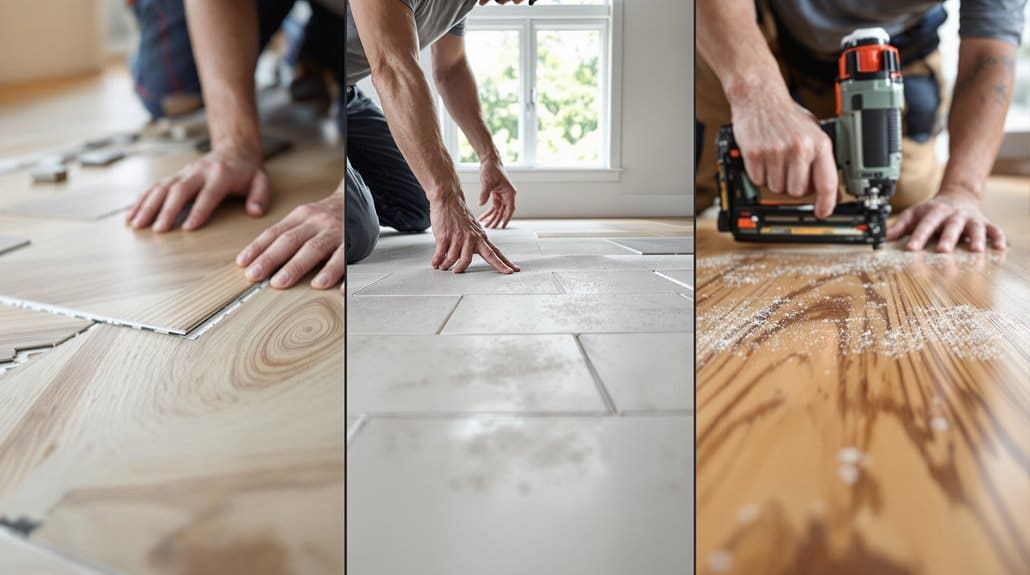
While you’re planning your flooring project, understand that installation speed varies dramatically depending on the material you’ve chosen. Laminate and vinyl plank flooring install quickly as they’re designed for straightforward click-lock systems requiring minimal flooring tools. Tile installation demands precision and patience—you’ll need proper spreaders, grout mixing equipment, and curing time. Hardwood flooring requires specialized installation techniques, including acclimation periods and precise fastening methods that extend your timeline considerably.
Your choice directly impacts labor hours and project completion. Engineered wood installs faster than solid hardwood. Luxury vinyl plank offers speed advantages over natural stone, which demands expert-level installation techniques. Luxury vinyl tile can be installed over existing flooring like concrete, plywood, or tile, which eliminates removal time and accelerates the installation timeline. Consider your budget, timeline, and the specific demands each material places on installation teams. Understanding these differences helps you set realistic expectations and allocate resources effectively for your clients’ projects.
Why Subfloor Condition Delays Installation
Before you install new flooring, you’ll need to address any moisture damage or rot in your subfloor, which can add days or weeks to your project timeline. Structural repairs become necessary when the subfloor has deteriorated, requiring you to replace compromised sections entirely. These foundational issues won’t resolve themselves and must be corrected first, or your new flooring will fail prematurely. Water damage or warping prevents proper installation and must be fully remediated before proceeding with new materials.
Moisture And Rot Damage
If your subfloor’s moisture content exceeds acceptable levels, your flooring installation won’t proceed until the problem’s resolved. Increased moisture creates ideal conditions for wood rot, compromising structural integrity and creating health hazards through mold growth.
You’ll need moisture prevention measures implemented before installation continues. This might include vapor barriers, improved ventilation, or addressing underlying water intrusion sources. Rot remediation requires removing affected sections and replacing compromised materials entirely.
Testing moisture levels is crucial. Professional installers use moisture meters to verify readings fall within acceptable ranges for your specific flooring type. You can’t rush this process—installing over damp subfloors leads to premature failure, cupping, warping, and costly replacements down the line.
Addressing these issues upfront protects your investment and guarantees your flooring lasts decades. Similar to shower installations, incorporating proper drainage systems during subfloor repairs eliminates future water intrusion points that could compromise your new flooring.
Structural Repairs Extend Timeline
Beyond moisture concerns, your subfloor’s structural integrity directly impacts installation timelines. When inspections reveal rot, warping, or compromised joists, you’ll need repairs before proceeding. These unexpected issues greatly extend your project duration and increase repair costs.
Structural damage requires professional assessment to determine replacement scope. You might need partial or complete subfloor replacement, which adds days or weeks to your timeline. Installers can’t place new flooring over unstable foundations—doing so compromises durability and safety.
Budget additional time for material sourcing and specialized contractor availability. Professional subfloor evaluation ensures suitability for hardwood installation and identifies any structural concerns that must be addressed before materials can acclimate properly. Addressing these problems upfront prevents costly failures later. Quality installation depends on solid structural conditions, making this phase crucial rather than optional for your flooring’s long-term performance.
How Home Size Affects Installation Duration

Your home’s square footage directly determines how long flooring installation’ll take. Larger homes require extended timelines, while compact spaces finish quickly. Consider these factors:
- Small homes (under 1,000 sq ft): Installation typically takes 1-3 days, allowing installers to work efficiently without maneuvering through complex room layouts.
- Medium homes (1,000-3,000 sq ft): Plan for 3-7 days, accounting for multiple rooms and varied installation challenges like shifts and closets.
- Large homes (over 3,000 sq ft): Expect 1-2 weeks minimum, especially with intricate room layouts requiring precise measurements and cuts.
Irregular floor plans, numerous doorways, and architectural features create installation challenges that extend your project timeline. Understanding your home’s dimensions helps you schedule appropriately and plan for service interruptions throughout your space.
Installation Pace by Square Footage: What’s Normal
You’ll find that installation pace varies considerably based on your home’s square footage, with larger areas requiring proportionally more time to complete. Standard installation rates typically range from 100 to 300 square feet per day, depending on the flooring type and subfloor conditions you’re working with. Understanding these benchmarks helps you set realistic expectations for your project timeline and coordinate logistics accordingly.
Square Footage Impact On Timeline
The pace of flooring installation varies greatly based on the area you’re covering. Several factors directly influence your project timeline:
- Small spaces (under 500 sq ft) typically take 1-2 days, allowing installers to focus on precision without complex logistics or labor coordination challenges.
- Medium areas (500-1,500 sq ft) require 2-4 days, depending on installation techniques and labor availability; multiple workers can accelerate completion notably.
- Large installations (over 1,500 sq ft) span 5+ days, demanding careful scheduling, sequential installation techniques, and adequate labor availability to maintain quality standards.
Your flooring type, subfloor conditions, and room layout as well matter greatly. Complex patterns or shifts between materials extend timelines. Coordinating labor availability with your installer guarantees efficient project management and realistic expectations for your specific square footage.
Standard Installation Rate Benchmarks
Understanding how square footage translates to actual installation time requires looking at industry standard rates that professionals use to estimate projects. Most flooring installers work at 100-300 square feet per day, depending on material type and subfloor conditions. Hardwood typically moves slower than laminate or vinyl planks. You’ll find that installation cost correlates directly with this pace—faster installations cost less per square foot, while complex patterns or preparation work increases both time and expense.
When discussing your project, clear project communication about square footage helps contractors provide accurate timelines and quotes. Request detailed breakdowns that specify daily progress expectations. This transparency guarantees you understand what you’re paying for and when your flooring will be complete.
Realistic Timelines for Each Flooring Material

Installation duration varies markedly depending on which material you’ve chosen, with laminate and vinyl typically completing fastest while hardwood and tile require considerably more time.
Your flooring expertise matters when tackling different materials:
- Laminate and vinyl install in 1-2 days for standard rooms, as these materials don’t demand extensive subfloor preparation or complex finishing work.
- Hardwood flooring takes 3-7 days since you’ll navigate installation challenges like acclimation periods, sanding, and multiple finish coats that can’t be rushed.
- Ceramic and porcelain tile requires 5-10 days owing to layout precision, grout curing time, and potential substrate preparation needed for proper drainage.
Understanding these realistic timelines helps you serve clients better by setting accurate expectations and scheduling accordingly.
Why Installations Run Late (and How to Protect Yourself)
Even with realistic timelines established, projects routinely exceed your initial estimates due to unexpected conditions and preventable oversights. Installation delays stem from subfloor damage, moisture issues, or layout complexities your contractor didn’t anticipate. Poor project management compounds problems—inadequate material ordering, scheduling conflicts, or staffing gaps derail progress.
Protect yourself by requiring written timelines with specific start and completion dates. Request daily progress updates and establish clear communication channels. Verify your contractor inspects the site before quoting work. Include contingency clauses addressing unforeseen conditions and their cost implications. Demand detailed project schedules outlining each phase.
Ask about their installation delays history and how they’ve resolved them. Require penalties for missed deadlines and incentives for early completion. These measures guarantee accountability and keep your flooring project on track.
Conclusion
You’ll find that professional flooring installation typically takes 1-2 days for laminate or vinyl, but 3-7 days for hardwood. Larger homes can stretch timelines to two weeks because of layout complexities and subfloor issues. Research shows that 40% of installation delays stem from unexpected subfloor damage. You’ll protect yourself by getting detailed written estimates, confirming material acclimation requirements upfront, and establishing clear communication checkpoints with your contractor throughout the project.
The post How Long Should Professional Flooring Installation Actually Take? appeared first on Flooring Specialist.source https://myflooringspecialist.com/how-long-should-professional-flooring-installation-take/




No comments:
Post a Comment