Your hardwood floors are like a blank canvas waiting to be restored rather than discarded. If you’re staring at scratches and dull patches, you’ve likely wondered whether refinishing or replacing makes sense. The answer isn’t always obvious. Cost differences are substantial, but your subfloor’s condition and damage severity matter similarly. Understanding what actually gets fixed during refinishing—and what doesn’t—will reshape how you approach this decision.
Key Takeaways
- Refinishing costs 50-75% less than replacement while extending structurally sound floor life by 10-15 years.
- Modern dustless sanding and eco-friendly finishes complete projects in days with minimal disruption to your home.
- Surface scratches, scuffs, and minor dull spots can be restored without full refinishing through targeted repairs.
- Refinishing reduces environmental impact by retaining existing hardwood’s carbon storage and minimizing landfill waste significantly.
- Professional-grade finishes last 7-10 years with proper maintenance, making refinishing economical before considering full replacement.
Refinishing vs. Replacement: The Real Cost Comparison

When you’re facing worn hardwood floors, the decision between refinishing and replacement hinges on cost, condition, and long-term value. Refinishing typically costs 50-75% less than replacement, making it an economical choice for structurally sound floors. Modern refinishing techniques—including water-based polyurethane and dust containment systems—deliver professional results while minimizing disruption.
However, evaluate key cost factors: floor thickness, damage extent, and subfloor integrity. If planks are less than 3/16 inches thick or show severe water damage, replacement becomes necessary. When helping clients decide, consider that refinishing preserves character and authenticity, while replacement offers design flexibility.
Request quotes for both options to provide accurate comparisons. Quality refinishing extends floor life 10-15 years, delivering genuine value for those prioritizing responsible stewardship of existing assets. Refinishing works by removing the top layer of wood, which eliminates scratches, stains, and minor dents to reveal a fresh surface beneath.
When Replacement Is the Better Choice
Though refinishing offers significant savings, you’ll find that replacement becomes the prudent choice when structural integrity or floor condition renders restoration economically inefficient. Several replacement considerations determine this decision. Extensive cupping, crowning, or rotting indicates subfloor damage that refinishing can’t address. When you’re considering a long-term investment, evaluate whether your hardwood’s thickness allows multiple refinishing cycles. Floors sanded below 3/16 inches lack sufficient material for future restoration. Water damage compromising the substructure necessitates replacement to prevent future problems. Moreover, if refinishing costs approach 80% of replacement expenses, investing in new flooring proves wiser. You’ll benefit from updated species options, improved durability, and warranty protection that justifies the investment for decades ahead. Replacement allows you to select from numerous styles and colors that better complement your current home design preferences.
Is Your Subfloor Healthy Enough to Refinish?
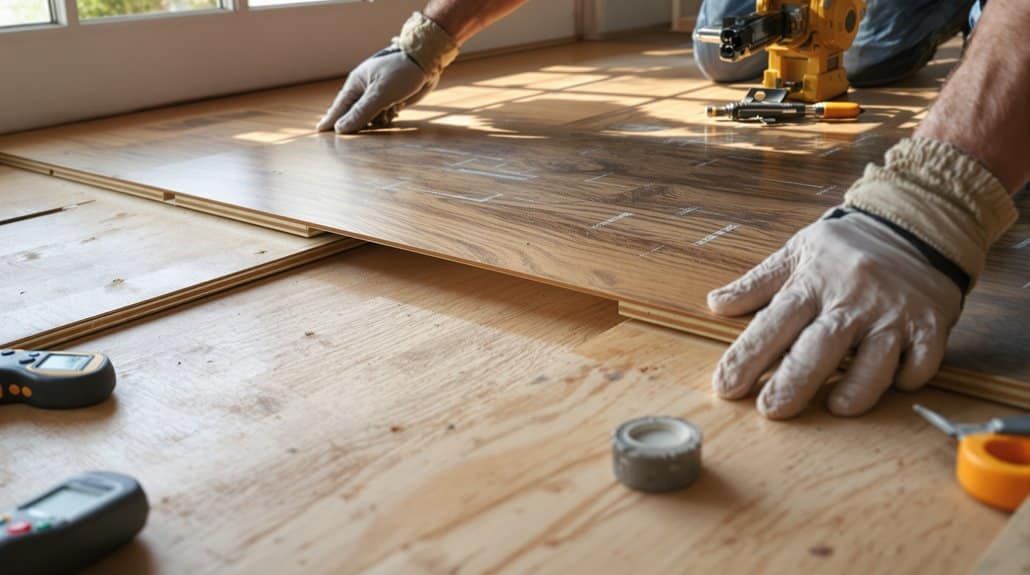
Before you refinish your hardwood floors, you’ll need to assess whether your subfloor can support the project by identifying signs of damage like soft spots, discoloration, or cupping in the existing wood. Next, you’ll evaluate moisture levels and check for rot, as excess moisture or fungal growth will compromise any refinishing work and require remediation first. Finally, you can perform structural integrity tests—such as probing with an awl or moisture meter readings—to confirm your subfloor is sound enough to proceed. Keep in mind that maintaining ideal humidity levels between 35% and 55% will help prevent future subfloor issues after refinishing.
Signs Of Subfloor Damage
Your subfloor’s structural integrity directly determines whether refinishing is viable or if replacement is necessary before you proceed. During subfloor inspection techniques, you’ll identify critical failure points that compromise your hardwood floors.
Watch for these signs of deterioration:
- Soft spots and sponginess – Press firmly across the subfloor; it shouldn’t yield under pressure
- Visible mold, mildew, or discoloration – Dark patches indicate moisture damage beyond surface treatment
- Separations and movement – Gaps between boards or noticeable flexing when walking suggest structural failure
You’ll additionally listen for creaking sounds and check for water stains around plumbing fixtures. If you find extensive damage, refinishing won’t solve underlying problems. You’ll need subfloor replacement first, ensuring a stable foundation for your new hardwood investment. A healthy subfloor is essential whether you’re planning to refinish solid hardwood floors or install engineered alternatives.
Moisture And Rot Assessment
Since moisture creates the conditions for wood decay, you’ll need to assess both current water damage and ongoing moisture exposure before committing to refinishing. Use moisture detection tools to measure wood moisture content—readings above 12% indicate problems requiring intervention. Probe suspected soft spots with a screwdriver; resistance indicates sound wood, while easy penetration signals rot. Check for discoloration, musty odors, and visible mold, which reveal active decay. Identify moisture sources: plumbing leaks, foundation cracks, or poor ventilation. Address these issues before refinishing, or moisture will compromise your work. Implement rot prevention by fixing leaks, improving drainage, and ensuring adequate subfloor ventilation. A healthy subfloor is dry, solid, and structurally sound—essential prerequisites for successful refinishing rather than costly replacement.
Structural Integrity Testing Methods
Once you’ve confirmed that moisture and rot aren’t actively compromising your subfloor, you’ll need to evaluate whether the underlying structure can support refinishing work.
Your structural assessment involves three critical integrity evaluation techniques:
- Bounce Testing – Walk across the floor applying pressure; excessive deflection signals weakened joists requiring replacement before refinishing.
- Fastener Inspection – Check that nails and screws remain firmly seated; loose fasteners indicate structural movement that’ll compromise new finishes.
- Joist Examination – Inspect beams for sagging, cupping, or visible damage; these conditions demand reinforcement or replacement before proceeding.
This hands-on evaluation determines whether refinishing serves your community’s needs or if replacement better protects the property long-term. Document findings thoroughly to guide your decision confidently.
Spot the Damage: What Can Actually Be Fixed

You can fix surface scratches and scuffs through refinishing, as they don’t penetrate the wood’s structural integrity. Water stains and discoloration require assessment to determine whether they’re surface-level stains that’ll sand out or deep damage that’s compromised the wood’s stability. Identifying which damages are repairable helps you decide whether refinishing will restore your floors or whether you’ll need deeper intervention.
Surface Scratches and Scuffs
How deep does that scratch really go? You’ll want to assess whether you’re dealing with minor surface damage or wear that requires refinishing. Light scratches typically affect only the protective topcoat, not the wood itself.
Here’s what you can actually fix without full refinishing:
- Shallow scratches that don’t expose bare wood—these respond well to scratch repair products and furniture markers
- Scuffs confined to the finish layer—surface protection solutions like touch-up stains effectively restore appearance
- Minor dull spots from wear—buffing and recoating localized areas refreshes the shine
You’ll save significant time and expense by addressing these surface-level issues immediately. On the other hand, if scratches penetrate the wood’s actual grain or you’re noticing multiple damaged areas, full refinishing becomes the more practical choice for uniform, lasting results that truly serve your home’s longevity.
Water Stains and Discoloration
Water stains and discoloration demand a different diagnostic approach than surface scratches since they’ve penetrated the finish and potentially affected the wood itself. You’ll need to assess whether the water damage is superficial or has compromised the wood structure.
Light stains often respond to targeted stain removal techniques and restoration methods. For deeper discoloration, you’ll evaluate color matching options during floor preparation. Professional restoration techniques can address moisture barriers that’ve failed, preventing future issues.
Your refinishing timeline depends on damage severity. Minor cases require spot treatment with protective finishes, while extensive water damage necessitates complete sanding and refinishing. You’ll apply moisture barriers to vulnerable areas, ensuring lasting protection against recurring moisture infiltration and protecting your investment long-term.
Modern Sanding and Stain Methods That Match New Floors
Since contemporary sanding equipment and stain formulations have evolved greatly, you’ll find it’s now possible to achieve results that closely match newly installed hardwood. Modern equipment delivers superior color matching and texture improvement compared to older methods.
You can markedly improve your refinishing outcomes by:
- Utilizing multi-grit sanding techniques with advanced dustless systems that preserve floor integrity while guaranteeing proper finish durability
- Selecting eco-friendly finishes and stain options that provide consistent results across varied wood species
- Employing professional tools for precise floor preparation, enabling accurate color matching without over-sanding
Contemporary DIY refinishing kits now incorporate professional-grade components, though hiring experienced technicians assures prime texture improvement and finish application. Your investment in modern methods yields floors virtually indistinguishable from new installations.
How Refinishing Saves Money and the Environment
When you refinish existing hardwood floors instead of replacing them, you’ll spend 50-70% less than installing new flooring while keeping materials out of landfills. You’re reducing both the carbon footprint associated with manufacturing, transporting, and installing new materials and the waste generated by demolition and disposal. This approach extends your floor’s lifespan by decades while supporting sustainable building practices that benefit your budget and the environment simultaneously.
Cost Comparison Analysis
Three significant financial and environmental advantages emerge when you choose refinishing over replacement.
Understanding the cost breakdown helps you serve your clients’ best interests. Here’s what you’ll uncover:
- Material costs drop 60-70% when refinishing existing hardwood versus purchasing new flooring
- Labor expenses decrease substantially since installation complexity is eliminated
- Disposal fees vanish entirely, removing environmental cleanup costs
Modern refinishing techniques maximize efficiency without compromising quality. You’ll invest in sanding, staining, and sealing rather than complete removal and replacement. This approach preserves the structural integrity of established floors while delivering pristine results.
The financial advantage compounds when considering reduced disruption to your clients’ spaces. Refinishing typically completes in days, not weeks. Your clients benefit from cost savings, environmental responsibility, and minimal inconvenience—a triple advantage that demonstrates genuine service-oriented decision-making.
Environmental Impact Benefits
By choosing refinishing over replacement, you’re dramatically reducing the environmental footprint of your flooring project. Refinishing extends your hardwood’s life cycle considerably, minimizing waste sent to landfills. You’ll conserve the natural resources required for harvesting and manufacturing new flooring materials.
When you refinish, you’re utilizing eco-friendly materials like low-VOC sealers and water-based finishes that diminish harmful emissions. This approach prevents the transportation emissions associated with manufacturing and shipping replacement flooring. Your existing hardwood retains its carbon storage capacity rather than releasing sequestered carbon during disposal.
Waste Reduction And Sustainability
Rather than sending hardwood floors to landfills, refinishing redirects considerable waste from disposal streams while preserving a valuable resource. You’re embracing sustainable practices that honor your responsibility to future generations.
Refinishing delivers measurable environmental advantages:
- Reduces landfill burden – You’ll divert thousands of pounds of wood waste annually through lifecycle assessment strategies.
- Minimizes manufacturing emissions – Refinishing requires considerably less energy than producing new flooring materials.
- Supports waste management goals – You’ll extend floor lifespan by 20+ years using eco-friendly materials and proper techniques.
You’ll achieve energy efficiency by avoiding the extraction, processing, and transportation demands of replacement flooring. Sustainable practices like water-based finishes and dust containment systems further reduce your environmental footprint. This approach demonstrates genuine stewardship while delivering practical, long-term value.
Prepare Your Home: What Happens Before Work Starts
What should you expect when refinishing contractors arrive at your home? You’ll need to complete crucial pre-work checklist items before crews begin. Move furniture, artwork, and personal items from the work area to protect them from dust and debris. Seal doorways with plastic sheeting to contain particles in adjacent rooms. Disconnect ceiling fans and remove light fixtures when necessary.
Your homeowner responsibilities include ensuring clear access to all flooring and confirming utilities are accessible for contractors. Arrange temporary accommodations if dust containment proves inadequate for your household’s comfort.
Confirm parking arrangements and delivery access beforehand. Discuss protection protocols for HVAC systems with your contractor. Establish communication procedures for questions arising during the project. These preparations minimize disruptions and allow crews to work efficiently while protecting your home’s contents and systems.
What Happens During the Refinishing Process
Once crews arrive and begin work, they’ll follow a systematic process that typically spans 3-7 days depending on your floor’s size and condition.
- Sanding techniques remove the old finish and surface imperfections through progressive grit levels, exposing fresh wood beneath.
- Stain application follows, allowing you to customize your floor’s color and improve natural grain patterns.
- Sealing and finishing protect your newly refinished surface with polyurethane or similar protective coatings.
You’ll notice dust containment measures throughout, as professionals isolate work areas to minimize disruption to your home. They’ll sand strategically to avoid gouging while achieving uniform results. Drying time between each phase is critical—rushing compromises quality. You’re investing in craftsmanship that restores your floor’s beauty while preserving its structural integrity for decades ahead.
Your Maintenance Plan After Refinishing
Your newly refinished hardwood floor requires a strategic maintenance plan to preserve its appearance and durability for years to come. Implement these maintenance tips immediately after refinishing completes. Use soft-bristled brooms or microfiber mops for regular cleaning techniques that won’t scratch the finish. Avoid excessive water—damp, not wet, mopping protects your investment. Place protective pads beneath furniture legs to prevent indentations. Address spills promptly to prevent water damage and staining. Maintain consistent humidity levels between 30-50% to minimize expansion and contraction. Apply protective mats at entryways where dirt accumulation occurs. Refinish high-traffic areas every 3-5 years, and plan full refinishing every 7-10 years. By establishing this thorough maintenance schedule, you’ll extend your floor’s lifespan considerably and maintain its beauty for your clients and household members.
How Long Refinished Floors Last With Proper Care
Three key factors determine how long your refinished hardwood floors’ll maintain their quality: the finish type you’ve selected, your commitment to the maintenance schedule outlined above, and your home’s environmental conditions.
With proper care, you’ll extend floor longevity considerably. Modern refinishing techniques yield finishes lasting 7-10 years under normal household traffic. Premium polyurethane coatings outperform standard finishes, offering improved durability.
Your floor’s lifespan depends on:
- Finish quality – Professional-grade products resist wear better than consumer options
- Maintenance consistency – Regular cleaning and protective measures prevent premature degradation
- Environmental stability – Controlling humidity and temperature fluctuations protects the wood substrate
You’re investing in long-term value when you maintain refinished floors diligently. Addressing spills promptly, using appropriate cleaning products, and scheduling professional maintenance every few years preserves your investment. This proactive approach serves your home’s aesthetic and structural integrity effectively.
Conclusion
You’ll find that refinishing your hardwood floors delivers transformative results without demolishing your budget. By addressing surface damage through modern sanding and staining techniques, you’re fundamentally giving your floors a million-year refresh. You’ll extend their lifespan 10-15 years while saving thousands compared to replacement. With proper maintenance protocols and a solid subfloor, you’re investing in durability and sustainability that’ll serve your home exceptionally well.
The post When Refinishing Hardwood Makes More Sense Than Replacing It appeared first on Flooring Specialist.source https://myflooringspecialist.com/when-refinishing-hardwood-makes-more-sense-than-replacing-it/



No comments:
Post a Comment