Your Georgia home’s floors are silently battling forces you can’t see. High humidity, clay-based soil, and extreme temperature swings create an environment where wood swells, laminate buckles, and tile cracks—often before you notice anything’s wrong. But here’s what you need to know: these failures aren’t inevitable. Understanding what actually causes them is your first defense.
Key Takeaways
- Georgia’s high humidity and clay-based soil cause wood swelling, laminate buckling, and foundation movement that damage floors.
- Maintain indoor humidity between 30-50% and install moisture barriers to prevent ground moisture from rising through foundations.
- Squeaky floors, uneven surfaces, and widening gaps between planks are early warning signs of moisture damage requiring attention.
- Install gutters extending six feet from foundations, seal cracks, and ensure proper air circulation to control moisture.
- Schedule annual professional inspections and address spills immediately to identify emerging issues before they compromise floor integrity.
Why Georgia’s Climate Wrecks Your Floors
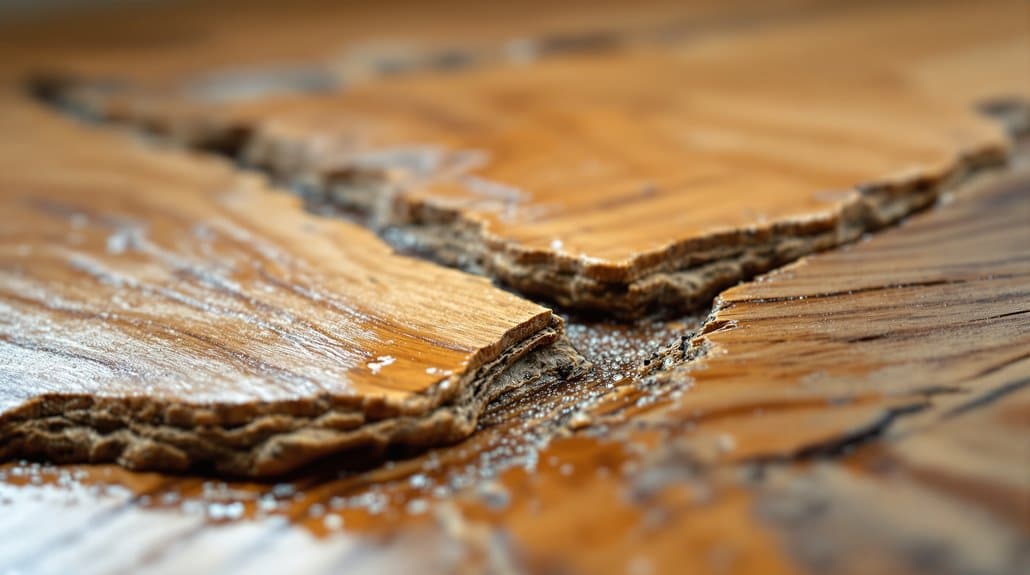
Georgia’s subtropical climate creates a perfect storm for floor damage. You’re contending with consistently high humidity levels that penetrate your home’s foundation, causing wood to swell and laminate to buckle. The state’s soil composition—predominantly clay-based—expands when wet and contracts when dry, creating foundation movement that stresses flooring systems.
Your floors experience temperature fluctuations that accelerate material degradation. Summer moisture coupled with air conditioning creates condensation on surface materials. Winter’s temperature drops cause rapid contraction, opening gaps between planks.
These climatic conditions demand that you understand your flooring’s vulnerability. Understanding how humidity levels and soil composition interact with your specific floor type allows you to implement preventive measures. Proper ventilation, moisture barriers, and acclimation protocols protect your investment and extend your floors’ lifespan. Without adequate protection, you risk mold growth that compromises both your flooring and your family’s health.
Common Floor Problems and What Causes Them
Owing to Georgia’s climate creating persistent moisture challenges, you’ll encounter several recurring floor problems that stem directly from humidity and foundation movement.
Your flooring materials experience specific failures based on installation techniques and environmental exposure:
- Cupping and crowning: Wood floors absorb moisture unevenly, causing edges to rise or centers to peak, compromising structural integrity.
- Tile cracking: Foundation settling creates stress points that fracture grout lines and ceramic surfaces.
- Laminate delamination: Improper underlayment installation allows moisture penetration between layers, causing separation and warping.
These problems develop progressively. Inadequate installation techniques—including insufficient vapor barriers and improper acclimation periods—accelerate degradation. Your flooring materials’ susceptibility depends heavily on substrate preparation and moisture control during installation. Understanding these cause-and-effect relationships allows you to implement preventive measures effectively, protecting your home’s structural foundation and interior surfaces. Before installation begins, checking subfloor conditions ensures a stable foundation that resists moisture-related failures and extends your flooring’s lifespan.
Early Warning Signs Your Floors Are in Trouble
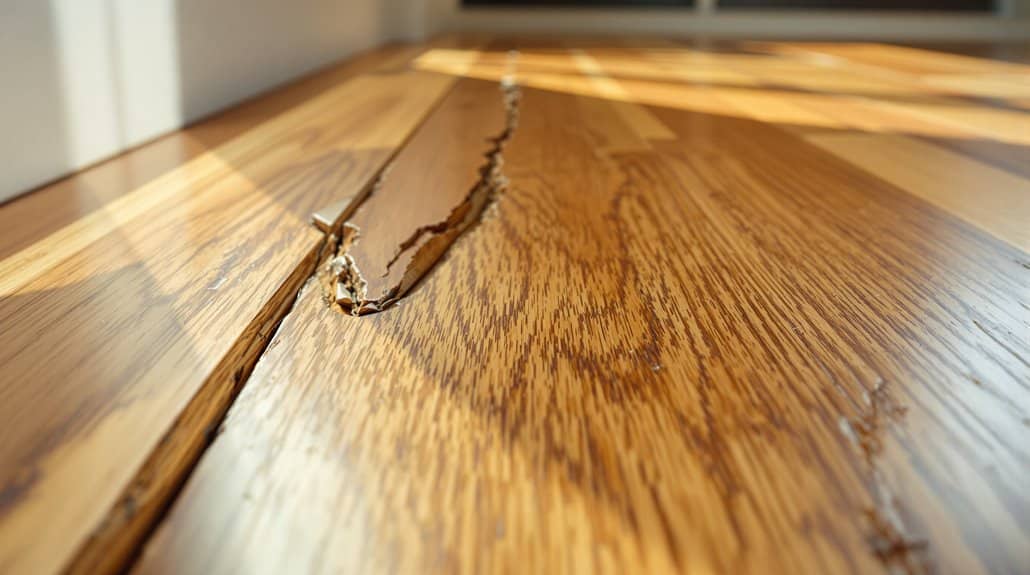
Before floor damage becomes expensive and structurally threatening, you’ll notice subtle indicators that signal moisture problems or foundation movement.
Pay attention to squeaky floors, which often indicate subfloor deterioration or loose fasteners. Listen for consistent noise patterns when walking across specific areas. Uneven surfaces reveal foundation settlement or moisture swelling beneath your home. Run your hand across the floor to detect dips or high spots.
Watch for cupping or crowning in hardwood floors—edges raised higher than centers suggest excess moisture. Observe gaps between floorboards widening, indicating wood shrinkage from humidity changes. Check for soft spots that feel spongy underfoot, signaling water damage.
Discoloration, warping, and visible mold growth require immediate attention. Maintaining ideal humidity levels between 35% and 55% helps prevent many of these common floor problems in Georgia homes. These warning signs help you intervene early, preventing costly structural repairs and protecting your home’s integrity.
How to Control Moisture and Prevent Damage
Identifying moisture problems is only half the battle—you’ll need to actively manage humidity levels and water intrusion to protect your floors from further deterioration. Install moisture barriers beneath affected areas to prevent ground moisture from rising. Maintain indoor humidity between 30-50% using dehumidifiers or proper HVAC ventilation to serve your clients’ long-term floor preservation.
Address water sources systematically:
- Seal foundation cracks and grading issues directing water toward your home
- Install gutters and downspouts extending at least six feet from the foundation
- Apply waterproof sealants to basement walls and crawl spaces
You’ll additionally need to guarantee adequate air circulation in vulnerable spaces. Humidity control isn’t just reactive—it’s preventative maintenance that safeguards structural integrity and extends floor lifespan considerably. When selecting flooring materials for moisture-prone areas, consider that water-resistant flooring options like LVP offer superior protection against warping and mold growth compared to traditional laminate.
Maintenance Steps to Protect Your Flooring Investment
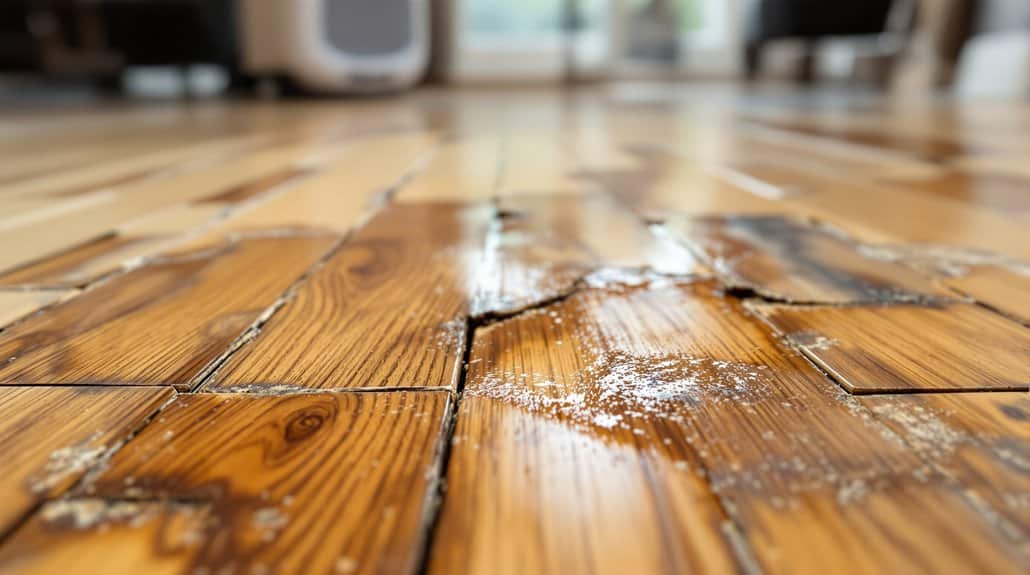
Once you’ve controlled moisture and addressed water intrusion, establishing a regular maintenance routine becomes critical to protecting your flooring investment. You’ll want to implement consistent floor cleaning protocols tailored to your specific flooring material. Vacuum or sweep high-traffic areas weekly to prevent debris accumulation that can scratch surfaces. Address spills immediately to minimize staining and water absorption.
Seasonal care deserves particular attention in Georgia’s climate. Before humid summer months, inspect seals and caulking around thresholds. During fall, clear gutters to redirect water away from your foundation. Winter demands attention to drainage systems to prevent ice dam formation near your home’s perimeter.
You should schedule professional inspections annually. These evaluations identify emerging issues before they compromise structural integrity, ultimately extending your floor’s lifespan and protecting your property value.
Conclusion
You’re fundamentally building a fortress against Georgia’s moisture onslaught. By installing barriers, maintaining humidity levels between 30-50%, and ensuring proper drainage, you’re constructing a shield that protects your floors from swelling, buckling, and cracking. Regular inspections and timely repairs seal the cracks in your defense. Think of maintenance as systematic checks on your home’s perimeter—each action you take fortifies your flooring investment against the relentless assault of Georgia’s climate.
The post Why Some Floors Fail in Georgia Homes (And How to Prevent It) appeared first on Flooring Specialist.source https://myflooringspecialist.com/why-some-floors-fail-in-georgia-homes/



No comments:
Post a Comment