You’re standing in your kitchen, eyeing new flooring options that don’t quite feel right with your existing cabinets and trim. The undertones clash. The finishes compete for attention. Before you commit to a choice you’ll regret, you’ll need to understand how color temperature, material composition, and surface sheen work together to create—or destroy—visual harmony in your space.
Key Takeaways
- Evaluate cabinet finishes, materials, and undertones under various lighting to establish a foundational color palette for flooring selection.
- Match flooring undertones to cabinet tones—warm cabinets pair with honey-hued floors; cool cabinets complement gray or whitewashed options.
- Consider sheen levels carefully; matte finishes create sophistication while glossy surfaces brighten smaller kitchens and reflect light differently.
- Test flooring samples (12×12 inches minimum) against cabinets and trim under natural and artificial lighting for several days before committing.
- Choose timeless flooring styles that complement cabinet design periods rather than trendy combinations that quickly appear dated.
Assess Your Cabinets, Trim, and Existing Colors

Before selecting flooring, you’ll need to evaluate your cabinet finish, hardware, and wall colors as your foundation. Examine your cabinet materials closely—whether they’re solid wood, veneer, or painted finishes—as these dictate your flooring palette. Note the undertones: warm honey tones demand different flooring than cool gray or white cabinets.
Assess your trim styles and stain colors throughout the space. Consider how baseboards, crown molding, and door frames interact with potential flooring choices. Photograph your cabinets under natural and artificial lighting to capture accurate color representation.
Document existing wall colors and any architectural features that’ll influence flooring selection. This thorough evaluation creates a unified design foundation, ensuring your new flooring complements rather than conflicts with established elements while serving your aesthetic vision effectively. Remember that quality flooring contributes significantly to your home’s overall value by creating cohesive, well-designed spaces that appeal to current and future buyers.
How Flooring Finishes Change Your Room’s Feel
The finish you select fundamentally transforms how your space looks and functions. Matte finishes create intimate, sophisticated environments by minimizing light reflection, while glossy surfaces amplify brightness and perceived spaciousness—ideal for smaller kitchens. Semi-gloss options strike a practical balance, offering durability without excessive sheen.
Your flooring’s texture impact directly influences the room’s tactile experience. Smooth finishes feel contemporary and streamlined, whereas textured surfaces provide visual warmth and conceal footprints and dust. Consider your cabinet style: sleek, modern cabinetry pairs beautifully with polished floors, while rustic cabinets complement distressed or hand-scraped finishes.
Color psychology matters similarly. Lighter floor finishes brighten spaces and complement darker cabinets, creating visual contrast. Darker floors ground lighter cabinetry, adding depth and formality. This interplay between finish type, texture, and color establishes your room’s overall aesthetic coherence and functionality.
LVP flooring offers diverse design choices with realistic wood and stone patterns that can be tailored to match your existing cabinet styles seamlessly.
Match Your Flooring to Your Cabinet Style
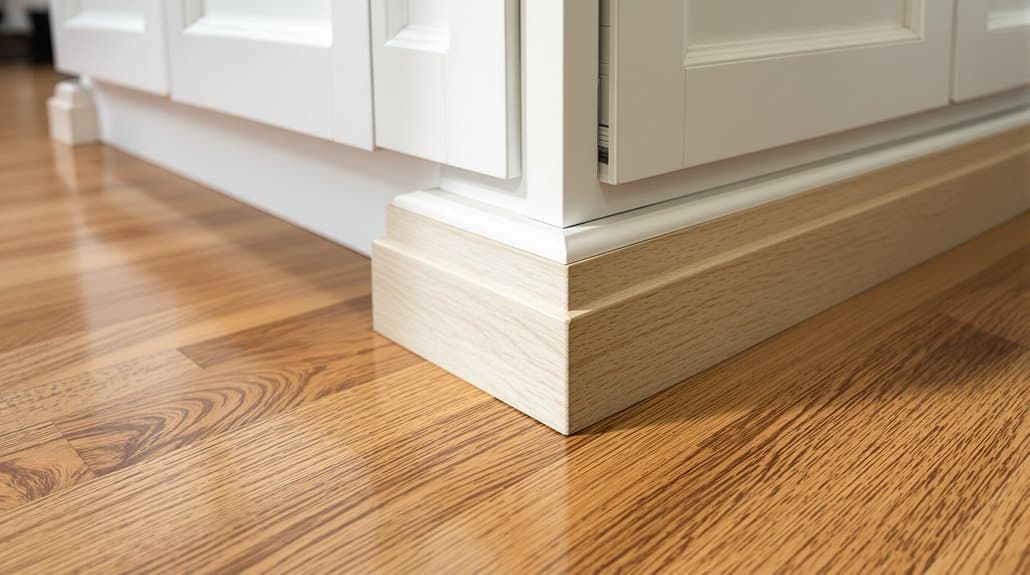
Your cabinet style dictates which flooring options will establish visual harmony in your space. Modern styles demand sleek, minimalist flooring—think polished concrete or light oak with clean lines that complement contemporary cabinetry. These choices create integrated, streamlined environments that reflect your clients’ sophisticated tastes.
Rustic vibes call for warmer, textured flooring that echoes natural authenticity. Reclaimed wood or hand-scraped planks pair beautifully with distressed cabinet finishes, grounding spaces in character and warmth.
Consider your cabinet’s undertones carefully. Cool-toned cabinetry pairs effectively with gray or whitewashed flooring, while warm-toned cabinets benefit from honey or amber-hued options. This intentional pairing guarantees your flooring amplifies rather than competes with your cabinetry, creating unified, professionally designed interiors that serve your clients’ aesthetic aspirations. Just as you focus on undertones when selecting paint colors, the same principle applies when matching flooring to existing cabinets for a cohesive design.
Should You Match or Contrast Your Flooring?
You’ll find that complementary color palettes create a unified design by selecting flooring and cabinets from the same or adjacent color families, establishing visual harmony throughout your space. Conversely, you can contrast your flooring with your cabinetry to generate visual interest and define distinct zones within your kitchen or bathroom. The choice between matching and contrasting depends on whether you’re seeking unified sophistication or dynamic visual separation. Consider how different tile patterns can either complement your existing cabinetry for a cohesive look or create striking contrast that enhances the perception of space in your room.
Complementary Color Palettes Work Best
Rather than defaulting to matching cabinetry and flooring in identical hues, you’ll achieve more sophisticated and visually dynamic results by embracing complementary color relationships. Understanding color theory facilitates you to create design harmony that enhances your entire space.
When you’re selecting flooring to complement existing cabinets, consider these strategic approaches:
- Pair warm cabinet tones with cool-toned flooring to establish visual balance and depth.
- Choose flooring that’s one shade lighter or darker than cabinetry for subtle contrast without jarring shifts.
- Select accent colors from your flooring to echo in hardware or trim work for unified design flow.
This thoughtful approach transforms your kitchen or bathroom into a refined environment that serves both aesthetic appeal and functional design principles your clients will appreciate.
Contrast Creates Visual Interest
While complementary color palettes establish harmony, strategic contrast between flooring and cabinets can improve a space with dramatic visual impact. You’ll find that bold contrast creates depth and guides your clients’ eyes through the room, making spaces feel larger and more dynamic.
Consider pairing dark cabinetry with light flooring or vice versa. This approach maximizes color balance while allowing each element to shine independently. Texture variety amplifies this effect—combining smooth cabinet finishes with textured or patterned flooring adds dimension without overwhelming the design.
You’re not limited to neutrals either. You can successfully introduce contrasting wood tones or even accent colors through flooring to complement your cabinet selection. Strategic contrast demonstrates sophistication and raises the entire kitchen or bathroom aesthetic, serving your clients’ desire for distinctive, purposeful design choices.
Test Samples in Your Space Before Deciding
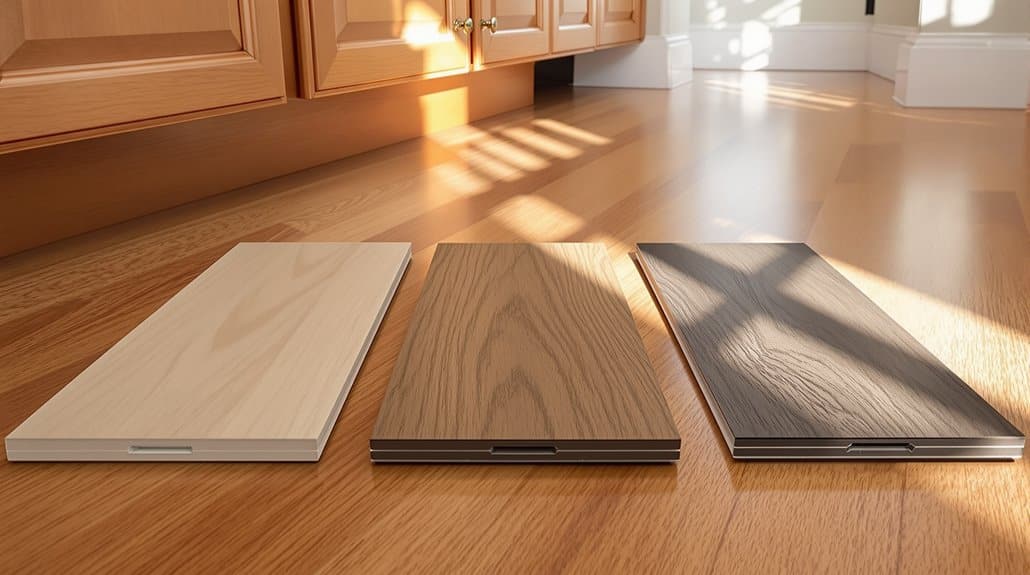
How do lighting conditions, existing wall colors, and adjacent finishes affect your flooring and cabinet selections? You’ll uncover that samples viewed in isolation don’t reflect real-world performance. Request adequate sample sizes—typically 12×12 inches minimum—to accurately assess color temperature and visual impact within your actual space.
- Place samples against your cabinets under natural and artificial lighting at different times of day to evaluate how color temperature shifts affect the overall aesthetic.
- Position samples on your subfloor alongside trim and wall colors to verify the flooring complements your complete design scheme.
- Live with samples for several days to confirm you’re satisfied with the pairing before committing to your purchase and installation.
This deliberate approach guarantees your selections serve your clients’ vision authentically and withstand scrutiny long-term.
Mistakes That Make Flooring and Cabinets Clash
Even with careful sample testing, common design errors can undermine your flooring and cabinet pairing. You’ll want to avoid mismatches between wood tones, undertones, and finish sheens that create visual discord.
| Mistake | Impact | Solution |
|---|---|---|
| Ignoring undertones | Clashing warm/cool tones | Match undertone families |
| Mixing incompatible flooring styles | Disjointed aesthetic | Select unified design periods |
| Overlooking cabinet materials | Poor surface interaction | Coordinate wood species |
| Neglecting sheen levels | Inconsistent light reflection | Balance gloss uniformity |
| Forcing trendy pairings | Dated appearance quickly | Choose timeless combinations |
You’re making a significant investment in your home’s foundation. Verify your cabinet materials complement your flooring styles through thoughtful consideration of grain patterns, color saturation, and finish characteristics. These details prevent costly regrets and create enduring elegance throughout your space.
Conclusion
You’ll uncover that matching flooring with cabinets isn’t actually about finding identical pieces—it’s about orchestrating a visual symphony where contrasts harmonize. You’ve meticulously assessed undertones, tested samples under fluorescent and natural light, yet the magic happens when you don’t perfectly match. Your carefully coordinated grain patterns and complementary sheens create depth precisely since they’re not identical twins. You’ve invested in cohesion by embracing subtle differentiation, proving that flawless design thrives on strategic, sophisticated variation rather than uniformity.
The post How to Match New Flooring With Existing Cabinets and Trim appeared first on Flooring Specialist.source https://myflooringspecialist.com/how-to-match-new-flooring-with-existing-cabinets-and-trim/



No comments:
Post a Comment