You’re planning a flooring upgrade, but you’re wondering if your baseboards have to go too. The short answer? You don’t necessarily have to replace them. Nevertheless, whether you can keep them depends on several factors—their condition, your new flooring type, and installation requirements. Let’s investigate what you need to know before making your final decision.
Key Takeaways
- Yes, you can replace flooring while keeping existing baseboards if they’re structurally sound and stylistically compatible with new materials.
- Remove baseboards before installation to prevent damage, allow for proper underlayment placement, and accommodate new flooring height differences.
- Reinstallation costs $3–$8 per linear foot, but retaining quality baseboards saves 15–20% compared to full replacement.
- Protect baseboards during installation using painter’s tape, drop cloths, and cloth-wrapped pry bars to avoid gouges and damage.
- Close gaps between new flooring and baseboards using paintable caulk, quarter-round molding, or shoe molding for finished appearance.
Do Your Old Baseboards Need to Go?
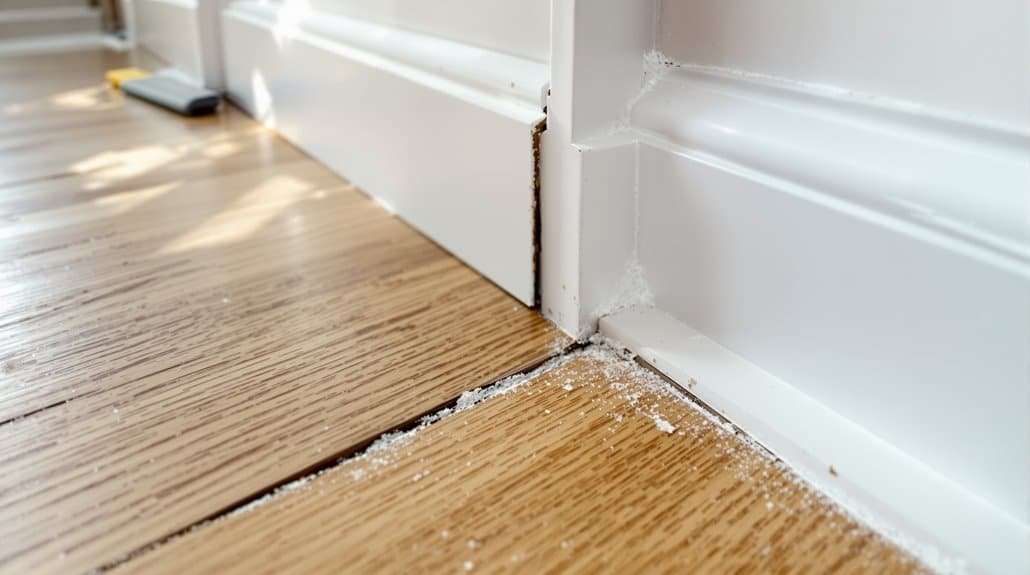
How do you know whether your baseboards should stay or go when you’re replacing flooring?
Inspect your baseboards for damage, water stains, or warping that’d compromise your flooring installation. If they’re structurally sound, you can reuse them. Consider their style—modern baseboard styles may clash with new flooring choices, requiring replacement for aesthetic cohesion.
Evaluate installation techniques used on your existing baseboards. If they’re caulked and painted directly to walls, removal becomes labor-intensive. Baseboards installed with nails offer easier removal without wall damage.
Assess whether your new flooring’s height differs considerably from current levels. Thicker materials may require taller baseboards to maintain proper proportions.
Finally, consider your budget and timeline. Keeping quality baseboards saves money and labor while maintaining design continuity. Removing and replacing them gives you complete design control but increases project costs and complexity. Professional flooring companies can assess your baseboards during the initial consultation to help you make the most cost-effective decision for your project.
When Baseboards Must Be Removed Before Installation
While keeping your existing baseboards is possible when they’re in good condition, certain situations demand removal before you install new flooring.
You’ll need to remove baseboards when they’re damaged, warped, or moisture-compromised. Different baseboard types require varying installation techniques—some nail directly to studs, while others attach to the wall itself. If your new flooring height differs considerably from the original, removing baseboards prevents gaps or misalignment issues.
Moreover, remove baseboards when installing floating floors or certain wood varieties that require expansion space. You should likewise take them down if you’re applying underlayment that raises your floor height. This guarantees proper ventilation and prevents buckling.
Removing baseboards protects them during installation and allows you to address any wall damage underneath. You’ll serve your clients better by handling this upfront rather than creating aesthetic or structural problems later. When installing waterproof laminate, you’ll find the easy installation process particularly suitable for DIY enthusiasts who want to tackle baseboard removal themselves.
Check Your Baseboards for Reuse

Before you reinstall your baseboards, you’ll need to assess their condition by examining them for damage like gouges, water stains, warping, or paint deterioration that’d make them unsuitable for reuse. Look closely at wear indicators—including discoloration patterns, gaps between the baseboard and wall, or separation from the floor—that signal structural compromise or aesthetic decline. Once you’ve determined they’re reusable, prepare them by carefully removing any old caulk, sanding rough spots, and cleaning away dust and debris so they’re ready for reinstallation over your new flooring. If your baseboards show water damage from humidity level fluctuations, especially in homes with hardwood flooring, you may need to replace them to ensure proper protection for your new floors.
Assessing Baseboard Condition
Your baseboards’ reusability depends on their structural integrity, finish quality, and attachment method. Inspect for water damage, warping, or rot that’d compromise reinstallation. Check baseboard materials—solid wood withstands removal better than veneer or MDF, which splinter easily. Examine the finish for scratches, stains, or fading that affect aesthetic considerations. Gently probe nail holes and seams for weakness. Test adhesive strength if your baseboards were glued. Document any existing damage photographically for reference. Assess whether the current condition aligns with your design goals. If baseboards show significant wear in spite of sound structure, refinishing may be more cost-effective than replacement. Consider whether light surface-level scratches can be addressed through refinishing rather than requiring full baseboard replacement. Ultimately, honest evaluation determines whether preserving them serves your renovation vision and budget effectively.
Damage and Wear Indicators
Several telltale signs’ll reveal whether your baseboards can survive removal and reinstallation. Carefully examine wear patterns and structural integrity before deciding on repair options.
- Surface damage – Look for deep gouges, dents, or water stains that’ll compromise aesthetics after reinstallation
- Wood deterioration – Check for soft spots, rot, or warping indicating moisture damage or pest activity
- Paint condition – Assess whether existing finish’ll withstand removal without chipping or separating from the substrate
- Joint integrity – Inspect corner connections and seams for separation, gaps, or structural weakness
You’ll want to document these findings thoroughly. Minor cosmetic damage won’t prevent reuse, but significant structural issues necessitate replacement. Understanding your baseboards’ condition helps you plan appropriate repair options and determine whether removal is feasible for your flooring project.
Reuse Preparation Steps
Once you’ve determined your baseboards can handle removal, preparing them properly’ll protect your investment and guarantee successful reinstallation. Start by carefully documenting your baseboard styles with photographs and measurements, noting the profile, height, and material composition. This documentation proves invaluable when matching replacement sections or reinstalling existing pieces.
Next, apply painter’s tape along the top edge where baseboards meet the wall. This protective measure prevents accidental damage during floor removal. Gently score the caulk line with a utility knife to ensure clean separation from the wall surface.
For reuse techniques, use a pry bar wrapped in cloth to avoid gouging the wood. Work slowly, applying steady pressure at multiple points. Label each baseboard section on the back with painter’s tape, indicating original location and orientation. Store prepared baseboards flat in a climate-controlled space.
Budget: Keep, Refresh, or Replace?

When you’ve assessed your baseboards’ condition, you’ll need to evaluate whether keeping them makes financial sense against the cost of replacement or refinishing. You can perform a cost-benefit analysis by comparing the price of new baseboards, professional removal, and installation against the expense of revitalizing your existing trim through painting, staining, or minor repairs. Budget-friendly renewal options like a quality paint job or wood filler repairs often extend your baseboards’ life and maintain their appearance at a fraction of replacement costs.
Cost-Benefit Analysis
Before you commit to new flooring, you’ll need to assess your baseboards’ condition and determine whether keeping them makes financial sense. Your cost analysis should weigh these factors:
- Baseboard condition – Inspect for damage, water stains, or warping that’ll require replacement regardless
- Installation costs – Removing and reinstalling baseboards typically runs $3–$8 per linear foot
- Color matching – Existing baseboards may not coordinate with new flooring, necessitating updates
- Long-term durability – Older baseboards may deteriorate faster with new flooring exposure
For renovation budgeting purposes, retaining quality baseboards saves 15–20% on project costs. Conversely, if your baseboards show significant wear or aesthetic misalignment with new flooring selections, replacement often proves more cost-effective than attempting modifications. Calculate your specific numbers before deciding.
Baseboard Condition Assessment
The foundation of your decision rests on a thorough inspection of your existing baseboards’ structural and aesthetic condition. Examine baseboard materials closely for water damage, warping, or rotting—indicators that replacement is necessary. Check paint quality and surface finish; minor cosmetic issues you can address through revitalization. Assess installation techniques by testing stability; loose or compromised baseboards warrant attention before flooring replacement.
Measure baseboard height and profile carefully to guarantee compatibility with new flooring heights. Document existing conditions with photos for reference. Consider whether your baseboard materials—wood, vinyl, or composite—align with your design goals. If baseboards remain structurally sound and aesthetically acceptable, keeping them becomes cost-effective. Nonetheless, if they show significant deterioration or stylistic misalignment, replacement guarantees a unified, professional appearance that serves your long-term vision.
Budget-Friendly Refresh Options
Once you’ve assessed your baseboards’ condition, three distinct financial paths emerge: keeping existing baseboards, revitalizing them, or replacing them entirely. Your choice depends on your budget and desired outcome.
Consider these budget upgrades and flooring alternatives:
- Keep existing baseboards – Paint them to complement new flooring, minimizing costs while updating your space’s appearance.
- Revitalize through refinishing – Sand, stain, or paint baseboards to match flooring alternatives, extending their lifespan affordably.
- Replace selectively – Update only damaged sections rather than entire runs, reducing material and labor expenses.
- Choose budget-friendly materials – Install vinyl or laminate baseboards instead of hardwood when full replacement becomes necessary.
Each option serves different renovation goals. Keeping baseboards works when they’re structurally sound but aesthetically dated. Revitalizing provides maximum value for minimal investment. Selective replacement addresses specific damage without overspending. Evaluate your circumstances carefully to make the most cost-effective decision.
Protect Baseboards During Installation
Several protective measures will safeguard your baseboards from damage during flooring installation. You’ll want to apply painter’s tape along the baseboard edges, creating a barrier between the new flooring material and existing trim. This baseboard protection prevents adhesive, dust, and debris from adhering to your baseboards.
For installation techniques, remove baseboards entirely if you’re installing hardwood or engineered wood floors—this approach guarantees flawless changes and eliminates protection concerns. When baseboards must remain in place, use temporary cardboard or plastic sheeting as additional shielding.
You’ll additionally protect adjoining surfaces by covering baseboards with drop cloths secured with painter’s tape. During tile or vinyl installation, maintain a quarter-inch gap between the flooring edge and baseboard, allowing for natural expansion and contraction while minimizing contact points where damage might occur.
Close Gaps Between New Flooring and Old Baseboards
After you’ve installed your new flooring and the adhesive has fully cured, you’ll need to address any gaps that remain between the flooring edge and your existing baseboards.
Consider these gap filling techniques and trim compatibility options:
- Caulk application – Use paintable silicone caulk matching your baseboard color to seal gaps up to 1/4 inch, ensuring flexibility as flooring shifts seasonally.
- Quarter-round molding – Install complementary trim that accommodates height differences while disguising imperfections.
- Shoe molding – Apply this flexible trim along the baseboard-to-floor junction, creating a finished appearance.
- Wood filler – Use color-matched filler for smaller gaps requiring permanent solutions.
Select materials ensuring trim compatibility with your baseboard finish and flooring type. Proper gap closure prevents debris accumulation and improves your installation’s professional appearance.
Align New Flooring Height With Existing Trim
Since new flooring materials typically vary in thickness from your previous floor, you’ll need to carefully assess and adjust the height differential between your new flooring surface and existing baseboards. Measure the exact elevation change where your new material meets the trim to guarantee proper flooring compatibility.
You’ll likely encounter gaps if the trim height doesn’t align with your new surface level. Calculate thickness differences—laminate, vinyl, and hardwood each vary—then plan accordingly. Consider using transition strips or shims to bridge significant height discrepancies professionally.
Assess your trim height before installation begins. If gaps emerge after laying flooring, you can install quarter-round molding or caulk to conceal them effectively. Proper alignment prevents moisture infiltration and maintains a finished appearance while preserving your existing baseboards.
Refresh Baseboards Without Replacing Them
You can dramatically improve your baseboards’ appearance through strategic cleaning, refinishing, and minor repairs without the expense and hassle of removal. This approach preserves existing trim styling while updating your space’s visual appeal.
Consider these restoration techniques:
- Deep clean baseboards with TSP solution to remove dirt and grime buildup
- Fill gaps and cracks with paintable caulk, then sand smooth for seamless finish
- Apply baseboard painting with quality semi-gloss or satin finish in your chosen color
- Install quarter-round or shoe molding to conceal flooring changes and height variations
Proper preparation guarantees professional results. Sand existing paint lightly to improve adhesion, then apply primer before your final baseboard painting application. This method delivers refreshed trim styling that complements your new flooring while maintaining structural integrity and reducing project costs considerably.
Making New Flooring Work With Your Existing Baseboards
Once you’ve refreshed your baseboards, the real challenge lies in guaranteeing your new flooring integrates seamlessly with the trim you’ve just restored. You’ll need to reflect on how different flooring connections work with your existing baseboard styles. Measure the height difference between your old and new flooring—this gap directly affects how your baseboards sit. If you’re installing thicker flooring, you may need to shim baseboards or use connection strips to bridge uneven surfaces. Make certain flooring materials don’t compress under baseboards, which causes gaps over time. Select connection moldings that complement both your baseboard styles and new flooring material. Proper installation prevents moisture infiltration and maintains visual continuity throughout your space, serving your home’s longevity and aesthetic appeal effectively.
Conclusion
You’ve got options—keep those baseboards if they’re not secretly plotting against your new flooring. You’ll need to manage expansion gaps meticulously, protect them during installation like they’re museum artifacts, and guarantee height alignment doesn’t create awkward offsets. With proper planning, you’ll dodge the baseboard replacement trap entirely, keeping your wallet intact while your floors get their stylish upgrade.
The post Can You Replace Flooring Without Replacing Baseboards? appeared first on Flooring Specialist.source https://myflooringspecialist.com/can-you-replace-flooring-without-replacing-baseboards/




No comments:
Post a Comment