You’re tempted by the quick fix, you’re drawn to the lower cost, but you’re ignoring a critical problem: uneven concrete. When you install new flooring over an irregular surface, you’re setting yourself up for failure. Stress concentrates at high points, adhesives fail, and your warranty disappears. What exactly happens beneath that new surface, and which flooring types suffer first?
Key Takeaways
- Uneven concrete creates stress points that cause flooring to crack, buckle, warp, and separate prematurely.
- Adhesives fail to bond properly across gaps, compromising installation integrity and flooring durability.
- Manufacturer warranties are voided when flooring is installed over uneven or improperly prepared concrete substrates.
- High spots create dangerous trip hazards while gaps allow moisture to wick upward, causing swelling.
- Moisture infiltration through gaps promotes mold and mildew growth, shortening flooring lifespan significantly.
Why Uneven Concrete Breaks Flooring

When you install flooring over uneven concrete, you’re creating stress points that’ll eventually cause cracking, buckling, or premature wear. Uneven surfaces force your flooring material to bridge gaps and absorb impact unevenly, concentrating pressure on high spots while leaving voids underneath.
This uneven load distribution accelerates crack propagation, especially in rigid materials like tile or laminate. You’ll face significant installation challenges as adhesives won’t bond properly across gaps, and underlayment won’t provide consistent support. Movement in the subfloor transfers directly to your new flooring, compromising its structural integrity.
As your clients’ homes settle and temperature fluctuations occur, the stress compounds. What starts as minor stress points becomes visible damage—lifting seams, broken tiles, or warped planks. Addressing concrete unevenness before installation protects your work and preserves your reputation for quality craftsmanship. Without proper surface preparation, even durable flooring materials like luxury vinyl or laminate will fail to retain their structural integrity under the added stress of an uneven subfloor.
Measure Your Concrete: Is the Unevenness a Problem?
Before you commit to any concrete leveling method, you’ll need to measure your floor’s actual variation to determine whether it truly warrants treatment. Use a 10-foot straightedge to identify high and low spots across the surface. Mark any gaps exceeding 1/4 inch over that distance.
Your concrete assessment should focus on practical implications. Minor variations under 1/8 inch won’t compromise most flooring installations. Nevertheless, gaps between 1/4 and 1/2 inch demand attention before laying vinyl, laminate, or tile.
Measure multiple areas—corners, center zones, and doorways—since unevenness varies throughout spaces. Document your findings with photographs and measurements. This data guides your decision on whether leveling techniques are genuinely necessary or preventative. Skipping assessment risks costly flooring failure and voided warranties. Uneven subfloors can cause laminate or hardwood to separate over time, resulting in squeaky or creaky floors that indicate structural problems beneath the surface.
How Lippage Ruins Tile and Grout Lines
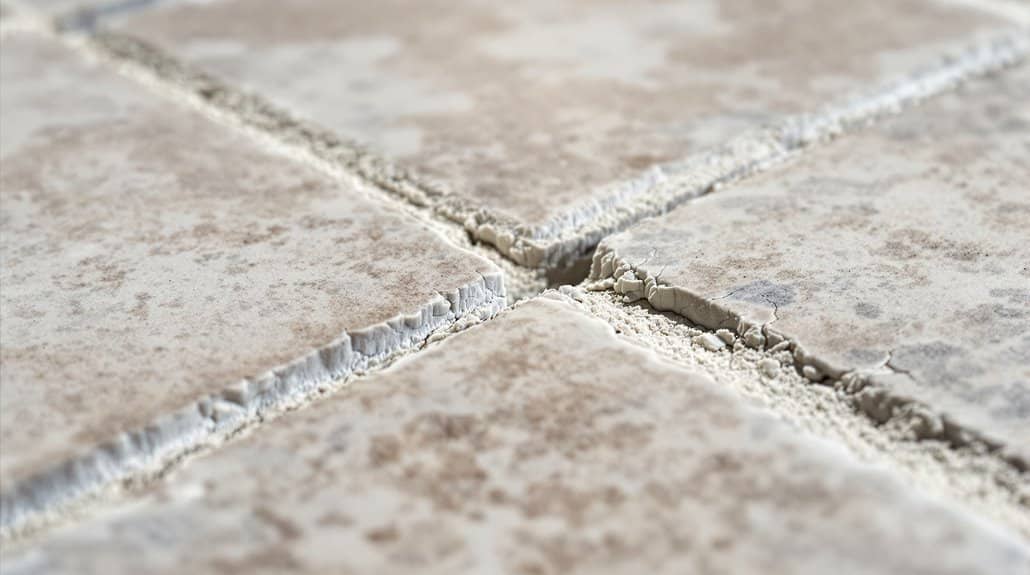
Once you’ve laid tile over uneven concrete, lippage—the vertical misalignment between adjacent tiles—becomes your biggest maintenance headache. Uneven surfaces force tiles to sit at different heights, creating dangerous lip edges that catch feet and damage grout lines. You’ll struggle with consistent grout maintenance as gaps widen and narrow unpredictably across your floor. Poor tile alignment compromises the grout joint’s structural integrity, allowing water infiltration that weakens your foundation further. Clients notice these imperfections immediately, viewing them as inferior craftsmanship. The lippage likewise accelerates wear patterns, making repairs costlier down the road. When serving others, you’re responsible for preventing these visible defects. Properly leveling concrete before installation protects your reputation and guarantees durable, professional results that your clients deserve. Professional installation by experienced flooring specialists ensures proper substrate preparation, eliminating lippage issues before they compromise your tile or stone flooring investment.
Concrete Settlement and Premature Wear
As concrete settles unevenly over time, you’ll find that your flooring installation becomes increasingly vulnerable to accelerated deterioration. Uneven settling creates stress points where tiles crack, wood warps, and laminate buckles prematurely. You’re fundamentally shortening your flooring’s lifespan considerably when you ignore foundation problems.
Your clients deserve better. Before installing new flooring, address concrete repair proactively. Settlement causes differential movement—one section sinking while another remains stable. This movement directly damages surface materials and forces costly replacements years earlier than expected.
You’ll protect your reputation and your customers’ investments by evaluating concrete conditions first. Use self-leveling compounds or concrete patching to create a stable base. This foundational work extends flooring lifespan greatly and prevents callbacks from premature failure caused by ongoing settlement issues. Materials like porcelain and ceramic tiles are particularly susceptible to cracking when installed over uneven concrete due to stress points created by the irregular surface.
Why Concrete Unevenness Voids Your Warranty

Most flooring manufacturers won’t honor warranty claims if you’ve installed their products over uneven concrete. When you skip proper substrate preparation, you’re violating the installation guidelines that protect your warranty coverage. Manufacturers understand that uneven surfaces cause premature failure—buckling, cracking, and separation develop rapidly under stress.
The warranty implications are severe. You’ll bear full replacement costs when issues arise, potentially thousands of dollars out of pocket. More critically, your flooring longevity suffers drastically. Uneven concrete forces materials to flex abnormally, accelerating wear patterns and reducing expected lifespan considerably.
As someone committed to serving others properly, you’ll want to prioritize substrate preparation. Level the concrete first, then install flooring. This approach maintains manufacturer coverage, guarantees durability, and demonstrates professional integrity to those depending on your work.
Safety Hazards: High Spots and Trip Risks
Owing to concrete surfaces developing high spots and valleys over time, they’ll create genuine safety hazards that extend far beyond cosmetic concerns.
You’re exposing occupants to significant risks when you install flooring over uneven concrete. Consider these critical dangers:
- Trip hazards from abrupt elevation changes that catch feet unexpectedly
- Ankle injuries resulting from unstable stepping surfaces
- Fall risks particularly threatening for elderly residents and children you’re serving
Uneven substrates cause flooring materials to separate, buckle, or crack prematurely, amplifying these dangers. Your trip prevention strategies must address the root cause—the concrete itself—rather than merely covering it.
Implementing safety flooring options requires proper substrate preparation first. You’ll protect those in your care by leveling concrete before installation, preventing injuries and liability complications that compromise your service mission.
Which Flooring Types Fail First on Uneven Concrete
You’ll find that laminate flooring fails quickest on uneven concrete since moisture wicks upward through low spots, causing boards to swell and buckle within months. Vinyl planks can settle unevenly into concrete depressions, creating visible gaps and movement that compromise both aesthetics and the water-tight seal you’re trying to achieve. Both materials lack the rigidity to bridge significant height variations, so you’re risking accelerated deterioration if you skip proper concrete preparation.
Laminate Flooring Performance Issues
When it comes to uneven concrete substrates, laminate flooring fails faster than most alternatives since it can’t flex or conform to surface irregularities. You’ll encounter significant durability issues that compromise your installation quality and client satisfaction.
Key problems you’ll face:
- Planks separate and gap as concrete settles, creating visible spaces between boards
- Moisture wicks upward through low spots, causing swelling and warping
- Clicking systems weaken from constant pressure variations and movement
Your installation techniques must account for these vulnerabilities. Proper underlayment selection becomes critical—you’ll need moisture barriers rated for concrete contact. Laminate durability depends heavily on substrate preparation. Fill substantial low spots before installing, and verify moisture testing confirms concrete’s readiness. Rushing this preparation stage directly results in callbacks and failed installations that damage your reputation.
Vinyl Planks And Settling
While vinyl planks offer better flexibility than laminate, they’re still vulnerable to uneven concrete—particularly rigid core and SPC (stone plastic composite) variants that can’t absorb substrate movement. When you’re planning vinyl installation on compromised surfaces, you’ll encounter distinct settling issues.
Rigid vinyl planks resist flexing, so they transmit every concrete imperfection directly to your finished floor. Over time, this causes visible gaps between planks, edge curling, and premature wear patterns. Your clients will notice clicking sounds as planks shift independently.
For flooring durability, luxury vinyl plank (LVP) with softer cores performs marginally better than rigid alternatives. On the other hand, without proper concrete preparation—including leveling compounds and moisture barriers—even quality vinyl installation fails prematurely. You’re responsible for setting realistic expectations about substrate conditions before starting any project.
Moisture and Mold: What Grows Beneath New Flooring
Trapped moisture beneath new flooring creates an ideal environment for mold and mildew to flourish, particularly over concrete that hasn’t been properly sealed or allowed to cure. You’re exposing your clients to serious health risks if you skip critical moisture prevention steps.
Protect your installations with these key components:
- Install quality moisture barriers before laying any flooring material
- Test concrete moisture levels with a calcium chloride test before proceeding
- Apply appropriate sealers to concrete surfaces for mold prevention
You must allow concrete to cure fully—typically 28 days—before covering it. Uneven concrete traps water in low spots, accelerating mold growth. Inadequate ventilation compounds the problem. Your diligence in moisture management directly impacts your clients’ indoor air quality and structural integrity. Don’t compromise on this foundation step.
Self-Leveling Compounds vs. Grinding: Quick Fixes That Backfire
Although self-leveling compounds and grinding seem like quick solutions to uneven concrete, they’ll create bigger problems down the road if you don’t understand their limitations.
Self-leveling options work only on minor imperfections—typically under a quarter inch. You’ll waste money applying them to significant dips or slopes. Grinding techniques similarly fail when unevenness exceeds surface-level irregularities. Both methods likewise mask underlying causes like settling or structural movement, which will resurface and damage your new flooring.
Moreover, self-leveling compounds can delaminate from dirty concrete, while grinding generates dust that infiltrates your home and equipment. Neither addresses moisture issues beneath the surface.
Before choosing either approach, honestly assess your concrete’s condition. If problems run deeper, invest in proper subfloor preparation. Your clients deserve flooring that lasts.
When to Replace the Concrete Instead of Flooring Over It
Sometimes you’ll encounter concrete damage so severe that patching or resurfacing won’t solve the underlying problems. Concrete replacement becomes necessary when you’re facing structural compromise that threatens your flooring longevity.
You’ll need full replacement if you’re dealing with:
- Deep cracks exceeding a quarter-inch width that penetrate structural layers
- Significant settling or heaving that creates slopes exceeding one-eighth inch per foot
- Active water intrusion or moisture barriers that’ve failed completely
Attempting to install new flooring over compromised concrete wastes material and money. You’re fundamentally masking a failing foundation. Professional assessment identifies whether concrete replacement truly serves your client’s needs versus temporary fixes that’ll deteriorate quickly. Investing in proper substrate preparation protects your reputation and guarantees durable results.
Conclusion
You’re fundamentally building a house of cards when you install flooring over uneven concrete. That compromised foundation will inevitably crumble, taking your investment with it. Don’t gamble with shortcuts—proper substrate preparation isn’t an expense, it’s insurance. Address the underlying concrete issues now through grinding or replacement, or you’ll face exponentially costlier repairs later. Your flooring’s longevity depends on it.
The post What Happens If You Install New Flooring Over Uneven Concrete? appeared first on Flooring Specialist.source https://myflooringspecialist.com/what-happens-if-you-install-new-flooring-over-uneven-concrete/




No comments:
Post a Comment